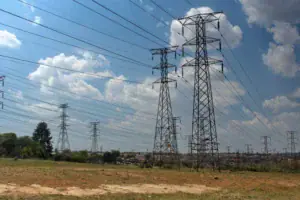
Minister Kgosientsho Ramokgopa unveiled changes to pricing policy to fight the high cost of electricity
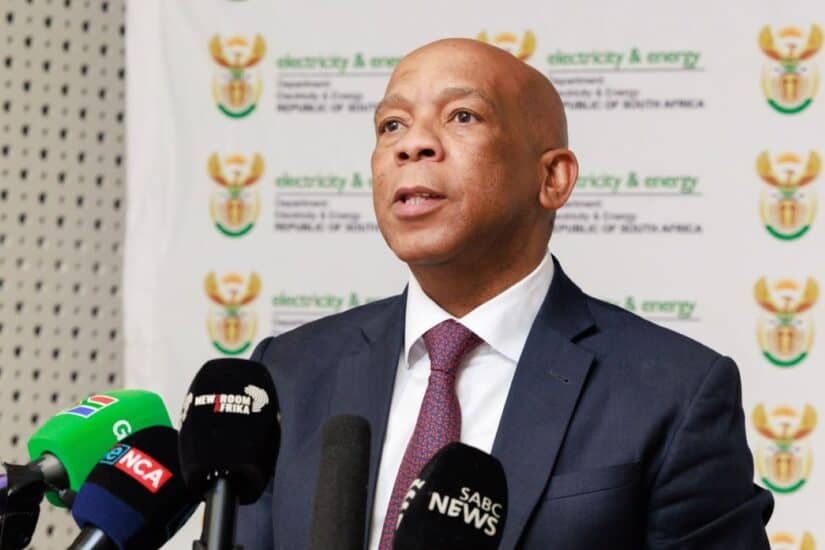
Minister of Electricity and Energy Dr Kgosientsho Ramokgopa. Picture: GCIS


Minister of Electricity and Energy Dr Kgosientsho Ramokgopa has announced changes to the Electricity Pricing Policy to tackle South Africa’s high electricity costs and ease the burden on low-income households.
Speaking at a media briefing in Pretoria on Tuesday, he hit out at municipalities for increasing electricity tariffs because of non-paying customers.
Ramokgopa hits out at municipalities for overcharging
“As we know in municipalities, affluent areas are likely to pay a higher tariff because of time-of-use charges and the amount of electricity they use,” said Ramokgopa.
“So what we are finding increasingly is that municipalities will charge these customers, what we call the affluent customers, significantly more than what is required because they call that to be subsidies that are going to be given to the poor.”
He added that this principle must be eliminated because customers who pay their bills are overburdened by the fact that other customers can afford to pay but do not.
As a result, municipal debt to Eskom balloons. Ultimately, Eskom will be forced to recover the municipal debt in the tariff.
“So if you look at the current tariff, about anything between 1 to 2.5 percentage points of the tariff that we are paying is on the basis that Eskom is unable to recover what the people are owing, and the fact that they are owed a lot of money means that they are putting additional pressure on customers.”
No punishment allowed
Ramokgopa said the revised policy will not allow paying customers to be punished because of non-paying customers.
“You are not allowed to punish those who are paying on account of those who are not paying. You must be an efficient producer and supplier of electricity. So what do we mean? Those that are not paying, you go after the people who are not paying and not translate that into the tariff.
“What also sits in your tariff is what we call the inefficiencies from the technical losses and the non-technical losses. People have connected themselves illegally. What you and I refer to colloquially as being municipal infrastructure because we are not maintaining it. There are technical losses as they buy electricity from Eskom; it gets transported in this transmission line, the distribution line, they lose that electricity.
“One of the big metros just the other day shared with me that their technical losses are up to 30%. So for every R10 purchase of electricity, before they can lend it to the consumer, they have already lost R3 of that electricity.
“So what do they do in that instance? The R3 that they have lost as a result of the technical losses, they place it on the tariff, and they burden all of us because they have not maintained the infrastructure. That will not be allowed.”
Ramokgopa must also take blame
However, an independent energy analyst and economist, Tshepo Kgadima, told The Citizen that Ramokgopa is also to blame for the high electricity prices.
He said the Revised Electricity Pricing Policy presented by the minister does not make sense, and “it should worry him that he is the one leading a violation of the constitution”.
The analyst said independent power producers need to be allowed to contribute power to the grid, which will contribute to lower electricity prices. Kgadima also said municipalities should not be responsible for supplying or charging for electricity.
“I have for a long time called for a standardised uniform tariff of electricity in South Africa and I have also for a long time now asserted that an 87 cents per kilowatt hour electricity tariff is what must be instituted in the country without delay,” he said.
“Now, when the minister says, well, we don’t allow the municipalities to overcharge, we want them to standardise the charge to the consumers regardless of the municipality. In the first instance, municipalities have got no business whatsoever to supply electricity or to even charge for the supply of electricity.
“And secondly, it is an absurdity that you can have the minister of electricity saying he wants to push ahead with the so-called negotiated pricing agreements.”
He accused both the government and Eskom of discrimination.
“That is not warranted. It’s a discrimination on the basis that a multinational corporation can pay 62 cents a kilowatt hour and then you and I can pay over R5 per kilowatt-hour.
“The organ of state has got no basis whatsoever to even think of discriminating South Africans. But here we have the minister and cabinet, together with Eskom, all of them enjoined in duty to prevent discrimination of citizens, but they are actually the ones who are in the lead.”
Renewable energy taking pressure off grid
He also said one of the reasons Eskom has surplus power at the moment is due to South Africans moving off the grid.
“Right now, Eskom has got 7 000 megawatts of excess or surplus power. That figure will soon move to 13 000 megawatts, and soon in the next five years, that figure will have moved to 20 000 megawatts of surplus power of electricity. Without building one single power station more, because Eskom customers or electricity consumers are migrating off-grid, be they businesses or individuals.”
Kgadima said electricity provided by the state should be far cheaper, but blamed corruption for the government needing to implement tariff hikes.
“Because of rampant fraud, corruption, and looting, they will tell you that the cost of electricity is higher. The cost of electricity generation in South Africa is 32 cents. Anything above 32 cents is a direct result of rampant corruption, fraud and looting.”
Helping low-income households
Ramokgopa said the department has focused on three priorities during his tenure as minister. The first priority he mentioned was eliminating load shedding, followed by eliminating load-reduction, which he says has been successfully completed in seven out of the nine provinces. The two provinces which will still experience load-reduction are Gauteng and KwaZulu-Natal.
He said the third priority is attending to the exponential increase in electricity tariffs. “So we know that over a period stretching back to 2007 electricity tariffs have increased by about 97% and in the corresponding period inflation has increased by about 150%,” he said.
“So you can see that the cost of electricity, the price of electricity, is undermining the competitiveness of our industries and eroding the disposable income of households. And household consumption constitutes about 60% of South Africa’s economy. So it’s in our interest to resolve this question of the cost of electricity.”
Electricity has been one of the obstacles hindering the country’s economy from growing. To address the cost of electricity, he will table the Revised Electricity Pricing Policy to Cabinet, but before doing so, the proposals will be published on Friday for public comment.
“I must indicate that these measures will be put out to public comment so that they were able to benefit from the multiplicity and diversity of views that exist in the public to enrich the core proposals that we are presenting before you.”
No change in electricity policy for 10 years
Ramokgopa noted that the Electricity Pricing Policy was first established in 2008 and has not changed since then. He said that over the past 17 years, household consumption has changed, citing that more people have electric appliances.
“The second thing that has changed is that we are liberalising the electricity market,” he said. “By that I mean, as you know, as part of our comprehensive set of reforms, we are introducing new generators who are going to allow for someone who’s a generator to enter into an agreement with someone who’s an offtaker,” he said.
He said the seventh administration has three priorities: job creation and growing the country’s economy; reducing poverty and addressing the cost of living; and building an ethical, capable, and developmental state.
“Now two of the three priorities are creating jobs and ensuring that the economy grows, ensuring that we address poverty and reduce the cost of living. They rely largely on the cost of electricity. So if we don’t address the cost of electricity, what the president would have announced is a pie in the sky. We are unlikely going to grow this economy because our industries will be uncompetitive.”
Tariff path
Ramokgopa said the revised electricity pricing policy will establish a tariff path. The National Energy Regulator of South Africa (Nersa) will be required to create a 10-year forecast on how much electricity will cost in a decade.
“We want everyone to have some degree of certainty on what will be the cost of electricity not just today, tomorrow, not only in the three years’ time or five years’ time; we want to create a 10-year horizon, and it is for this reason that as part of this electricity pricing policy, Nersa will be required to publish a 10-year price forecast.”
He said this will help attract investment into the country because businesses want to know the electricity price path, especially industries that rely heavily on energy.
Transparency
Ramokgopa said the pricing policy will also provide a framework for transparent, efficient, cost-reflective tariffs. Simply put, there won’t be any hidden costs in what households and businesses are paying as an electricity tariff.
He highlighted that the policy will ensure that there’s efficiency-based pricing. This will be achieved by ensuring that the municipal and Eskom bills households receive will show how the two arrived at the price point they did.
“So by that I mean it’s going to show what the energy costs are, what the costs are associated with converting, for example, coal into electricity. So the cost associated with the generation at an Eskom plant or a solar PV. It must also show you what the network charges are,” he said.