Mass shootings in the West Rand and Cape leave South Africa reeling
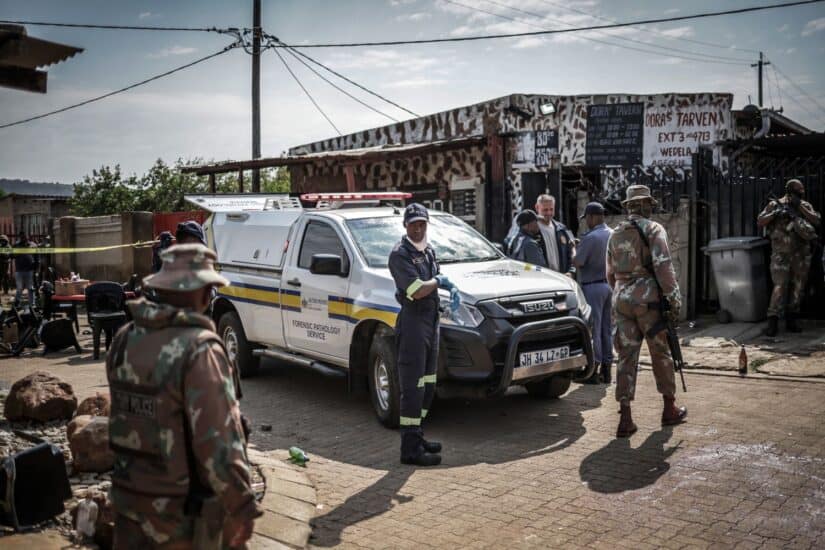
Police and SA National Defence Force members inspect the scene where gunmen armed with assault rifles stormed a Joburg bar in one of the mass killings across the country over the weekend. Picture: EMMANUEL CROSET / AFP


In one of the bloodiest weekends in recent South African history, mass shootings claimed the lives of at least 27 people, with another 26 wounded, in separate attacks.
Questions are being asked about whether police intelligence gathering is hopelessly inadequate for tracking violent groups and providing early warning of such attacks. Even worse, there is concern policing incompetence is contributing to the rampant availability of illegal firearms.
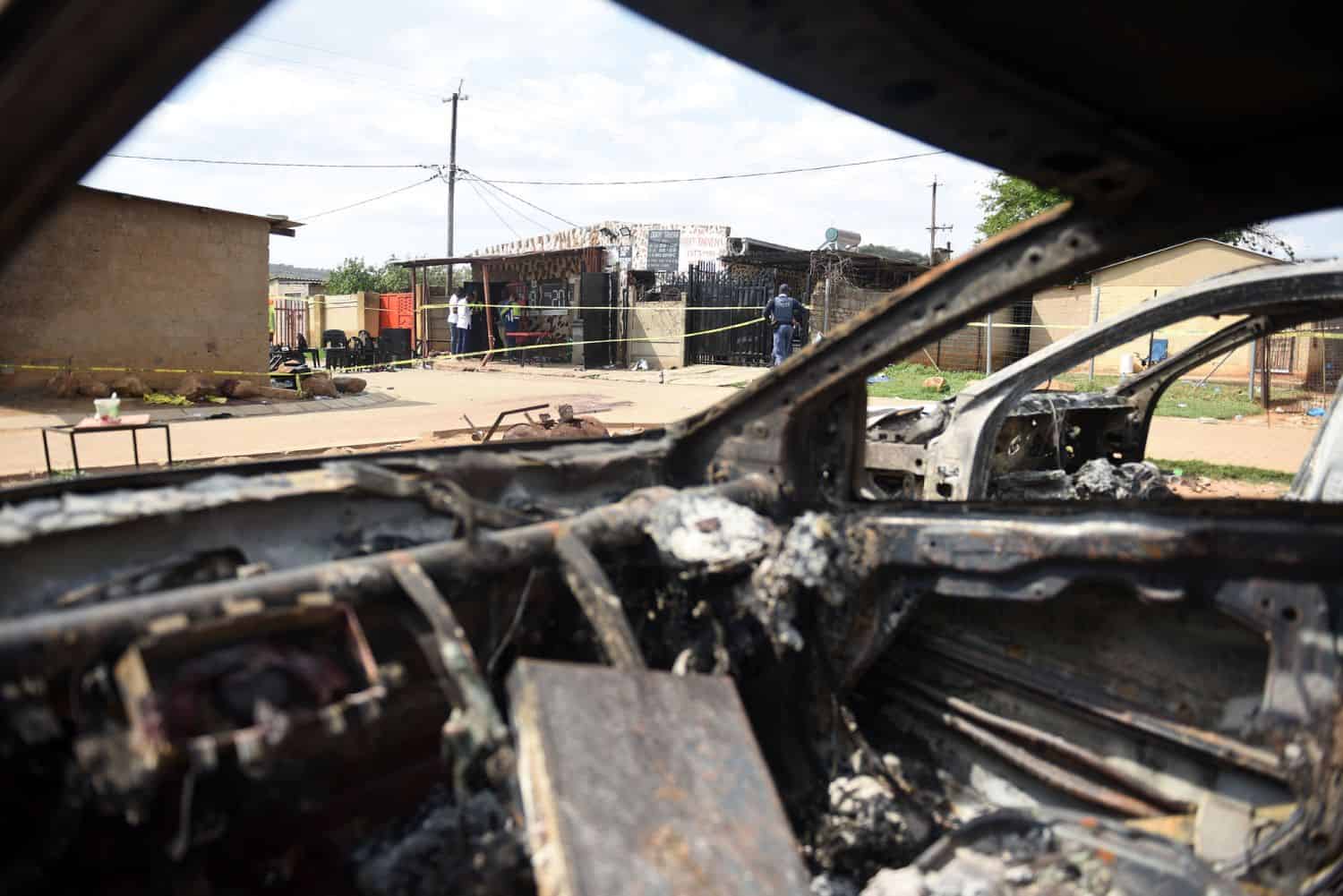
The first shooting, at a tavern in Wedela, near Carletonville, on the West Rand, on Saturday night claimed 17 lives and left 15 hurt.
A second mass shooting at an entertainment venue in Lwandle in the Western Cape in the early hours of Sunday left 10 people dead and 11 injured.
Police intelligence and illegal guns
Experts who spoke to by The Citizen said stronger intelligence and a more effective strategy to combat smuggling and trafficking of firearms could help prevent mass-casualty shootings.
Criminologist Prof Kholofelo Rakubu said the incidents should force the country to reconsider how it understands and prevents multiple-victim firearm violence. However, he cautioned against presuming the motives.
“Investigation must establish whether individual incidents are connected to robbery, revenge, organised crime, extortion, gang activity, interpersonal conflict or another motive.
“But criminology does not have to wait for motive to identify the conditions that make mass casualty attacks possible.
“This is bigger than tavern safety because the taverns were the crime scenes, but not necessarily the cause of the crime.”
Rakubu blamed the availability of illegal firearms, saying they were used in several mass killings in recent years.
“It gives an offender the capacity to kill and injure numerous people in a short period.
“Research by the Institute for Security Studies (ISS) previously showed police recorded 314 incidents in which three or more people were killed in a single attack between 2017-18 and 2019-20.
“Subsequent analysis showed a further escalation in multiple murders,” added Rakubu.
Lack of crime intelligence ‘alarming’
Willem Els, an ISS expert, said the modus operandi of the Wedela shooting bore similarities to previous attacks and could potentially be linked to illegal mining.
Els said the cause of the shooting was not yet known but the incident had similarities with previous attacks. He added such attacks often happened at illegal taverns because this was where groups gathered, making them potential targets for perpetrators.
“It is alarming we did not have crime intel to warn or to pick up on a possible shooting.”
Els said station commissioners should work with local policing forums to develop crime-prevention plans, including increased police visibility.
Seized guns must give answers
Ian Cameron, chair of the portfolio committee on police also did not rule out the possibility of the Wedela shooting being linked to illegal mining. He said the reported involvement of eight men armed with rifles, pistols and two getaway vehicles suggested coordination.
“Investigators must determine who planned the attack, who supplied the firearms and whether those responsible were involved in earlier crimes.
“Calling it a tavern shooting tells us where it happened, not why it happened.”
Cameron said emergency responses also needed reliable call handling, functioning radios, available response vehicles and proper coordination with medical services.
“Saps management must establish whether those arrangements worked during this incident,” said Cameron.
He added any expansion of investigative powers to local and provincial governments would require clear responsibilities, training, vetting, national standards, information-sharing and independent oversight.
“Curbing criminals’ access to firearms and ammunition is directly relevant, but lawful firearm ownership must not be confused with criminal use of firearms. Nothing in the account supplied establishes a basis for blaming lawfully armed citizens.
“We need to know whether anyone reported threats or related incidents beforehand and, if so, what happened to that information. People need a safe way to report what they know, with proper attention to the risk of retaliation,” said Cameron.
Stanley Maphosa, executive director of Gun Free South Africa, said intelligence, detective work, ballistics and firearm tracing needed to be strengthened.
“Saps recovers at least 100 illegal firearms weekly and has destroyed more than 317 000 firearms and parts in seven years, yet criminals remain armed. That tells us the criminal pool is being replenished.
“Every crime gun should answer three questions: Where did it come from? Who supplied it? What other crimes is it linked to?”
Some of South Africa’s recent deadly mass shootings
- 27 September 2026 – Lwandle, Western Cape: 10 people killed and 11 injured after gunmen opened fire at an entertainment venue.
- 26 September – Wedela, Gauteng: 17 people were killed and 15 injured when eight armed men reportedly opened fire at a tavern.
- 22 September – KwaMakhutha, KwaZulu-Natal: 11 people initially reported killed and three injured after gunmen attacked a house party. The death toll rose to 12.
- 9 June – Jumpers, Cleveland, Johannesburg: 12 people killed and at least nine injured when gunmen opened fire at an informal settlement.
- 8 August – Langa, Cape Town: Five people killed in shooting at house.
- 26 July – NY50, Gugulethu, Cape Town: Five killed and one injured.
- 17 January – Marikana, Philippi East, Cape Town: Nine people killed in a tavern/shebeen shooting.
- 6 December 2025 – Saulsville, Pretoria: 12 killed and 13 injured.
- 21 December 2025 – Bekkersdal, Gauteng: Nine were killed and 10 injured.
- 5 October 2025 – Zithobeni, Bronkhorstspruit: Five people were killed and six injured.