At the centre is Eskom's restructuring and unbundling.
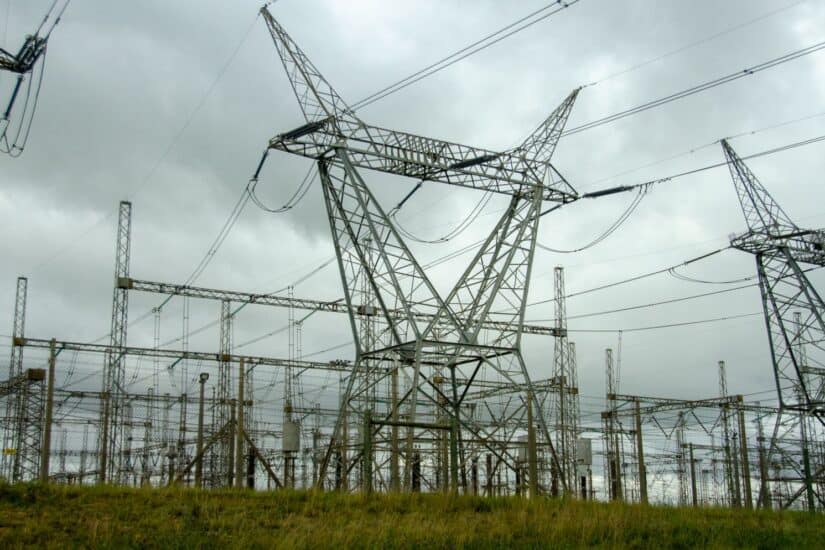
South Africa’s economy is growing, but it isn’t delivering any meaningful change. Picture: iStock


South Africa’s latest unemployment figures have once again exposed the gap between economic growth on paper and meaningful growth on the ground. While the economy has shown signs of recovery, that growth has not been strong enough to translate into the jobs South Africans desperately need.
Statistics South Africa’s latest Quarterly Labour Force Survey showed that the official unemployment rate climbed to 33.6% in the second quarter of 2026, from 32.7% in the first quarter, with the number of unemployed people rising by 345 000 to 8.5 million. At the same time, employment fell by 16 000 to 16.7 million.
The figures raise a bigger question about the quality and sustainability of South Africa’s economic growth: can reforms in electricity and logistics finally unlock the stronger growth needed to create jobs? This topic will be explored in depth at the upcoming Africa Summit in London on 21 and 22 October 2026.
Electricity and logistics reforms needed
The country has made progress in stabilising its electricity supply and opening parts of the energy and freight sectors to greater private-sector participation, but the latest labour-market data suggest that the benefits have yet to translate into meaningful employment gains.
For an economy where almost half of the broader labour force remains underutilised, the challenge is no longer simply getting GDP to grow – it is creating an environment where businesses can produce, invest, export, and expand fast enough to absorb new entrants into the labour market.
The CEO of Business Leadership of South Africa (BLSA), Busisiwe Mavuso, believes the unbundling of Eskom is one measure that will help grow the country’s economy. But many have criticised the unbundling, including major labour trade unions and internal leadership concerned about financial stability.
Resistance against Eskom unbundling
“The causes are not mysterious – from logistics to the energy system, investors are waiting for implementation to begin investing,” said Mavuso in her weekly newsletter. She was commenting on the unemployment statistics.
She said no single issue is blocking economic growth; rather, the country needs “to demonstrate a national commitment to implement the reforms that will drive growth”.
“Instead, there are too many signs of a lack of urgency and commitment to follow through. The Eskom board’s resistance to the unbundling of transmission assets into an independent system operator (ITSO) is one of the clearest examples.”
Eskom’s unbundling is an ongoing restructuring process to split the state power utility into three separate entities: Generation, Transmission, and Distribution. Initiated in 2019, the reform aims to open the energy market, attract private investment, and improve grid efficiency.
Is the board to be blamed?
Mavuso has blamed Eskom’s board for delaying the unbundling process, noting that people with money are ready to have the talk.
“I have consistently acknowledged that this restructuring involves real complexity – principally the position of Eskom’s lenders, who have billions of rand committed to the utility.
“Obviously, the transmission assets are currently on the balance sheet of the utility to which they have lent those billions. They will not want the utility’s creditworthiness compromised through the unbundling. That is perfectly understandable, and respect for the rights of lenders and other investors is paramount.
“But the bankers and lenders I speak to are clear that they are open to the conversation. It just needs to start. The Eskom board is not starting it. That is the problem.”
The delay is blocking job creation
Mavuso added that the delays in finalising the process are blocking investment and job creation.
“Eskom’s lenders are not against reform – most of them are strongly invested in seeing South Africa grow. What undermines their confidence is not the reform itself but the absence of credible implementation,” she said.
Mavuso does not have confidence that the current Eskom leadership is committed to the success of these reforms, citing all she sees is “a board that talks of solutions rather than obstacles, that is actively engaged with lenders to chart a clear pathway, and that approaches the complexity with the conviction that the outcome – a competitive electricity market with reliable, affordable power – is worth the effort.”
The National Union of Mineworkers (NUM) resolved to take legal action against the state and President Cyril Ramaphosa to halt the restructuring and unbundling of Eskom, claiming this will “kill Eskom”.
“That claim does not hold up,” said Mavuso. “Eskom’s lenders would never permit an outcome that destroys the utility’s viability – their own exposure makes that impossible.”
Threat to Eskom
Throwing her full support at the unbundling of the power utility, Mavuso said the only threat would be not unbundling Eskom. “[The threat] is the R114 billion in municipal arrears that continues to grow. Fixing that must be central to the restructuring process.”
“NUM’s energy would be better directed at the municipal debt crisis than opposing the reforms designed to fix it. Business has worked closely with Eskom to support its operational recovery and will continue to do so. Our commitment to Eskom’s long-term sustainability is not in question.”
She said many people have forgotten that South Africa was once a country that delivered on its promises. “The result was 5% annual economic growth, an investment-grade credit rating, and an unemployment rate far lower than today’s.”
“We lost our way after 2008, particularly through the [Jacob] Zuma years. We have been too slow to get back on our feet. The reforms that will restore that trajectory are agreed, mapped, and in progress.
“We have the potential to trigger substantial new industries that would create many jobs, such as renewable energy, which holds huge promise, but we risk fundamentally undermining investor confidence by not following through on already agreed-upon policy.”
What does SA need?
A panel discussion at Africa Summit, under the theme South Africa’s green shoots – turning reform into lasting growth, will discuss whether electricity and logistics reforms can unlock SA growth.
The panel will feature Mavuso, Ninety One CEO Hendrik du Toit, Deputy Finance Minister David Masondo and Bank of America chief economist for Africa Tatonga Rusike.
Financial Times Foreign Editor Alec Russell, who will be moderating the discussion, said: “For years the debate was whether South Africa could reform. Increasingly, the question is whether those reforms are sufficiently embedded to unlock investment and deliver lasting growth. That’s a conversation with implications well beyond South Africa, which is why it deserves serious scrutiny.”