Despite its return to profitability, the power utility is facing smothering debt and governance problems.
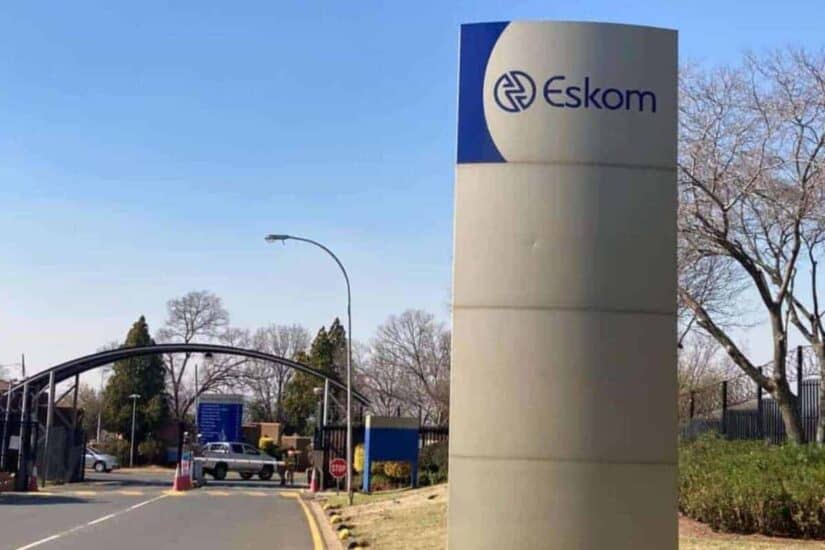
Picture: Devina Haripersad/The Citizen News


Is Eskom’s financial situation finally turning around after years of multi-billion-rand losses and reliance on taxpayer-funded bailouts for survival?
The utility was praised this week for maintaining profitability, after declaring a profit after tax of R30.3 billion in the year to end March 2026, its second consecutive year of being in the black (R14 billion in 2025).
Its latest annual report reveals that Eskom is still an entity in financial trouble, burdened by debt on multiple fronts, and facing governance problems.
Its future is also uncertain as its more than 100-year monopoly is ending because more households and businesses can now generate electricity. This has adverse consequences for Eskom since it generates revenue from electricity sales, and the current 6.2% decline in sales impacts revenue.
Eskom’s profitability is not a reflection of the business becoming better, but due to a series of events (some once-off) that have worked in its favour.
Helping shore up profits was an increase of nearly 13% in electricity tariffs and no longer needing to spend billions on diesel to power its open-cycle gas turbines that stave off higher load shedding stages.
Despite this rosy picture, Eskom is still broken in many areas.
Debt
Eskom is facing smothering debt and interest costs.
By March, its debt stock stood at R356.2 billion, dwarfing its revenue of R354.7 billion. So smothering is this debt load that any free cash Eskom has immediately goes into servicing debt and interest payments.
For instance, Eskom had free cash amounting to R124.9 billion (propped up by the transfer of a R80 billion government bailout). Of this amount, R38 billion went into paying a domestic bond that came up for maturity, and more than R40 billion was earmarked for further debt repayments and coal decommissioning activities as it moves to reduce emissions.
While Eskom is stable enough to survive the next year and pay its immediate debts, its financial position is uncertain in the long term.
Encouragingly, outgoing Eskom CFO Calib Cassim said the debt position is set to reach “a more sustainable level” of around R300 billion over the next five years.
This would free Eskom from government bailouts and help it raise capital independently from external investors.
Eskom has not tapped debt capital markets for three years because it was viewed as being at risk of defaulting on debt repayments. It now plans to return to domestic debt capital markets from 2028, aiming to raise up to R25 billion a year to fund its infrastructure expansion.
Municipalities
Another pressure point for Eskom is the battle to recover electricity payments from municipalities, which now owe R119.9 billion.
So serious is the municipal debt matter that Eskom board chair Mteto Nyati describes it as now being “the single greatest threat to Eskom’s financial sustainability”.
Cassim was more blunt: “We cannot be a bank to municipalities.”
National Treasury and Eskom have tried the soft approach with municipalities, offering to write off their debt over time, subject to certain conditions, including keeping up with current account payments. This failed.
Treasury has now embraced a tough approach; withholding government grants that municipalities depend on to run basic services.
By withholding this money, Treasury is forcing them to pay Eskom or lose their funding.
The tough approach seems to be working, with Eskom saying the City of Johannesburg fully settled its arrear debt of R5.3 billion in August 2026.
Speaking at the Money Summit on Tuesday, National Treasury Director-General Duncan Pieterse said there is appetite from Finance Minister Enoch Godongwana to be tough on other defaulting municipalities.
“Our responsibility is municipal financial management, and the minister has shown full willingness to deploy political capital to intervene where necessary,” he said.
Governance problems
Eskom’s external auditor, Deloitte & Touche, has also raised concerns about the power utility’s financial sustainability because of its reliance on government bailouts for survival, declining electricity sales and the arrear municipal debt.
These matters created a “material uncertainty relating to Eskom’s ability to continue as a going concern”.
The ‘going concern’ test is one that companies must pass to secure a clean bill of health from their auditors.
The auditors have also flagged weak internal and governance controls at Eskom, with the utility still struggling to comply with the Public Finance Management Act and flouting procurement rules resulting in irregular expenditure.
Eskom’s irregular expenditure incurred during the year amounted to R4.9 billion.
Of this, only R28 million related to new incidents (procurement of fuel and construction equipment), while the vast majority stemmed from existing multi-year contracts that will continue to attract the ‘irregular expenditure’ categorisation until they are resolved.
This article was republished from Moneyweb. Read the original here.