Ramokgopa expressed concerns about the coal emission levels.
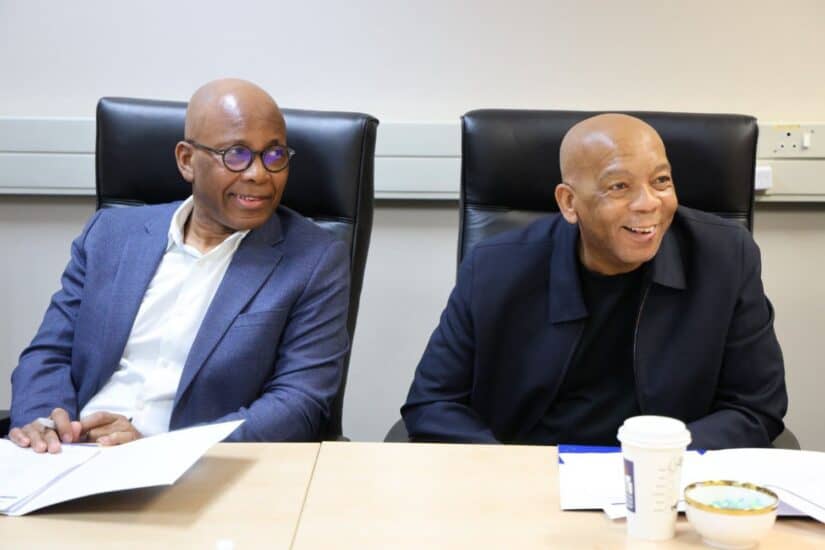
Minister of Electricity and Energy, Dr. Kgosientsho Ramokgopa, was today welcomed by innovators and scientists at the Eskom Research, Testing and Development (RT&D) Centre in Rosherville. Picture: Department of Electricity and Energy


Electricity and Energy Minister Dr Kgosientsho Ramokgopa says South Africa’s energy future will continue to depend heavily on coal, even as Eskom begins repurposing ageing coal‑fired power stations for renewable‑energy generation.
Ramokgopa paid a site visit to the Eskom Research, Testing and Development Centre in Germiston on Wednesday, 2 September 2026, to scout technologies that can slash harmful emissions from current coal operations.
Ramokgopa expressed concerns about the coal emission levels
“What is more important was for us to come and experience firsthand the issues around how we’re going to bring down the emissions level at our existing power stations. That is one of the major issues that is confronting Eskom: a requirement to meet the minimum emission standards, and the Department of Fisheries, Forestry and Environment has issued those regulations, and we’ve got every intention of being compliant.
“As I’ve always made a point before, we don’t have a coal problem; we have an emissions problem. Other jurisdictions, like China and Japan, are far advanced with this technology,” Ramokgopa said.
Clean energy
The visit highlighted progress in clean‑coal technologies, green hydrogen and advanced energy systems designed to strengthen operational performance, improve energy security and support a responsible long‑term transition.
Eskom spokesperson Daphne Mokwena said the visit demonstrated how research is now directly supporting Eskom’s turnaround.
“Our RT&D facility is converting operational challenges into tested solutions that can be validated and deployed under South African conditions. This work is essential to improving efficiency, strengthening energy security and building long‑term capability,” she said.
Eskom financials
The engagement comes two days after Eskom released its FY2025/26 results under the theme “From Recovery to Structural Sustainability.”
Eskom reported a R30.3 billion profit after tax, R22.4 billion in savings through its CORE programme, and an improved Energy Availability Factor (EAF) of 65.16%. South Africa has now surpassed 470 consecutive days without load shedding, with EAF rising further to 67.87% in August 2026.
Mokwena said these gains provide a stronger platform for long‑term investment.
“Sustained operational improvements allow Eskom to modernise the electricity system and invest in technologies that support reliability, affordability and competitiveness,” she said.
Clean coal
During the visit, the Minister viewed pilot‑scale demonstrations, including co‑firing ammonia with coal and torrefied biomass with coal, as part of Eskom’s clean‑coal programme, aligned with the Integrated Resource Plan (IRP) 2025.
The programme includes Carbon Capture, Utilisation and Storage (CCUS), Direct Sorbent Injection, Flue Gas Desulphurisation, co‑firing and High‑Efficiency, Low‑Emission (HELE) technologies.
According to Eskom, about 45% of listed emissions‑reduction projects have been completed, with CCUS feasibility studies finalised in 2025 and engineering work underway for a demonstration plant at Kusile.
Pilot testing of torrefied biomass in 2025 showed reductions in carbon dioxide and sulphur dioxide at a 20% co‑firing ratio, with a full‑scale demonstration planned at Kriel by March 2027.
Direct Sorbent Injection trials are informing cost‑effective sulphur‑reduction options for selected stations.
Green hydrogen
Mokwena said Eskom is also advancing research in green hydrogen, long‑duration storage, Small Modular Reactors, Hybrid Renewable Energy Systems, high‑efficiency photovoltaics and battery storage.
“These programmes expand Eskom’s future technology options while supporting a cleaner, more flexible and resilient electricity system.”
Innovation
Mokwena added that innovation is now central to Eskom’s future.
“As the electricity market evolves, customers expect reliability, affordability and sustainability. RT&D helps Eskom identify technologies that are technically viable, commercially practical and suited to South African conditions before deployment at scale,” she said.
Mokwena said Eskom’s priority is to translate recovery into long‑term capability.
“Our focus is on embedding the skills, technologies and systems required to sustain performance and support economic growth. RT&D plays a critical role in converting innovation into operational value,” Mokwena said.