



Rare earth elements are now a major geopolitical issue.
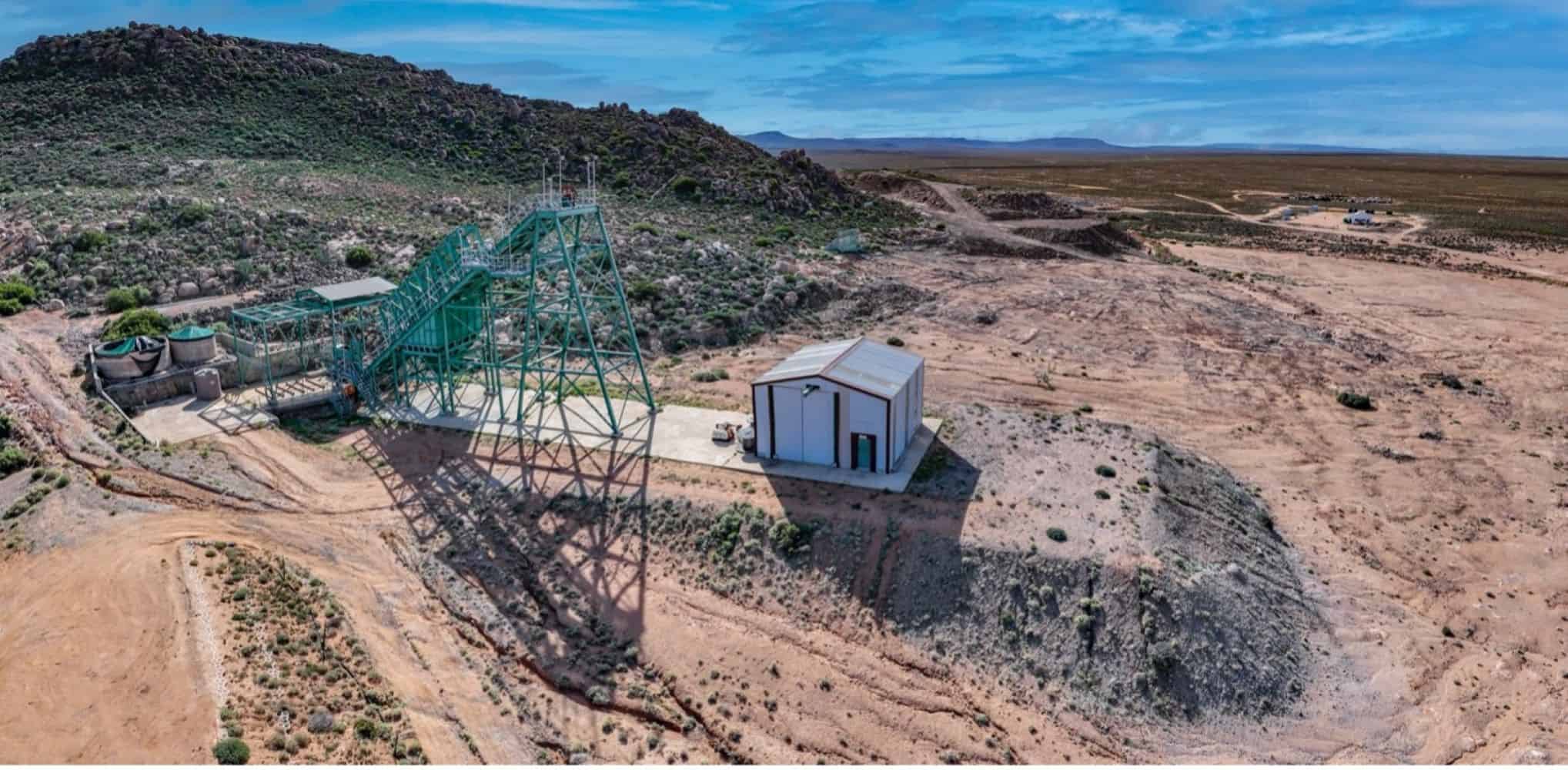
The Steenkampskraal mine north of Cape Town. Picture: Steenkampskraal mine website


With the volatile geopolitics in the world currently experiences, there is talk about access to rare earth elements as much as there is about who has access to the most oil reserves.
Why are these rare earth elements so important and does South Africa have any that could make it a target?
South Africa has two mines where rare earth elements are produced: Steenkampskraal Mozanite Mine, located 350km north of Cape Town and Rainbow Rare Earths in Phalaborwa. We asked Graham Soden, director, CEO and mine manager of Steenkampskraal, what makes these elements so rare if they are not particularly rare in the earth’s crust.
Soden says when rare earth elements were first discovered between the late 1700s and mid-1800s, they were found in unusual, “rare” minerals that were not common to miners and chemists of the time.
“These minerals, such as ytterbite, later renamed gadolinite, were chemically confusing and difficult to separate. Therefore, they were called “rare earths”, with the word “earths” referring to the old term for oxide minerals and “rare” used because the minerals were rare in commerce and discovery, not in actual abundance.”
ALSO READ: South Africa watches as Trump strikes Venezuela
Rare earth elements deposits are geologically rare
He points out that they are rarely found in economically viable concentrations. “Although elements, such as cerium and lanthanum are as abundant as copper or more, they are dispersed and not concentrated in ore-like deposits and chemically similar which means that they rarely separate naturally into rich pockets, making these deposits geologically rare.”
This raises the question that if they are not rare, why are they so valuable today? Soden points out that abundance does not mean accessibility, while these elements also occur in very low ore grades.
“Good deposits might only contain 3–15% monazite or bastnaesite and within that, only a few percent of the specific rare earth elements are desirable.
“This means large volumes of run of mine needs to be produced and very large intricate processing plants are required. Rare earths have nearly identical ionic sizes and very similar chemical behaviour.
“Separating them into individual oxides or metals requires solvent extraction circuits with hundreds to thousands of stages, strong acids and bases and tight environmental controls that makes rare earth element production capital-intensive and technically demanding.”
Some deposits also contain radioactive minerals. Soden says monazite, for example, contains thorium and uranium, which adds regulatory complexity, environmental permitting and special handling requirements. Steenkampskraal is an example where the thorium association is part of the challenge, he says.
ALSO READ: When the big kid hits harder in the sandbox
Who controls most of the rare earth elements?
However, Soden, says, even if rare earth elements are not geologically rare, China controls 60 to 70% of mining and 85 to 90% of refining, while processing knowledge, metallurgy and separation capacity are not widespread. Scarcity in processing capacity make these elements economically scarce.
Rare earths are essential in the production of electric vehicle motors, wind turbines, defence systems, electronics, catalysts and medical imaging. The magnet rare earths, neodymium (Nd), praseodymium (Pr), dysprosium (Dy) and terbium (Tb) are especially critical technologically and have few substitutes.
What makes the area of Steenkampskraal the right place to mine these rare earths? Soen says the area has some of the highest rare earth grades globally, far above most other deposits. The advantage at Steenkampskraal is that it has less rock that must be mined for the same output, a smaller footprint and with lower operating costs, more economical beneficiation.
“High grade is the single biggest reason the site is so attractive.”
Soden also points out that the rare earths at the Steenkampskraal mine occur mainly in monazite, which has several advantages, such as containing a high concentration of light rare earth elements, hosting valuable magnet rare earth elements, with grain size and liberated nature that suit beneficiation.
ALSO READ: SA economy expected to improve in 2025, but geopolitical risks remain
Why did rare earth elements become a political issue?
Soden says rare earth elements became a political issue because they sit at the intersection of geopolitics, national security, advanced technology and economic power.
“They are small in volume but strategically enormous in impact. They are essential for electric vehicles, wind turbines, smartphones, batteries, electronics, missiles, fighter jets, radar systems and medical imaging devices that makes them important for clean-energy transitions and military capability.
“Any disruption jeopardises everything from national defence to economic competitiveness.”
Soden says the fact that China controls so much of rare earths, creates a strategic dependency and countries worry that a single geopolitical actor can restrict exports, set prices, or leverage control for political concessions.
China has already imposed export quotas and restrictions at times, reinforcing fears of vulnerability.
He says countries now view rare earths as critical minerals because shortages would halt defence manufacturing, slow renewable energy deployment, weaken high-tech industries and potentially compromise military readiness.
Therefore, the governments of the US, EU, Japan, South Korea and Australia have elevated rare earths to national security priority lists.
ALSO READ: How manufacturers can transition to 100% renewable electricity
Energy transition also requires rare earth elements
The energy transition also intensifies competition as nations transition to renewable energy and electric mobility.
China’s dominance has therefore become a national security concern for other countries. Soden says even if countries build mines, they still face a lack of downstream processing capacity and long lead times with limited technical know-how.
China, on the other hand, has decades of metallurgical expertise, chemical engineering talent, established industrial ecosystems and domestic supply chains. Re-establishing this elsewhere is extremely difficult, Soden says.
He points out that rare earths face several economic challenges, such as low volumes but high importance, price volatility, demanding product specification, complex logistics and supply chain and a lack of substitutes for critical uses.
Other countries are trying to catch up, such as the US, Australia, Myanmar (Burma), Vietnam, Brazil, India, Russia and South Africa.
Steenkampskraal is at the upstream end of the global rare-earth supply chain, Soden says. “Its role is to produce high-grade monazite concentrate and in later phases, mixed rare-earth carbonate (MREC) and safely managed thorium/radium by-products with a distinct strategy to take the products all the way up the value curve to at least metalisation.
ALSO READ: SA closer to producing valuable rare earth minerals
Are rare earth elements expensive?
Are rare earths expensive compared to, for example, gold, platinum and coal? Soden says the prices vary widely by element, with common rare earths such as cerium selling for $5–$10/kg, medium ones like neodymium for $50–$100/kg and very rare or highly specialised ones like dysprosium costing $300–$500/kg.
Soden says most rare earths are much cheaper than precious metals but far more expensive than coal. Only certain heavy or specialised rare earths approach the price range of lower-tier precious metals.
“Some rare earths seem ‘expensive’ due to complex extraction, processing bottlenecks and strategic value.”
Support Local Journalism
Add The Citizen as a Preferred Source on Google and follow us on Google News to see more of our trusted reporting in Google News and Top Stories.

