
How to identify and report mining concerns around Ermelo
Years of local incidents show why understanding mining authorisations and compliance matters to communities around Ermelo.
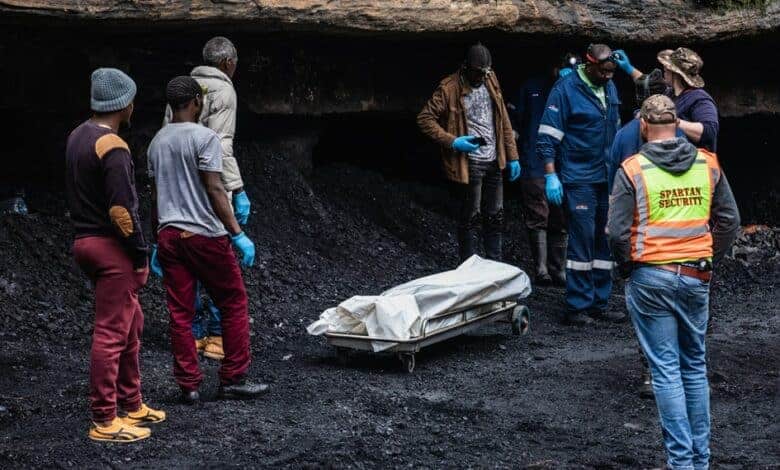
ERMELO – Illegal mining has affected the area for years, but not every mining-related contravention is the same.
Understanding what makes mining legal, what rules an authorised mine must still follow and how water and environmental laws fit into the picture can help residents recognise problems and ask the right questions.
Highvelder has repeatedly reported on illegal mining and the dangers associated with abandoned mining areas around Ermelo.
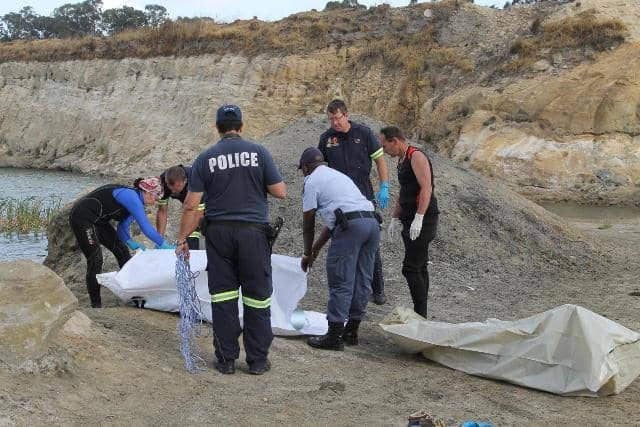
In 2016, an illegal miner died in a rockfall at the disused Mbabala coal mine near Klipbou, where illegal miners had been extracting coal.
Highvelder also reported in 2024 on illegal mining and unregulated mines around Ermelo.
That report included an October 13, 2022 operation in which 271 men were arrested for illegal mining in Ermelo.
Illegal mining is therefore a very real concern, but it is only one part of a much bigger mining and environmental picture.
What makes a mining operation legal?
A company or individual cannot simply find coal and begin removing it.
South Africa’s Mineral and Petroleum Resources Development Act (MPRDA) regulates the authority to prospect for and mine minerals.
Prospecting and mining are also not the same thing.
A prospecting right allows its holder to investigate an area for a mineral deposit.
This may involve activities such as drilling and sampling, but a prospecting right is not permission to commence ordinary mining operations.
Mining requires the appropriate mining authority, such as a mining right or, for qualifying smaller operations, a mining permit.
There is another important distinction: applying for one is not the same as receiving one.
Residents may, for example, see a public notice stating that an application for a mining right has been accepted or that an environmental assessment is under way.
That means an application is being processed. It does not by itself mean that the applicant has already been granted permission to start mining.
One mine, different laws
There is no single document that necessarily answers every question about a mining operation.
Three important pieces of legislation perform different functions:
MPRDA – Mining: Governs the authority to prospect for or mine minerals, including who may conduct these activities and where.
NEMA – Environment: Governs environmental authorisation and management, including how the potential environmental impacts of mining must be assessed and managed.
NWA – Water: Regulates water uses associated with mining, such as taking water, altering watercourses and certain activities involving mine-affected water or waste.
Put simply: one concerns mining, another the environment and another water.
A mine could hold a valid mining right while still facing questions about whether a particular environmental activity or water use is authorised or whether conditions attached to its approvals are being followed.
That does not automatically mean that the entire mine is an “illegal mine”. It may instead involve a specific alleged contravention that must be investigated.
Likewise, producing one authorisation does not necessarily answer every question about an operation.
What should an environmental authorisation tell us?
Mining can disturb land, vegetation, groundwater, wetlands and other environmental features.
Environmental assessment therefore forms an important part of the process before relevant activities are authorised.
Residents may have seen newspaper notices inviting the public to comment on proposed mines or expansions.
These notices can form part of a public participation process while an application is still being assessed.
During the environmental process, potential impacts must be identified and assessed.
Depending on the project, specialist investigations may examine issues such as groundwater, surface water, wetlands, biodiversity, soils or other environmental impacts.
This is also why public participation matters.
Residents and landowners may know about boreholes, wetlands, drainage areas or other local conditions that need to be considered during the assessment.
An environmental authorisation may ultimately impose conditions on what activities can take place and where.
Obtaining that authorisation therefore does not give a mine unlimited freedom to operate wherever, or however it wishes.
What about wetlands?
Wetlands are particularly important because they are often misunderstood.
A wetland does not necessarily resemble a permanently waterlogged marsh.
Some wetlands may only be visibly wet during certain periods, and specialists use factors including soils, vegetation and hydrological conditions to determine their boundaries.
Wetlands can also perform important functions in a catchment, including slowing and storing water, trapping sediment and supporting ecosystems.
Mining activity near a wetland therefore deserves scrutiny, but simply saying that a mine is “close to a wetland” does not by itself establish that the law has been broken.
The first questions are whether the area has been identified and delineated as a wetland, what activity is taking place, what environmental conditions apply and whether that activity involves a regulated water use.
Residents may sometimes hear claims that mining is automatically prohibited within 500m of a wetland.
That is an oversimplification.
The 500m measurement can be relevant to the regulated area used for certain watercourse-related activities under water law, but it should not simply be interpreted as a universal 500m no-mining zone.
The activity taking place and the authorisation applying to it still matter.
A WUL is not a blank cheque
Water use is another area where terminology can confuse.
The National Water Act identifies several regulated water uses.
These can include taking water from a water resource, altering a watercourse, discharging water containing waste into a water resource, disposing of waste in a manner that may detrimentally affect a water resource, and removing underground water where this is necessary for an activity such as mining.
A Water Use Licence (WUL) can authorise specified water uses subject to conditions.
But having a WUL does not mean that every conceivable water activity conducted by an operation is automatically authorised.
The particular activity, water source, authorised quantities and conditions matter.
There is another complication: not every lawful water use necessarily operates under an individual WUL.
Depending on the circumstances, the NWA also recognises water use under mechanisms such as General Authorisations and Existing Lawful Use.
An Existing Lawful Use generally relates to qualifying water use that lawfully occurred before the current NWA system came into operation and was allowed to continue under the Act.
For this reason, “they don’t have a WUL” is not enough on its own to establish unlawful water use.
The better question is: under what authority is this particular water use taking place?
What if water changes colour?
Residents are often the first to notice something unusual in a stream, wetland or dam.
Discoloured water, sediment, unusual runoff or water apparently leaving a mining area can all provide legitimate reasons for concern and investigation.
They do not, however, identify the pollutant or its source on their own.
Mining can affect water in several ways. Disturbed areas can produce sediment-laden runoff, groundwater can interact with mining excavations, and exposed rock can change water chemistry.
Certain geological conditions can also contribute to acid mine drainage, which occurs when sulphide-bearing rock is exposed to water and oxygen and chemical reactions produce acidic drainage.
Mine-affected water is not always acidic, however, and the appearance of water alone cannot establish its chemical composition.
Water testing can examine characteristics such as pH, dissolved salts and sulphate, as well as metals where relevant.
Where pollution is suspected, another important question is how it could travel from a possible source to the affected stream, wetland, borehole or dam.
More than one pollution source may also exist in the same catchment.
This means a photograph of unusual water can be important evidence that something needs investigation, but laboratory results, monitoring information and investigation may be required before its cause can responsibly be stated as fact.
Clean water and dirty water should be managed differently
Water management is particularly important at mines.
Rain falling on undisturbed land is not necessarily the same as water that has moved through disturbed mining areas, stockpiles, pits or other areas where it may collect sediment or contaminants.
Mining water-management systems are intended to prevent clean water from unnecessarily becoming contaminated and to collect and manage mine-affected water appropriately.
This can involve diversion systems and facilities designed to contain dirty water.
Heavy rainfall can therefore be particularly relevant when residents report mine-related water concerns.
If unusual runoff appears after storms, useful information includes where the water appears to originate, where it travels and which water resource it eventually reaches.
What about abandoned mines?
The problems do not necessarily disappear when mining stops.
Highvelder has previously reported on illegal miners returning to old mining areas around Ermelo to extract remaining coal.
A mine that has stopped producing is also not necessarily a mine for which the formal closure process has been completed.
Under the MPRDA, closure involves a formal process and environmental responsibilities do not simply disappear because machinery has left the site.
Rehabilitation can include reshaping disturbed land, stabilising affected areas, replacing soil, establishing vegetation and managing environmental and water-related impacts. Even though there has been instances the Highvelder has reported on previously where this does not happen.
A closure certificate is therefore an important distinction when considering an old mine.
There is another important question at abandoned or inactive sites: who is actually doing the mining?
The fact that a mining right historically existed over a property does not automatically authorise an unrelated person or company to move onto the land and extract the remaining coal.
When activity resumes at an apparently inactive mine, the identity of the company or people actually extracting the mineral matters.
What should residents look for?
Residents do not need to become environmental lawyers before reporting a concern.
A report can begin with something as simple as unexplained excavation, trucks removing coal from a site believed to be inactive, water being pumped from a dam or stream, unusual runoff, changes to a wetland or activity apparently extending into an area where residents did not previously see mining.
The most useful starting information is what was actually observed.
Where it can be obtained safely and lawfully, residents can record the location, date and time, the mine or company name if known, what activity was taking place and photographs or videos from a public or otherwise lawful location.
Official correspondence, public notices or documents already obtained from government departments can also be useful.
Residents should distinguish between what they witnessed and what they have been told.
For example, “trucks were seen removing coal from the property” describes an observation. “The mine is illegal” is a conclusion that still needs to be established.
Both can be reported to Highvelder, but the distinction helps journalists determine what needs to be verified.
Keep sending Highvelder your concerns
Highvelder encourages residents to report suspected illegal mining, activity at abandoned or inactive mines, possible environmental contraventions, suspicious water abstraction and possible pollution.
You do not have to know whether the issue falls under the MPRDA, NEMA or the National Water Act before contacting the newspaper.
You also do not have to prove that an offence has occurred.
A credible observation, photograph, document or description may provide the starting point for further investigation.
Highvelder can then seek the relevant authorisations, approach regulators and operators for answers and establish what the available evidence shows.
Safety, however, comes first.
Nobody should trespass on mining property, enter abandoned workings, follow suspected illegal miners, confront operators or put themselves in danger to obtain photographs or information.
Illegal mining is real. Environmental and water-related non-compliance can also occur at authorised operations. Abandoned mines can create another set of problems.
Knowing the difference does not make any of these concerns less serious.
It helps communities, regulators and journalists establish exactly what is happening – and what questions need to be answered.
If you have information or a tip-off about suspected illegal mining, environmental concerns or possible mining non-compliance, contact Highvelder editor Wayne van der Walt on 076 474 9264.