
South Africa leapfrogged landlines in the 1990s, moving straight to mobile networks.
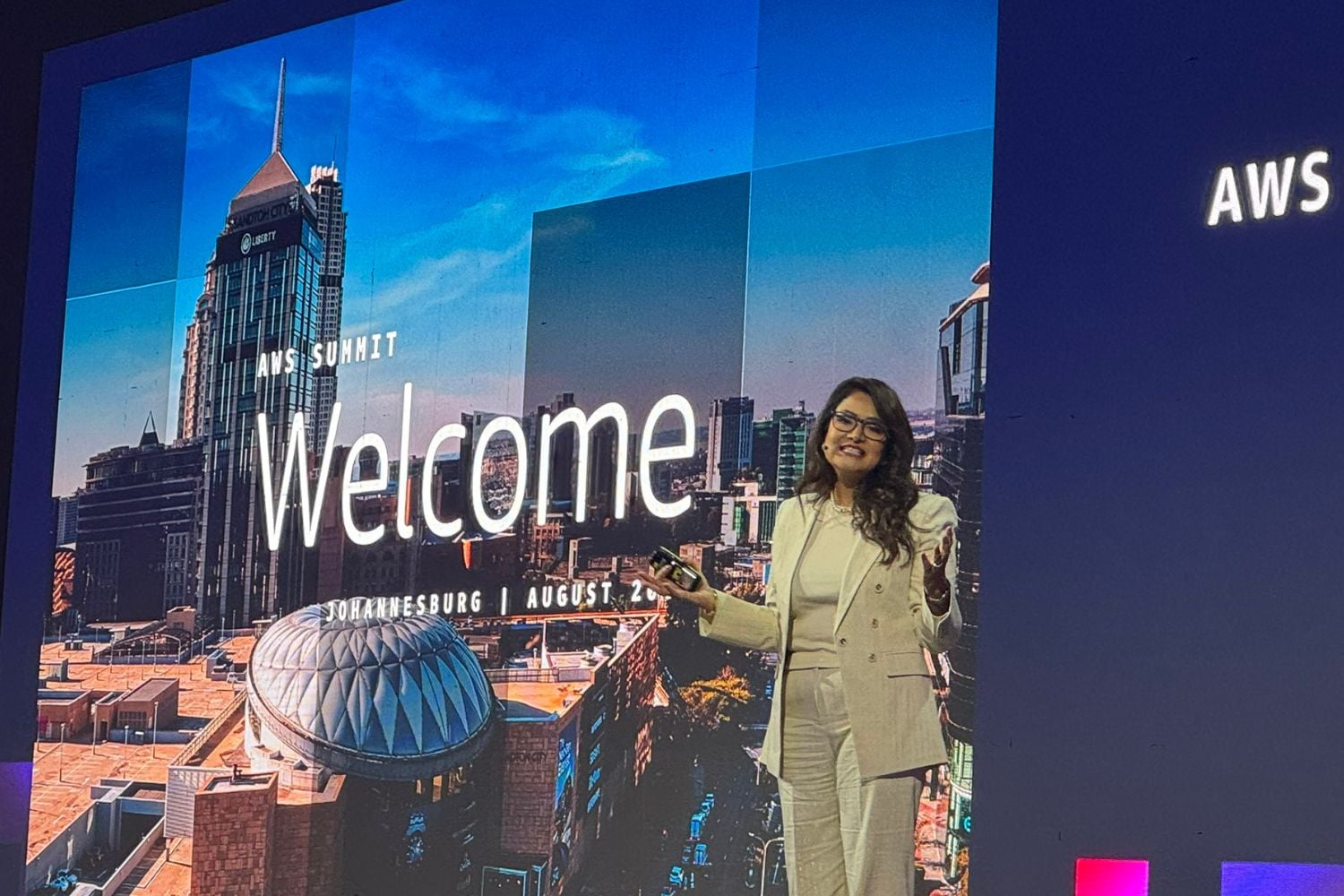
Africa’s developers are entering a new phase of technological leapfrogging says Jyoti Ball. Picture: The Citizen


Africa’s developers are entering a new phase of technological leapfrogging, with artificial intelligence set to drive growth and innovation across the continent.
Speaking at the Amazon Web Services (AWS) Sub‑Saharan Africa Summit at Gallagher Estate in Midrand on Wednesday, General Manager Jyoti Ball said Africa’s ability to skip traditional stages of development has given it a unique advantage.
Mobile revolution
“Has there ever been a more exciting time to be a developer? We are living at the epicentre of multiple, simultaneous golden ages – space travel, AI, robotics – each reinforcing the other,” Ball told delegates, echoing Jeff Bezos’s description of the current era as one defined by overlapping breakthroughs.
She pointed to the continent’s mobile revolution as a clear example of leapfrogging.
“In the early 1990s, South Africa had only four million mobile connections for a population of 40 million. Instead of waiting for landlines to expand, the country moved directly into mobile networks. Today, there are more than 115 million mobile connections for 65 million people – nearly two per person.”
Banking infrastructure
Ball added that Africa also bypassed traditional banking infrastructure, building mobile payment systems that now lead the world.
“The continent has more mobile money accounts than any other region, with one in five Africans relying on mobile money as their only financial account. In 2023 alone, mobile money platforms processed 92 billion transactions worth $1.4 trillion.”
Leapfrogging AI
She argued that the same leapfrogging is now happening with AI.
“Africa didn’t wait for landlines or bank branches. And now, it isn’t waiting to build AI the old way. Developers are already using language models in African languages, computer vision to detect crop diseases, and generative tools to build products faster than ever before.”
Examples include Jubilee Insurance, which built an AI‑powered claims agent in just 20 days, and startups applying AI to monitor millions of trees across multiple countries.
AI market
Ball noted that the AI market in Africa is projected to reach $16.5 billion by 2030, growing at 27% annually, with the IMF estimating it could add four percentage points to GDP if the right foundations are laid.
According to AWS, the company has invested $819 million in Africa since 2018, committed a further $1.5 billion, and trained one million people in cloud and AI skills.
“What excites me most is Africans not just consuming AI, but building their own AI. That’s the next leapfrog,” Ball said.
The summit underscored a broader message: Africa’s developers are not simply catching up, but are positioned to lead in shaping AI solutions for local and global challenges.