
If skies are clear, early risers will see the Moon gradually darken as Earth's shadow takes a dramatic bite out of its surface.
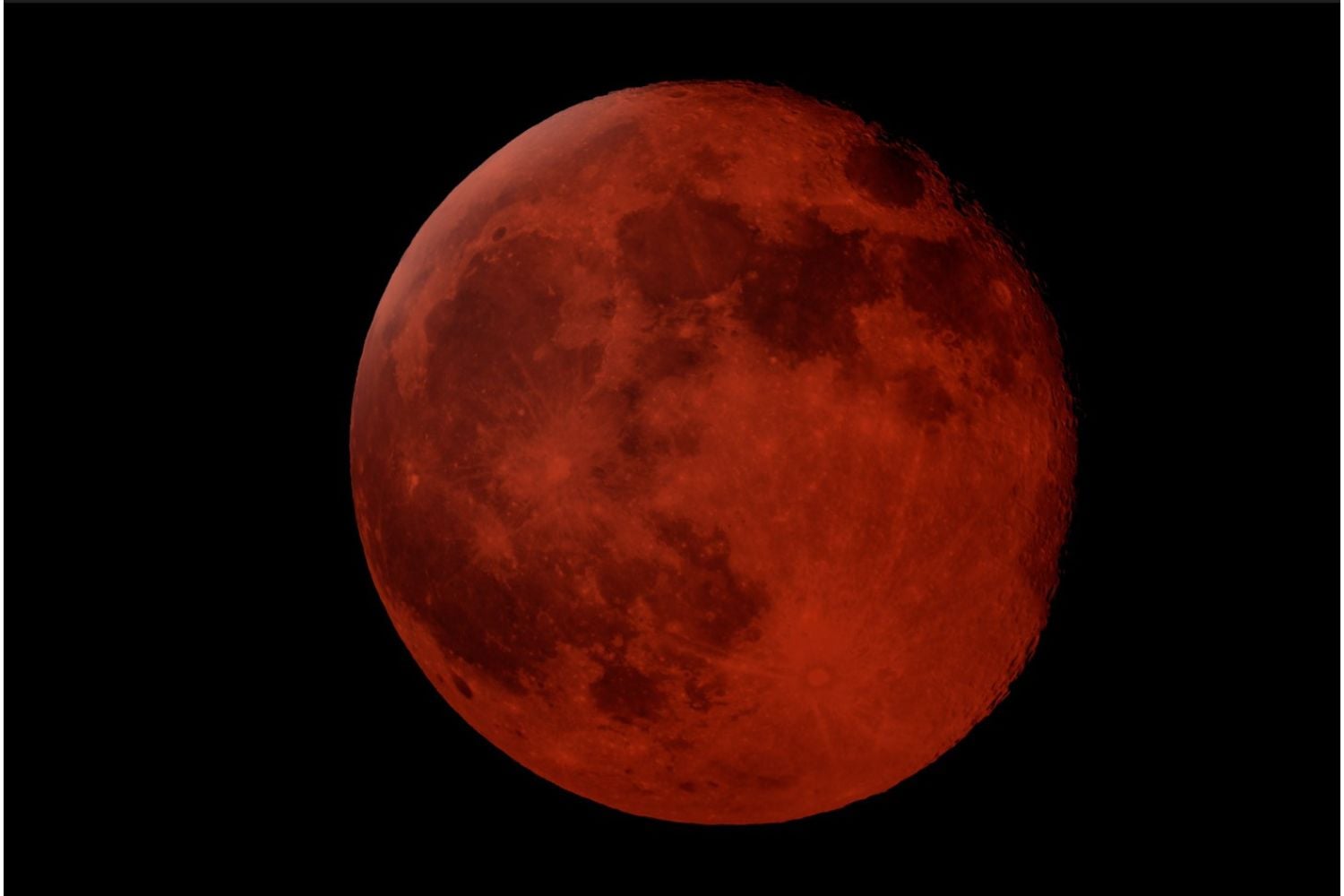
South Africans will wake early on Friday, 28 August 2026, to witness a rare celestial event. Photo: iStock


South Africans will wake early on Friday, 28 August 2026, to witness a rare celestial event: a partial lunar eclipse unfolding just before sunrise.
At its peak, almost the entire Moon will be swallowed by Earth’s shadow, glowing a deep coppery red low on the western horizon.
Spoiler
At 6:12am South Africa Standard Time (SAST), about 96% of the Moon’s disc will sit inside Earth’s darkest shadow, the umbra. Astronomers say the eclipse will be visible to the naked eye and does not require special equipment.
The penumbra is the part of Earth’s shadow where the Sun is only partially covered by Earth. The effect of the penumbra on the Moon’s appearance is subtle.
The only spoiler? Cloud cover. If skies are clear, early risers will see the Moon gradually darken as Earth’s shadow takes a dramatic bite out of its surface.
Weather
Weather forecasts indicate mainly clear skies across most of South Africa, providing favourable viewing conditions.
Because the eclipse is a slow-moving event spanning several hours, you will still likely catch excellent views even if there are patchy, passing clouds.
Lunar eclipses
Lunar eclipses occur when Earth moves directly between the Sun and the Moon. Unlike solar eclipses, which require protective eyewear, lunar eclipses are safe to watch and often last longer, giving sky‑watchers ample time to enjoy the show.
This eclipse is part of Saros series 138, a series of eclipses separated by 18 years. The last in the series occurred in 2008, and the next will take place in 2044.
Important key times for South Africa:
- 3.23am SAST – Earth’s faint outer shadow (penumbra) first touches the Moon. Too subtle to notice.
- 4.33am SAST – The real show begins. A dark bite cuts visibly across the lunar surface.
- 6.12am SAST – Maximum eclipse. Roughly 96% of the Moon sits inside Earth’s umbra, glowing a deep rusty red low on the western horizon.
- After 6.12am SAST – The Moon sets before the eclipse fully ends, so South Africans won’t see the final stages.
“Even a partial eclipse is a reminder of the vast mechanics of our solar system,” said one local astronomer. “It’s a chance to pause and look up.”
Sweet spot
For most of the country, the sweet spot to start watching is from around 4.30am.
Whether you’re a seasoned stargazer or simply curious, Friday morning offers a rare chance to see the Moon in a different light – provided the clouds don’t steal the spotlight.
Los Angeles’ famous Griffith Observatory will also host a livestream, which will begin at 10.25pm Eastern Daylight Time (EDT) on 27 August, which is 2.25am Greenwich Mean Time (GMT) on 28 August, providing live views – and public on-site viewing – as the Moon turns a deep crimson at the peak of the lunar eclipse.