
The finding raises profound questions about the species' biology, culture and possible sex‑specific burial practices.
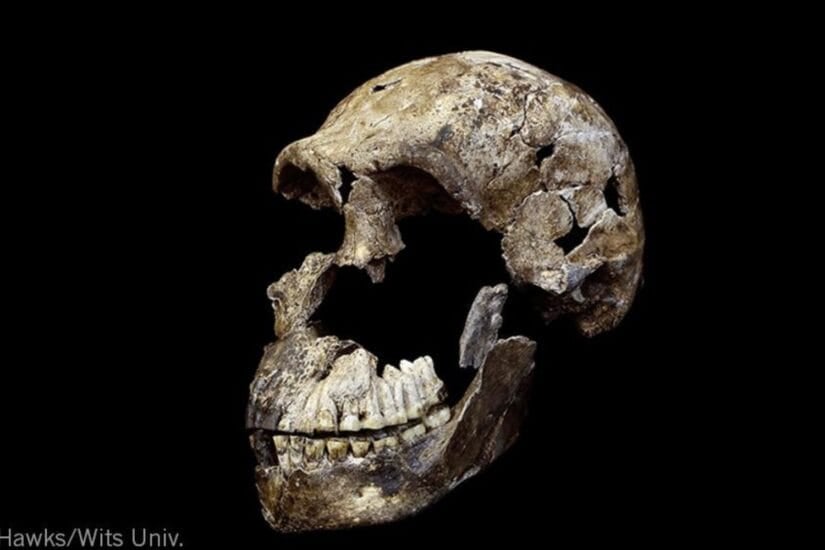
Scientists have extracted ancient protein fragments from Homo Naledi fossil teeth in South Africa’s Cradle of Humankind. Picture: Wits University Professor, John Hawks


In a world‑first breakthrough, scientists have extracted ancient protein fragments from Homo Naledi fossil teeth in South Africa’s Cradle of Humankind.
The breakthrough revealed that all 20 individuals tested were likely female, a finding that raises profound questions about the species’ biology, culture and possible sex‑specific burial practices long before Homo sapiens.
Research
The study, published in Cell on 24 June 2026, analysed 23 teeth representing at least 20 Homo Naledi individuals.
Researchers searched for Amelogenin‑Y, a protein coded on the male Y chromosome, but found none. The absence of this marker strongly suggests the remains belonged exclusively to females.
‘New doors’
Lead author Palesa Madupe, a South African‑born molecular scientist, said the results open new doors for paleoanthropology.
“Our study helps resolve the long‑standing mystery of why Homo Naledi lacked significant variation; it’s probably because they could have all belonged to one sex,” she explained.
“Protein analysis of Pleistocene hominins is not just possible; in some cases, it can be done in a minimally destructive way. This means potentially opening the door to a whole new way of sustainably investigating the differences between sexes in extinct hominins.”
Possibilities
The findings raise intriguing possibilities about mortuary practices.
National Geographic Explorer Lee Berger, who first described Homo Naledi in 2013, said the findings reveal sex bias in mortuary practice
“It appears that the most likely explanation for the observed absence of an Amelogenin‑Y marker is that we are seeing a sex‑bias in mortuary practice – a practice until now only observed in contemporary human cultures. The chance of having sampled twenty individuals and they are all from one sex, is quite literally one in a million.”
Homo Naledi
Homo Naledi, which lived between 335,000 and 241,000 years ago, is anatomically distinct from modern humans, with a brain size only slightly larger than that of a chimpanzee.
Yet evidence suggests the species engaged in behaviours once considered uniquely human, including the use of fire, symbolic engravings and intentional burials.
Discovery
Wits University Professor, John Hawks, a co‑author, said the discovery is unprecedented.
“These remains of Homo Naledi are older than any known Neanderthal or modern human burial site, and it’s remarkable to see that they may all be female,” he noted. “Naledi now gives us a huge opportunity to understand the biology of female hominins.”
New questions
Enrico Cappellini, professor of paleoproteomics at the University of Copenhagen, added that the findings raise new questions.
“Intriguingly, these results raise profound new questions, chief among them: if the H. Naledi individuals in the Rising Star cave system are all females, then where are the males?”
Human history
National Geographic’s Ian Miller said the discovery forces a rethink of human history.
Seeking to understand where we come from is truly core to the human experience. These new findings are amazing because they’re challenging us to rethink what we thought we knew about our place in human history.”
According to the findings, the discovery underscores how much remains unknown about human evolution.
By revealing a population that appears to consist entirely of females, the study forces scientists to reconsider assumptions about sex, culture and mortuary practices in early hominins.
It also highlights the potential of paleoproteomics to unlock secrets preserved in fossil enamel, offering new pathways to understand the deep history of human relatives.