Kruger’s Rhino Wars: What are we up against?
On March 31 this year, the number of rhino killed by poachers in the Kruger National Park (KNP) stood at 153. Among increasing pressure from the South African public about the allocation of funds for SANPark’s anti rhino poaching efforts and plans to protect these animals, Lowvelder will, through a series of articles, investigate the complexities of Kruger's rhino wars.
SKUKUZA – Kruger’s rhino horn has enriched international crime syndicates with an approximate USD 180m in 2013. Over 600 rhino were slaughtered last year for the ever-increasing demand in Asian markets, fuelling a relentless attack one what has become one of the country’s most valuable natural resources.
On March 31 this year, the number of rhino killed by poachers in the Kruger National Park (KNP) stood at 153. Among increasing pressure from the South African public about the allocation of funds for SANPark’s anti rhino poaching efforts and plans to protect these animals, Lowvelder will, through a series of articles, investigate the complexities of Kruger’s rhino wars
Know the enemy – profile of the modern-day rhino poacher
The poacher of today is continually evolving, always one step ahead of law enforcement and part of an organised-crime syndicate. Maggs says, “This is no different from dealing with the illegal trade in drugs, weapons or human trafficking.”
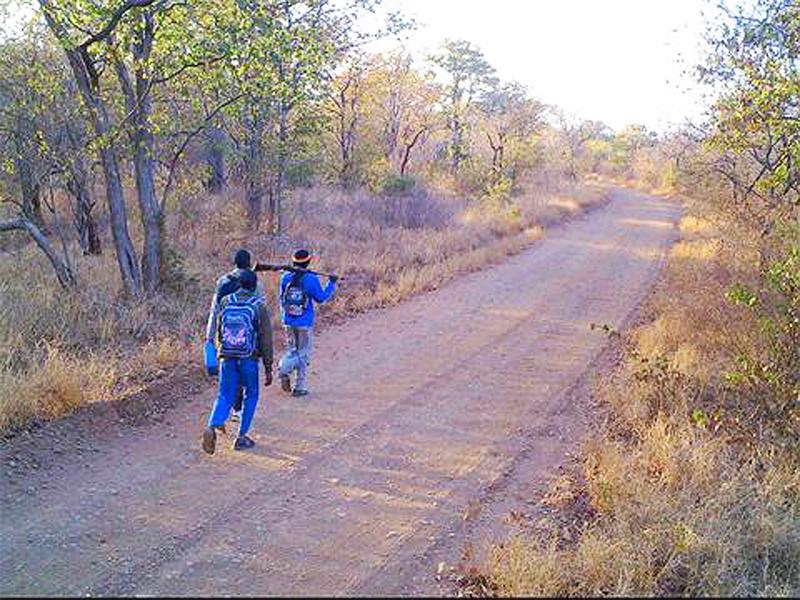
Highly disciplined and bush smart, rhino poachers travel in groups of two to five, spending either hours or days in the park, depending on how quickly they can find the requisite number of horns.
The cost of poaching is a firearm (often supplied by local coordinators) and an axe. An anti-poaching corps of 1 000 could soon be outnumbered.

Many local law enforcers allege that members of the Mozambican police and Guarda Frontiera are in cahoots with poaching syndicates.
“The Mozambique Government knows the names of several of the local receivers yet it does nothing,” an operator declared. Poachers have been found in Kruger carrying R15 000 to R20 000 in cash.
- Highly disciplined and bush smart, rhino poachers travel in groups of 2 -5, spending either hours or days in the park, depending on how quickly they can find the requisite number of horns.
- It is estimated that almost 80% of all rhino poachers hail from Mozambique.
- Intelligence shows that between five and 15 groups are active within the KNP at any given time
- Armed with heavy calibre rifles like .375 .458 as well as AK47 and handguns, these criminals are not afraid to shoot on sight.
- Silenced weapons are now the rule rather than the exception.
- A group is generally in and out within 3 hours, indicating that they could have an informer network on the SA side.
- Deep incursions are also prevalent, meaning they are dropped off by vehicle.
- They are adept at operating in the night time.
- Poachers will as easily shoot to kill (and rob) other poaching groups as they would rangers.
- Villagers in Mozambique view these poachers as Robin Hood figures, bringing rarely seen luxuries like Range Rovers to the communities.
- Poachers caught in Mozambique pay a fine after which they are released and their weapon/s returned.
The levels of criminal activity involved in rhino poaching
Rhino horn currently trades on the black market at almost USD 100 000per kg. The average weight of a horn is around three kilograms. In doing the calculation it becomes clear that the conflict surrounding rhino horn is a serious one, fought daily across several tiers of criminal involvement.

One of the men responsible for safeguarding the estimated R40 billions worth of horn in the field is Mr Ken Maggs of special operations at SANParks. Based in the KNP he is second in command to gen Johan Jooste, and leads a specially-trained rangers corps who engage in armed combat with a dangerous enemy on a daily basis. “We are facing a relentless insurgence into the country and the park on a daily basis,” said Maggs.
Field rangers who started their careers with the idea that they would be conducting conservation work, now face a life and death situation at all times, requiring a vigilance against the most dangerous creature this bush can yield – an armed man that will shoot you on sight.
Kruger is not your friend
The KNP is not your friend; this all rangers understand. “Kruger itself is a beast not easily overcome by man,” is how Maggs describes it. It is vast, covering 2 million hectares, making it larger than some countries. Trying to protect a large number of free ranging animals within this environment, complicates the task.

Knowing that they are up against a potentially endless flow of desperate poachers, is there a glimmer of hope in the fight to save Kruger’s rhino? See the next article in the series, explaining the role of local poaching coordinators and the frightening extent of the threat from the east.