Aircraft take fight against poaching to a new level
In the ongoing battle to safeguard these animals and to catch and prosecute those responsible for their death, a wide range technological solutions have been implemented - some with greater effect than others.
From the time you wake up in the morning until you retire to bed at night, on average two, maybe three, rhino are killed. Every day. Figures provided by Outraged South African Citizens Against Poaching (Oscap) show that 422 have been killed this year so far, and official departmental records indicate 419. In the ongoing battle to safeguard these animals and to catch and prosecute those responsible for their death, a wide range technological solutions have been implemented – some with greater effect than others. In a series of articles we will look at some of those employed by private rhino owners as well as in the Kruger National Park (KNP).
UAVs and other flying objects
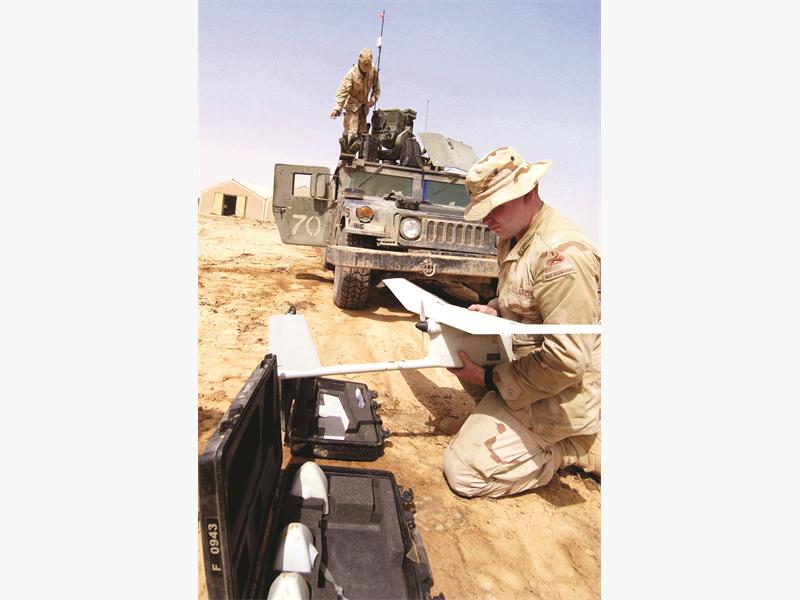
Unmanned arial vehicles (UAVs) in the form of drone helicopters or fixed-wing aircraft are remotely controlled and can feed real-time images and other data to a control point. They can be equipped with infrared and high-resolution video cameras.
How can they be used to combat rhino poaching?
• They can be rapidly deployed when an incident occurs to capture footage of the scene or of poachers.
• Infrared cameras are able to show people, animals and vehicles even in the dark of night using heat sensors, and are a superb surveillance tool.
• Helicopter drones can play loud noises to scare animals away, shine spotlights, release tear-gas grenades and deploy anti-poaching tools to assist rangers.

Where are these used locally?
SANParks embarked on a three-month test period of helicopter drones in the KNP in partnership with weapons manufacturer Denel. This recently came to a close with “inconclusive” evidence of the benefits to its counter-poaching efforts, spokesman Mr Isaac Phaahla said. In 2012 the Ichokowitz Foundation and Paramount donated a Seabird Seeker manned aircraft to the park. This two-seater is valuable in conducting aerial surveys covering vast tracts of the two million hectares that comprise the park. Described as a “high-tech, low-speed recon plane” its purpose is to help track poachers.
The anti-poaching Seeker is equipped with a quiet engine and sophisticated heat sensors for detecting animals and humans on the ground. This will aid pilots and spotters as they fly at high altitudes over South Africa’s flagship park which borders Mozambique. Most of the illicit rhino killings take place here.
Two Ultra-Light Bantam Air-craft patrol the Shengwedzi and Thsokwane areas.
Recent media reports about a Gazelle helicopter, donated by the same foundation in 2013, explained that this craft has not been deployed for anti-poaching in the KNP, because of tardiness on the part of the Department of Defence to properly licence it.
This craft, capable of reaching 310km/h and with a significant range would be a valuable weapon where poachers are being pursued in the veld. It is intended for rapid deployment of tracking teams to locate poachers and conduct night patrols using thermal imaging equipment. It can carry a three- member team plus canine.
The International Anti-Poaching Foundation (IAPF), which works in the Hoedspruit area, is convinced that there is a place for UAVs in conservation. Founder Mr Damien Mander has remarked on occasion, “Why could I have a UAV watching over me in Iraq, but elephant here cannot have the same privilege?” He says it can cover in a few hours what a ground team will cover in a week.

Hidden remote sensors
Rangers in the Congo are using hidden movement sensors to stop elephant poachers. These are radio-transmitting metal detectors alongside elephant trails.
How are they used to combat poaching?
When poachers carrying weapons pass a detector a radio signal is sent to a treetop antenna. Rangers immediately receive the coordinates on a satellite phone.
More precise and nimble than camera traps, the system can alert rangers to poachers before a crime takes place.
In the next articles, we will look at the use of science in counter- poaching as well as how canines are being used.
Read all our poaching- related news under War Against Poaching.