The teeth of rhino poaching
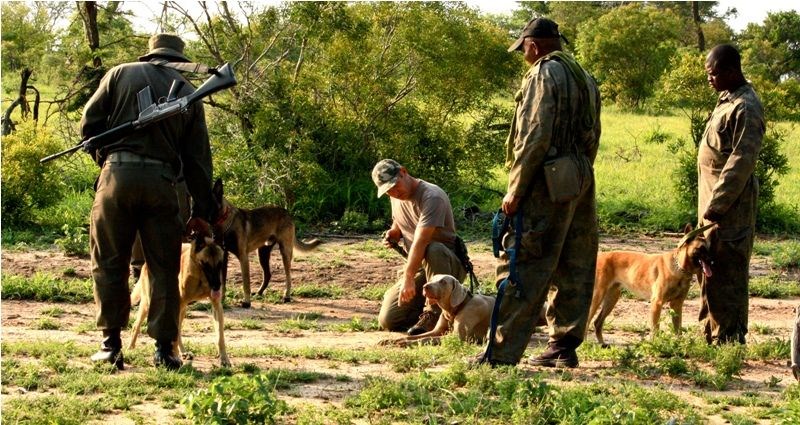
Trained dogs are being used by private game reserves as well as in the Kruger National Park (KNP) to track down poachers, firearms and injured animals.
Another 20 rhino were killed this past week, according to the NGO, Outraged Citizens Against Poaching (Oscap). This brings the statistics to 442 for the year. The most recent figures released by the Department of Environmental Affairs were 419 as of May 21.
In this second article in a series about the use of technology to combat the rampant poaching of our wildlife, Lowvelder takes a closer look at the use of trained canines in the war against poaching.
See another report about the use of unmanned arial vehicles and helicopters here.
What are K9 units?
Trained dogs are used by private game reserves as well as in the Kruger National Park (KNP) to track down poachers, firearms and injured animals.
Their superior sense of smell makes them ideal for human scent tracking, detection of ammunition and locating carcasses. Their other characteristics also make them useful for protection of field rangers.
The most critical benefits that K9 units offer in terms of anti-poaching in the KNP, says Mr Isaac Phaahla, spokesman for SANParks, is that sniffer dogs can easily detect any organic material, like a rhino horn. They have also been successful in finding hidden firearms – some poachers create special hidden compartments in their vehicles to store rifles and ammunition.
Furthermore, the dogs cut down the time it takes for the park’s special-projects team to locate suspects, not only due to their remarkable senses, but also their mobility in difficult terrain.
According to Mr Conraad de Rosner, director of K9 Conservation, a private provider of conservation services, poachers are well aware of the canines’ presence and often avoid areas where they are known to be deployed.
“We have found chilli pepper powder and other substances on suspects,” he says. These are, however, not a deterrent for well-trained patrol dogs.
It takes time, De Rosner explains, to train them to a level where they are effective in tracking down armed and dangerous poachers. A dog is trained daily by one handler.
They accompany their handlers on daily patrols and remain at one another’s side 24/7. When an incident occurs, the dog’s main function is to indicate the direction and movement of the suspects while protecting the field ranger.
“The more, the better,” De Rosner says regarding the ideal number to effectively protect an area. The preferred breeds for the job are the Belgian Malinois for tracking and apprehension of humans, and the Weimeraner for locating wounded rhino.
Canine units have also been deployed and stationed in five areas in the KNP since 2012. There are plans to expand on the unit inside the park, with a part of a donation of more than R200 million recently by the Howard Buffett Foundation earmarked to establish so-called elite canine units. Sniffer dogs will also be deployed at all the entry points to the KNP.
Succesful arrests
There have been 53 arrests in the park in 2014 for rhino-poaching related crimes. In 2013, the total number stood at 133. From 2010 to 2012, 222 arrests were made in the KNP.
Phaahla says, “The units have made a great difference, the number of successful arrests have largely been due to them.”
Challenges in K9 deployment
Due to the time and energy required to train these dogs, they are an expensive acquisition, upwards of R60 000 each. Veterinary bills and food add to the expenses. Both De Rosner’s units as well those in the KNP benefit from Hills science plan, ensuring that they are in top condition, he says.
Costs to maintain effective unit in the park amount to nearly R1 million per annum, which include kennels, the handlers and uniforms.
Finding suitable candidates that are not afraid of gunshots or helicopters, as well as finding fully qualified handlers, are the biggest challenges the KNP faces in terms of counter-poaching deployment.
Read more about the war against poaching here.