Sappi Ngodwana Mill’s specialised cellulose expansion bodes well for future growth
Sappi Southern Africa, an integrated forest-products company, meets the needs of local and international customers through a wide range of offerings, such as specialised cellulose, paper and paper packaging, as well as wood-fibre needs.
MBOMBELA – It takes 20 years for a tree to be ready for harvesting, but only two and a half weeks to produce the paper you are currently holding in your hand.
Imagine a world without it – no books to snuggle up with in bed; no magazines or newspapers with views, trends, and features to read and share with friends; nothing to scribble your brilliant ideas or to practise your art on; no sheet music when playing piano and no packaging to protect valuable goods in transit. Not even toilet paper or kitchen wipes.
Sappi Southern Africa, an integrated forest-products company, meets the needs of local and international customers through a wide range of offerings, such as specialised cellulose, paper and paper packaging, as well as wood-fibre needs.
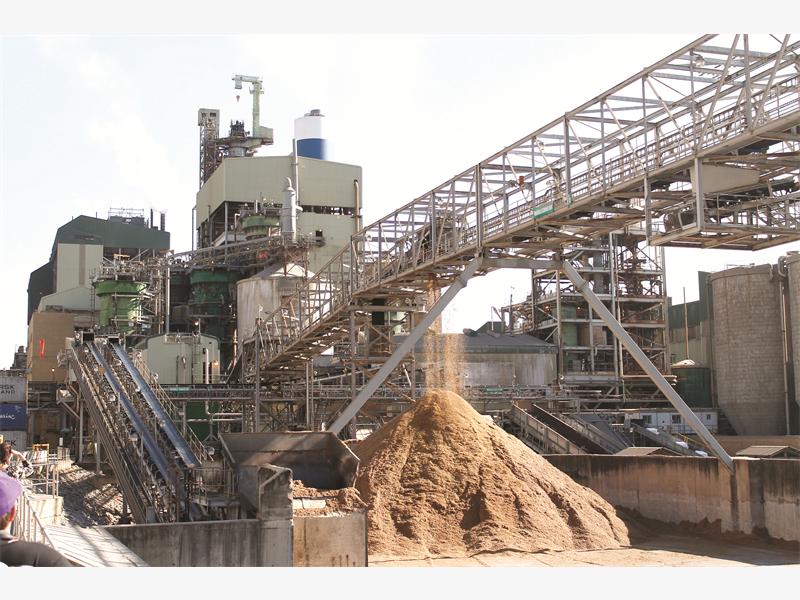
Sappi chose Ngodwana Mill, which was established in 1966, to further expand its specialised cellulose (dissolving wood pulp) production in South Africa, because of the mill’s close proximity to existing plantations and the availability of existing infrastructure.
Being situated close to an existing, responsibly managed fibre source, it contributes significantly to the mill being a low-cost producer of dissolving wood pulp. When it was established, it produced 217 tons of unbleached kraft pulp per day.
The successful upgrade to produce specialised cellulose, Ngodwana Mill in Mpumalanga marks an exciting phase of growth and development for the company, and the province.
Today, the mill’s total production (paper, paper pulp and specialised cellulose) amounts to 790 000 tons per year.
Sappi Ngodwana Mill Annually contributes R4,2 billion to the economy of the province, with more than 42 000 people depending on Sappi for their livelihood in the province.
On Wednesday June 18, the MEC for finance, economic development and tourism, Cllr Eric Kholwane and other dignitaries attended a ribbon-cutting ceremony at the mill to celebrate the completion of the partial conversion.
The expansion and modernisation of Ngodwana commenced in 2011 as part of Sappi’s strategy to invest in fast-growing, high-margin businesses that will offset the decline of coated paper consumption in mature markets.
Project GoCell, as it was known, converted a paper machine at the mill to produce
210 000 tons of specialised cellulose per year, in addition to its existing newsprint and liner-board (packaging paper) production.
Specialised cellulose is a sought-after natural, renewable fibre with a wide range of uses in the textiles, consumer goods, foodstuff and pharmaceutical industries.
The expansion has helped to increase Sappi’s total global production of this beneficiated wood fibre to 1,3 million tons per year, entrenching its position as the global leader in this market. Specialised cellulose is also produced at Sappi Saiccor Mill in KwaZulu-Natal and Cloquet Mill in North America.
As the world’s population grows, so does the demand for specialised cellulose. “Extensive research and interactions with our customers have convinced us that this is one of the best markets in which to invest for the future,” said Sappi Limited’s CEO,
Mr Ralph Boëttger.
The growing global demand for this raw material is approximately six per cent annually. The demand for viscose staple fibre (VSF), which is Sappi’s focus, is expected to grow by around eight per cent per year. Asia is the company’s biggest market, with projected figures indicating that the region’s burgeoning middle class will grow from a current 1,9 billion to about 2,7 billion by 2030 – accounting for 43 per cent of global consumption expenditure.
Locally, this venture is a vote of confidence in South Africa as a good place for manufacturers in which to invest for the future.
Sappi is the first multinational with manufacturing interests in the Lowveld region. As such, the expansion does not only reposition the company for sustained growth, but also strengthens economic development in the province.
Mr Alex Thiel, CEO of Sappi Southern Africa said, “As a long-term investment, the expanded operation will help generate more export revenue and boost the local economy by securing jobs in an area where unemployment is rife.”
A key desired outcome of the project was that, during the civil and construction phase, it should benefit the community through skills training and development.
This has been successfully achieved. Project GoCell’s community training initiatives were recognised in the BHP Billiton Achiever Awards competition (2012).
Sappi won first place in the categories Reskilling and Empowerment and Best Training Programme for Large Companies.
Another important benefit of the expansion has been the improvements made to the mill’s environmental footprint. The bleach plant has been replaced by a new process that is chemically more efficient and that will generate less effluent. In addition, Ngodwana Mill will burn 61 000 fewer tons of coal per year, which equates to 120 000 tons less carbon dioxide emissions.
Project GoCell was commissioned in the third quarter of 2013 and despite its magnitude, this expansion was a safe one. The team worked for more than four million continuous man-hours.
The project was completed without major injuries sustained among staff and contractors. This is in line with Sappi’s business objective of achieving a zero-injury target in its operations globally.
The Sappi Global Safety Awareness Day held on
June 12, is an annual initiative to keep the company’s zero-injury goal a major priority.