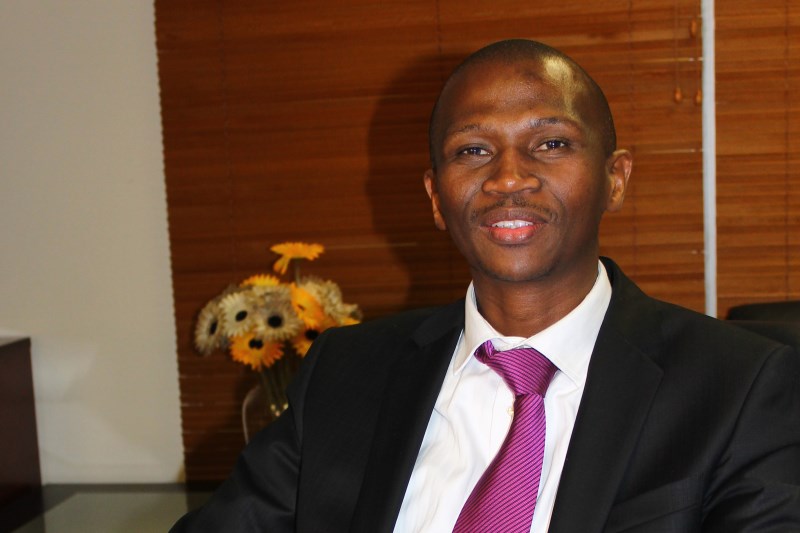
MBOMBELA – An educated, healthy and mobile nation is needed to move the country forward, and to achieve this, the help of the private sector is needed.
This was the message of the MEC for finance, Mr Eric Kholwane, during a financial-sector stakeholder breakfast at the Protea Hotel last week. The meeting was the first step in establishing more partnerships between businesses and government to build a sustainable financial sector in Mpumalanga.
Kholwane reiterated premier Mr David Mabuza’s message that the private sector’s resources were crucial to development. These included knowledge and money. The MEC said government could lay the foundation for development, but has limited finances.
“As treasury, our decisions have far-reaching consequences.” He illustrated this by attending an executive- committee meeting directly after the breakfast, to discuss the province’s adjustment budget to be tabled to legislature next week. “We need an alternative funding model, without which we would place our budget under more pressure.”
His suggestion to simplify registering on the government suppliers’ databases drew the loudest applause. A more efficient way, he said, would be to have one database, instead of a different one for each department and government entity.
“Our commitment to engage with each other must start in earnest,” he said.
The business people in attendance welcomed the opportunity. Mr Sipho Simelane of FNB said the business sector had been waiting for this opportunity and his bank has already taken steps to train municipal employees in finances. He also asked Kholwane to protect CFOs in municipalities because according to his knowledge, those who refused to become corrupt were often gotten rid of.

Mr Mpho Malaka of Pricewaterhouse-Coopers said government should also take note of changes in the country, such as people who were residing in townships and were building mansions. “Government must stop seeing all these people as indigent.”
Ms Helen Thrush, an auditor, agreed that a frank discussion was needed between government and business. She criticised high bank costs and a struggle to obtain credit as crippling to SMMEs, which played a crucial role in the economy.
She also said SARS were unnecessarily strict on them, given that 89 per cent of disputes with the authority were resolved in the taxpayers’ favour. “They should not hammer everyone across the board, but those who are breaking the rules.”

Mr Ronald Ncube agreed that these drivers of job creation could not be ignored. “Where they are lacking and where we can assist is in enterprise development. We have the capacity to grow skills. If we train locals, they will also stay here.”
He added that the private sector was not only good for imparting training, but that they could be brought on board of projects by government as early as developing the strategy.
Kholwane agreed that the service of cooperatives and SMMEs to the economy had been proven.

He concluded that no single person had all the wisdom. “We must coordinate all our available capabilities.”