Groundbreaking medical procedure is all in the wrist
Because the femoral artery has a more direct route to the heart, it has become the standard entry site for catheterisation procedures. However, the use of the radial artery has recently increased.
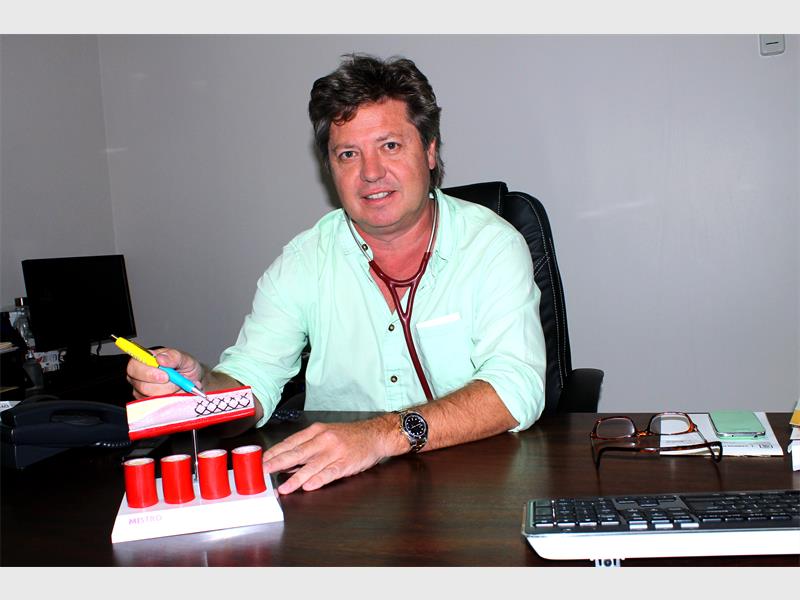
MBOMBELA – Hippocrates once said, “Wherever the art of medicine is loved, there is also a love of humanity”. The love of both was evident when Dr Fanie Fourie, a cardiologist recently became the first doctor in Mpumalanga to perform a life-changing interventional radial angiogram. During this procedure, a stent was placed in a patient via the wrist area through the radial artery towards the coronary arteries surrounding the heart. An angiogram is an X-ray test that uses a special dye (iodine) and a camera to take pictures of the blood flow in an artery or a vein. The iodine is used to ensure that the veins show up clearly on the X-rays.
During an angiogram, a thin tube called a catheter is placed into a blood vessel after a nurse has administered a medication through the vein for sedation. The catheter is then inserted into a specific area, normally the heart, to study the blood-flow and to determine the area that needs medical attention – problems that can be caused by bulges, narrowing or a blockage that affects the flow of blood.
The X-rays are then printed or displayed on a computer screen for further examination. The possibility of a stent may arise, or referral for a bypass surgery can then be done. It sounds like a painful experience, but according to Fourie, apart from the entry, it’s basically painless.
The first thought that normally comes to mind about an angiogram is that the procedure is done through a blood vessel in the groin area where it is traditionally done, but when it comes to the heart, there are in fact three kinds, namely femoral (through a blood vessel in the groin), brachial (elbow) and radial (wrist).
The latter is a fairly new, minimally invasive procedure which is also referred to as a radial artery catheterisation. This breakthrough holds major advantages regarding the patient’s mobility, bleeding and comfort level.
Because the radial artery is much smaller and located closer to the skin surface, internal bleeding is eliminated and any external bleeding can easily be compressed.
After the catheter is removed, a compression device is placed around the wrist to apply pressure on the artery, and there is no requirement for the patient to lie down for as long as would be required after a femoral angiogram. In general, patients find it much more comfortable as they able to sit up, walk, and eat immediately afterwards. This is a particular advantage for patients with back problems because there is no need for heavy pressure on the legs, or prolonged immobility.
Because the femoral artery has a more direct route to the heart, it has become the standard entry site for catheterisation procedures. However, the use of the radial artery has recently increased.
Unfortunately, not all patients qualify for this procedure. Before starting, the physician performing the procedure may test the blood supply to the hand. There are two arteries that supply blood to the hand (the radial and ulnar arteries), and if both are working, it is safe to proceed. If not, this procedure will not be carried out, to prevent complications. By the third day after the procedure, normal activity with the hand can be resumed.