Lecture to celebrate architect’s legacy
This year marks a half century since Eaton's death in a motor accident.
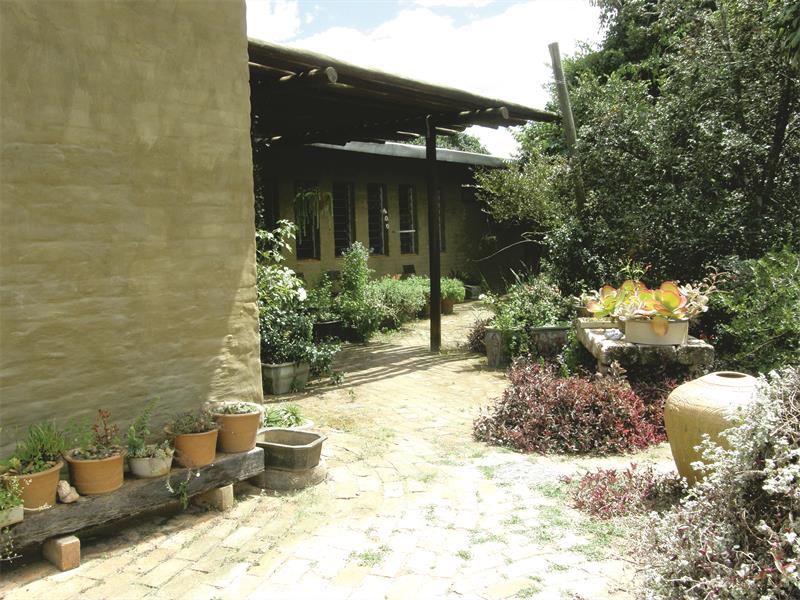
MBOMBELA – Though the province of Mpumalanga has a few important buildings listed, very few are representative of the major architects who over the past 15 decades have contributed significantly to the Southern African building industry.
Names that cross the mind are Herbert Baker, of whom there are only two buildings in the province. Other groundbreaking architects like Frank Fleming, Herman Kallenbach, Gerhard Moerdyk, Gordon Leith, Rex Martienssen, Gawie Fagan, to name a few, remain to be studied to conclude if their designs are represented here. Surely by utilising the valuable information gathered on the comprehensive online facility of information concerning the South African-built internment, www.artefacts.co.za, such an identification and listing can turn out to be quite an interesting project for anyone interested in local architecture.
A very important architect not mentioned above is Pretoria-born Norman Eaton. At least one structure designed by him can be found in the Lowveld. This is a house he designed for South Africa’s most famous ceramist, Esias Bosch, on the Plaston Road south of White River
This structure will form the basis of an architectural celebration to be brought to the Lowveld by the Mpumalanga Institute of Architects, with the Managers of Artefacts, coincidently a White River-based organisation.
This year marks a half century since Eaton’s death in a motor accident. Titled The Half-Centennial Norman Eaton Memorial Lecture, Saturday May 28 has been set aside to honour Eaton locally.
The full-day event includes a lecture by Marguerite Pienaar, The Norman Eaton Legacy: A Critical Architectural Appraisal of the Documentation of his Domestic Oeuvre, the screening of the documentary film, The Forgotten Legacy of Norman Eaton, the viewing of the Bosch residence, and will conclude with a buffet dinner at the Premier Hotel Winkler.
Pienaar, through her research and publication on Eaton, is regarded as the most knowledgeable of him and his work.
Eaton is best known for bank buildings and houses. Apart from a few early houses which were painted white, his houses were almost exclusively of brick. These form the major part of his work which is notable for the quality of workmanship and the development of an artistic vernacular in which certain African traditions were incorporated, particularly decorative features notable in the Great Zimbabwe ruins.
His work was fastidious and artful. After Eaton’s sudden death, Alexis Preller, among many at Eaton’s memorial service, observed that Eaton’s favourite words were, simple, delicate, sensitive, individual and the ever-recurring phrase, African quality.
Among Eaton’s best-known works are House Greenwood (1949-1950), the Netherlands Bank, Church St (1946-1953), and Polley’s Arcade (1959) in Pretoria and the Netherlands Bank Building (1961-1964) in Smith Street in Durban. He was responsible for the design of a number of Land Bank buildings, notably those in Potchefstroom (1940), Pietermaritzburg (1941-1943) and Kroonstad (1943-1944).
The cost to participate is R500 per person. Book no later than May 20. For more information visit Eaton for Africa.