“The South Africa of Nelson Mandela’s dream”
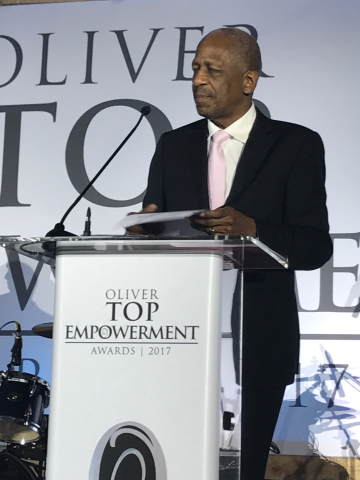
Dr Phosa speaks at the 16th Annual Top Empowerment Awards, which was held on the 30th of March 2017.
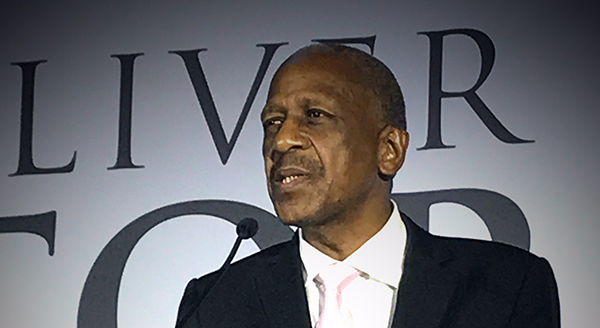
“I have decided to talk a little tonight about how I think our beloved former President and leader, Nelson Mandela, would have reacted to current developments in our country. I will also add some of my own thoughts to this discourse utilizing his wisdom as a backdrop and as guidance to my observations.
You can watch Dr Phosa’s speech on Periscope
Mr Mandela believed that there is value in every person and that all people have worth. He was the epitome of statesmanship – he was sincere and principled – he said what he believed and believed what he said. He had a strong moral compass and stood firmly on the bedrock of truth and integrity, he was a visionary and was able to see what was good for the people and more importantly, his fundamental philosophy was ‘to do what is best for my people’ and not just myself. Some current leaders clearly do not share that philosophy, such as the President who is desperately clinging to power-in luxury- whilst the people who we are supposed to serve suffer from and die from neglect. It seems that we have changed our motto from a better life for all to a better life for a selected and corrupt few.
However, coupled with these philosophies, was his innate ability to bring people together in the spirit of reconciliation, even friendship, and broad agreement about fundamental nation building matters. Madiba (as we fondly know him) was an iconic leader in his own lifetime and even after his death, his star in the global firmament continues to shine brighter.
Madiba is a South African hero and a global legend – and it therefore pains me intensely to see what has happened to his (and our) beautiful country; how our standing and status globally seems to decline. Our economy is weakened, with our reputation wounded as a result of the constant allegations of nepotism and corruption.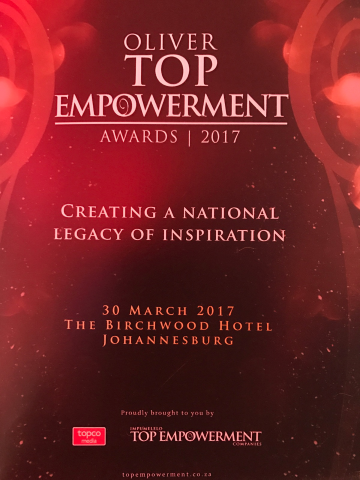
When the Constitutional Court sets the basis for a breach of oath of office, how would a real leader respond? How should the elected representatives of the people react – all of whom, I remind you, have been entrusted to uphold that which is right? I am forced to ask myself whether independence of thought and a quest for the truth is still a value we cherish or do members sit as puppets of populist leaders, subject to the vagaries and benefits of misguided resource allocation and afraid to anger the leader- for fear of being marginalized.
ALSO READ: Mathews Phosa for president?
Why, should we ask, do leaders get away with gross incompetence without any fear of losing their jobs. Why is it that we find ourselves in a system that it is, in fact our most competent cabinet Ministers and leaders who fear for their jobs? Certainly something fundamental has gone wrong when good men are silent about the evil that they see around them.
Madiba himself would tell you that he was not a saint (he said so himself many times) but he had a gigantic intellect, immense wisdom, and a pure vision that clearly set him apart from other ordinary men and women. There is no other way to say it than to state it plainly – his life was hard, tough, and difficult but those experiences made him even more of aviionary. So, in his deeper moments of introspection and contemplation, what did Madiba dream about? 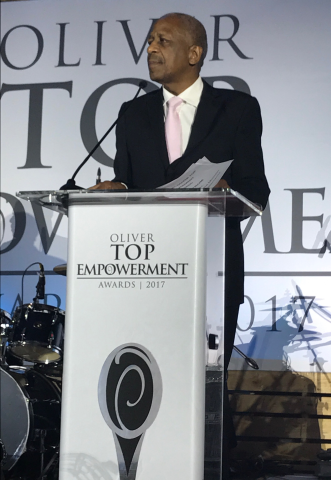
In his final speech before being sentenced in 1964 Madiba gave us a hint of his South African dream – paraphrasing, he said: The ideal of a free and democratic society in which all persons live together in harmony and with equal opportunities … is an ideal for which I am prepared to die.
ALSO READ: Country at one of the lowest points in its history says Mathews Phosa
These powerful words which will always be remembered, emphasise Madiba’s vision for and belief in an inclusive South Africa for all the people who live in it. And he pursued this dream – during his incarceration on Robben Island and after he was released. Adv George Bizos tells the story how after the final Constitution was drafted, Madiba specifically thanked the team for a Constitution ‘that is good for South Africa as a whole, and not just the ANC.’ Madiba, himself, is on record, stating unequivocally: “We [the ANC] are not anti-white but we are against white supremacy. We have condemned racialism no matter by whom it is professed”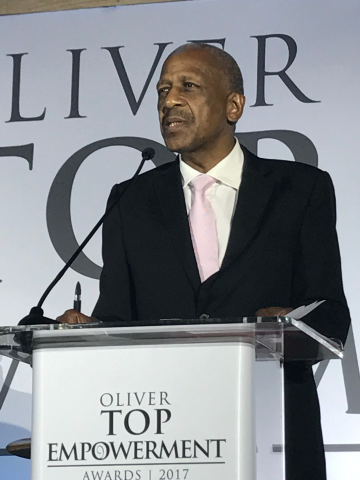
Now, ladies and gentlemen, I want us to pause and think back to Penny Sparrow, Mathew Theunissen, Chris Hart, Judge Mabel Jansen, Helen Zille – all of them were correctly vilified and sanctioned and/or criticized for their seemingly racist and colonialist commentary but what is our reaction when a black person says: “All whites should be killed like Hitler exterminated the Jews”; or a grinning Riaan Lucas says, “this is how I look when white people die” – would that not also be fundamentally racist, tantamount to hate speech, and deserving of our condemnation? But what do we say? … and what do we think Madiba would have said? 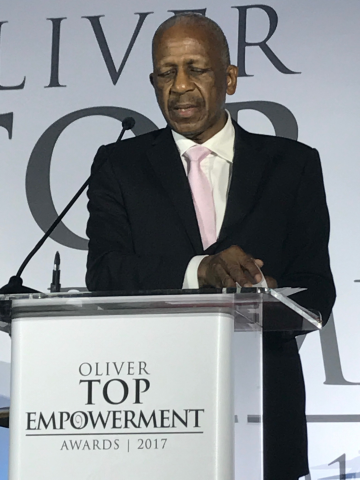
When we try to justify racism or discrimination ‘because surely a black person could not be racist’, we are condoning the unconscionable. As Madiba insisted – any form of racism must be condemned and I add tribalism, provincialism and ethnicity to the list. Bigoted ethnic divisions amongst our black comrades makes me very angry and but also very sad for our young democracy, especially when I see leaders being supported and positions filled because of tribal origin, ethnic affiliation or perceived provincial power – such a response is totally hostile and foreign to the promise of a robust and open democracy.
In 1994, all South Africans stood together in the same queues for the first time to cast their ballots and we sang and spoke of freedom. But, I ask you, are we free or do the bonds of poverty and economic distress still keep us shackled? We all know the reality and we all know that financial and resource deprivation remains a way of life for the majority of South Africans. Madiba’s vision, stated during the Rivonia trial and many times afterwards on the curse of poverty were unequivocal: “Overcoming poverty is not a task of charity, it is an act of justice. Like slavery and apartheid, poverty is not natural”
Yet today, that vision of economic equality remains an illusion for a majority of South Africans. Some statistics note that current policies and conduct have benefited only about 15% of the black population with more than half the population earning less than 10% of total income. In the new democracy, South Africa has become one of the most unequal societies with economic disparity fast becoming a catalyst for class differentiation and a new form of segregation.
As a selected few South Africans hurtle along this journey of wealth creation, I have no doubt that there is a powerful economic revolution, instigated by the masses, yet to come. When it does, I pray that there will be someone in the leadership who will be able to manage the masses and ensure that this revolution, too will b
e peaceful and bloodless, and in the best interests of all South Africans. Who is there amongst who will fearlessly stand up and ensure economic integrity and assure commercial credibility as we strive for a peaceful redistribution of economic wealth?
Today, as we try to build the South African nation, there are too many South Africans emigrating who could help us build this country to what it can be if the best, the youngest, and the strongest leave. How do we stop the exodus? My short answer is: We must give people something to stay for, a dream towards which to strive, and a future built on hope and aspiration. Today, too many see no future in South Africa as the country appears to be imploding on the shoulders of corruption, nepotism, cronyism, and fraud.
I think that President Mandela would have been sorely disappointed by what we’ve managed (or failed) to achieve. He had the deepest respect for the law and some of you may remember when the Constitutional Court ruled against him for exceeding his powers, he fell on his sword and publicly apologised to the country on national television. But I digress – continuing with the destruction of Madiba’s dream, I can talk about municipalities with qualified audits, citizens facing blackouts because municipalities have failed to pay Eskom, the Arms Deal, the Gupta scandals, the SABC, service delivery protests, and recently, the deeply humiliating social grants scandal.
I want to add just one comment to the Constitutional Courts’ scathing comments on the social grants fiasco. Certainly it is late in the day of a government when there is even the mildest suspicion of wrongdoing with the payments system that affect South Africa’s most vulnerable.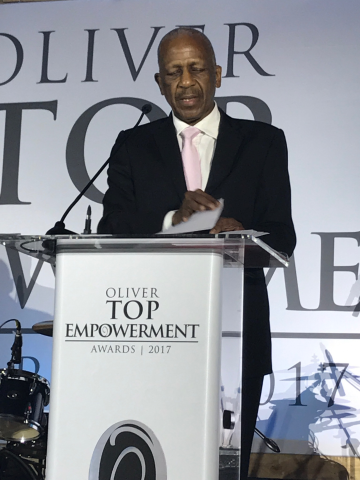
When a country starts to rely on the judicial branch of government to repeatedly correct the errant and scandalous ways of government, we are close to the precipice. It is late in the day when we ourselves admit openly, and are constantly reminded by our independent institutions, that both the executive and the legislative branches are failing in their sacred constitutional duties.
The above rises philosophical and practical questions: Were we ready to govern in 1994? Have we absorbed the reality that we are not in opposition anymore? Should we not stop looking for enemies and start focussing all our intention on timely, good and clean service delivery? Should we not bravely take responsibility for own actions and admit our mistakes? What went wrong after we won the 1994 election? Are we spending enough time developing a cadre of leadership that can lead and govern selflessly and honestly? Do we understand that we are well down the path of losing the 2019 election? Are we beyond correction in our practice of looting taxpayers’ money for our own corrupt and illegal benefits.
We’ve all heard the expression ‘I didn’t struggle to be poor’ as a justification for behaviours; well today young men and women have openly told me, “I want a tender so that I can retire by the age of 35. I’m not going to be old like you and still working.”
ALSO READ: Dr Mathews Phosa speaks out against ANC, Zuma and corruption
I believe that by 2001 Madiba saw the ANC beginning to lose its way and in an interview with the London Telegraph was quite outspoken. He said: “Little did we suspect that our own people, when they got a chance, would be as corrupt as the apartheid regime. This is one of the things that has really hurt me”
Madiba’s vision for the ANC was pure and simple: “The ANC must ensure that the people in power are those who have credibility, who are clean” -and I would have added ‘competent’, as well!
ALSO READ: Dr Mathews Phosa expects ANC to lose power in many municipalities
Madiba believed that education is the most powerful weapon that one can use to change the world – and on that note, I believe that we have failed him. Not just on the three R’s of reading, writing, and ‘rithmetic, but if we were truly educated (and it doesn’t have to come from book learning and classrooms) none of what I have just been talking about would be happening. Do not get me wrong, I believe that great strides have been made in educating the black majority but still we read that notwithstanding the billions of rands spent, global institutions still rate us in the bottom half and sometimes even at the very bottom, below much smaller and less wealthy countries.
However, we cannot make broad statements without a proper root cause analysis for if truth be told, context is critical and we must accept the truth that the apartheid government set the ANC up for failure. By providing a quality of education for black children that was sub-standard and critically poor and ensuring that black people were only equipped for menial and domestic labour, the basic skills to grow the nascent democracy post-2014 were palpably absent. This was a steep hill to climb, especially taking cognisance of the socio-economic and political circumstances of the time: sanctions that had almost crippled the economy, mismanagement of funds by the then ruling party, the then wealth sitting almost solely in the hands of white South Africa. To address this, the ANC introduced the opportunities of black economic empowerment, the civil service was overhauled and white employees were given packages and replaced by black cadres. But after placing them in position, the mistake we made was that there was no adequate training and mentorship, no development, and no focussed and dedicated capacity-building. Cadre deployment was and remains a failure of the ANC.
ALSO READ: Dr Mathews Phosa congratulates the South African Special Olympics team
Ladies and gentlemen, my time is up so let me stop but leave you with the following words of Madiba himself. He said (and I quote): “If there are dreams about a beautiful South Africa, there are also roads that lead to their goal. Two of these roads could be named Goodness and Forgiveness” I want to say to you the young people here, the next generation, our future: be proud of who you are; take a leaf from Madiba’s book and be fulfilled with who you are. Madiba always said, “The colour of my skin is beautiful – like the soil of Mother Africa.” Anton Lembede said the same. Heed these great men … and always try to be the best that you can be. Don’t take shortcuts, and don’t aspire to be someone different? Why would you want to do that? Is it because fundamentally you are not happy within yourself or are you just confused? Until we resolve this internal conflict, black people will never be taken seriously. I am therefore saying to you: Be pleased to be an African and cherish your African values.
Madiba’s dream was simple one: all South Africans have the right to hope and the right to a future that is built on equality, fairness, dignity and respect – and I emphasise the inclusive “ALL”. One of the most famously quoted sections from the Rivonia Trial was Madiba’s closing address and it would be wrong not to repeat it today: “Political division based on colour is entirely artificial and when it disappears, so will the domination of one colour group by another. The ANC has spent half a century fighting against racialism. When it triumphs, it will not change that policy”
ALSO READ: “Rising through the obstacles – My Story” – Dr Mathews Phosa
Madiba’s passion and his commitment to racial harmony, peaceful co-existence and a better life for all was unequivocal. However, can each one of us look in a mirror and say: “I have it in my heart to live Madiba’s dream?” Think about it as you walk home, into your classroom, sit in a restaurant, or just look at the people around you. Today, I challenge you: catch the runaway train, “speak fearless and selfless truth to power”, make South Africa the great country that it is destined to be. TAKE A STAND AND HARNESS MADIBA’S DREAM. Viva Madiba viva!!! Long live Madiba, long live our beautiful South Africa!!!
I thank you.”