Everything is (not) awesome with your friend
Suicide is a serious issue, but people have learned to use social media in such a way that they can hide their feelings, making it difficult for loved ones to be able to reach out in time

MBOMBELA – Earlier this month a 19-year-old Wits University student, Kago Moeng, jumped to her death from the sixth floor of a building in Braamfontein, Johannesburg.
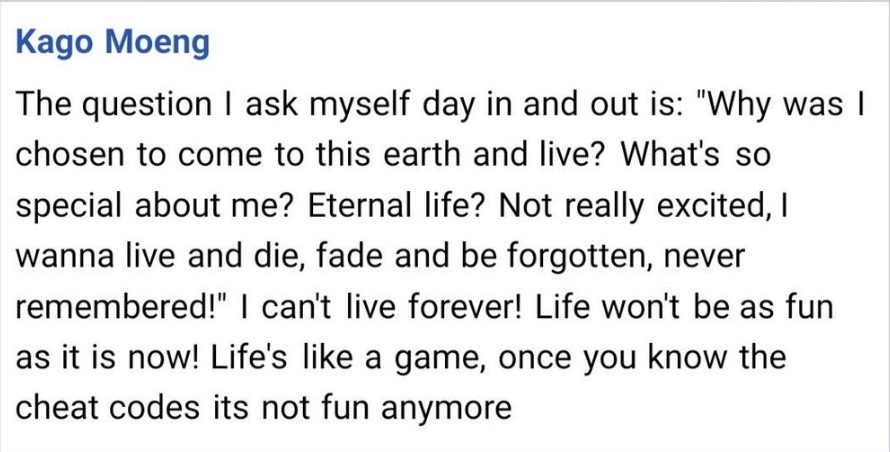
Immediately, the hashtag #BraamSuicide started to trend with many coming forward about “how they never saw it coming”, as she posted in pictures on her various social media pages and “always looked so happy”. In all of this, her “friends” and “followers” conveniently missed a post prior to the suicide:
“The question I ask myself day in and day out is: Why was I chosen to come to this earth and live? What is so special about me?… I want to live and die, fade and be forgotten never remembered!”
Check on your “strong” friends
People are masters of disguise on social media. This results in many not checking on someone because they “look like” they are having fun wherever they are, they “look” happy.
Things are not always what they seem, especially in these social media streets. Check on your friends and family and follow up on previous incidents they had a “small” problem with. It might sound minute, but could also be big enough to push someone over the edge.
Suicide is no joke
It is alleged that Moeng stood at the balcony of the room for two hours before jumping. During this time, people on the ground cheered her on to jump; she did, and died on impact.
Many people believe the “tough love” approach is best when dealing with someone who is suicidal, that telling the person to “do it” will deter them from actually committing suicide. This is not always the case.
Almost everyone who attempts suicide has given some clue or warning. Do not ignore even indirect references to death or suicide.

The pressure
Many cultures have little to no understanding of depression. People of such cultures are told to “get over it” and “stop being sad all the time”.
Depression is seen as a “white/western” thing or a “demon”. Props are given to the people who appear strong amid all the adversities. Strength is a badge of honour to such families, while “weakness” is frowned upon.
Tell someone
When a suicidal person confides in you, it is alright to tell someone. The South African Depression and Anxiety Group (Sadag) has around-the-clock psychologists ready to listen.
You can also suggest that the person contact them, it is completely anonymous. Reach out to a religious leader, police or any trusted adult, family member or community member in whom the person can confide.

Do not ignore the signs
If someone seemed fragile the previous day and super excited the next, do not ignore that. Check up on the person and do a thorough follow-up. Scrutinise social media posts and note changes in patterns.
- Contact Sadag counsellors between 08:00 and 20:00 from Monday to Sunday on 011-234-4837.
- For a suicide emergency contact 0800-567-567.
- Call the 24-hour helpline on 0800-12-13-14 or SMS 31393 and they will call you back.