Meet Abarth, the man who changed the sports-car world forever
The journey of Carlo Abrath life is a long and interesting one and it all leads back to the cars we love to drive
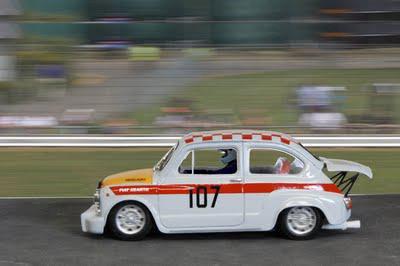
Abarth is a racing and road-car maker founded by Italo-Austrian Carlo Abarth in 1949. The performance brand of Fiat originally built exhaust systems for vehicles, and the now-famous association with Fiat began in 1952 when the Abarth 1500 Biposto was built on a Fiat platform. In the 1950s and 1960s, the Abarth brand continuously made a name for itself in the public eye as the synonym for sport, tuning and performance, changing the sports-car world.
Karl Alberto Abarth
Born in Vienna, Austria on November 15, 1908, Karl Alberto Abarth was the founder of one of the world’s best known performance car tuning firms. His Austrian heritage aside, Abarth later adopted Italy as his home and changed his name to the Italian equivalent of Carlo. At the age of 16, Abarth began an apprenticeship at Castagna in Italy designing bicycle and motorcycle chassis.
He returned to Austria at the age of 19, and took a job with the then-famous motorcycle racer, Joseph Opawsky at Motor Thun Motorcycles, preparing and testing their race bikes. Abarth’s first break in racing came about when the factory rider fell ill and he was offered to race in his place.
Abarth set the fastest lap during testing but was forced to ride a replacement machine that suffered a mechanical failure mid-race. Abarth suspected sabotage as his success wasn’t well received by the other riders in the team and he subsequently left Thun.
Soon thereafter Abarth bought a secondhand 250cc Grindley-Peerless British motorcycle which he stripped down and modified. His first race victory came at Salzburg on July 29, 1928; a remarkable result considering he was responsible for his own mechanical backup.
The following year Abarth built his first motorcycle carrying the Abarth name. This pioneering water-cooled two-stroke clearly demonstrated his engineering genius, and by his mid-twenties, Abarth had amassed five European Championship titles.
Abarth was forced to abandon motorcycle racing following a serious accident in Linz in 1933, but continued racing with a sidecar of his own design, on which he won many races. In 1934, he raced the Orient Express train on the 1 300km stretch from Vienna to Ostend. Abarth’s fi rst attempt was unsuccessful.
However, on his second attempt, just two weeks later, victory was his after beating the train by more than 20 minutes. Abarth was forced to end his racing career in 1939 after a second, more serious accident in Yugoslavia. At this time, Abarth turned his attention to the tuning of cars.
Through his business contacts with renowned racing driver Tazio Nuvolari, as well as being a Porsche family-friend, he, along with engineer Rudolf Hruska and Piero Dusio established the Compagnia Industriale Sportiva Italia (CIS Italia, later becoming Cisitalia). Abarth had moved permanently to Italy in 1934, where he met Ferdinand Porsche’s son-in-law Anton Piëch and the two opened the Italian Porsche Konstruktionen agency.
The first automobile born of this cooperation was the somewhat unsuccessful Tipo 360 F1 prototype. The revolutionary single-seater car boasted a ground-breaking design that included a complex four-wheel drive system and a mid-mounted, twin-supercharged 1 493cc flat-twelve engine producing well in excess of 224kW.
The project suffered from under-funding before realizing its full potential, and the CIS Italia project ended in 1949 before the car could turn a wheel in competition. The links with Porsche continued, however, into the 1960s.
Using the remnants of the Cisitalia company, Carlo Abarth founded Abarth & C. S.r.l with Armando Scagliarini (father of Cisitalia racing driver Guido Scagliarini) in Turin on March 31, 1949 using his astrological sign, Scorpio, as the company logo. The company’s mission statement was: “The production of cars and complementary aggregates for sport and racing cars, as well as changes and improvements to sports and racing cars, servicing, manufacture of mass-production tools, agency services and the sale of fuels for race cars.”
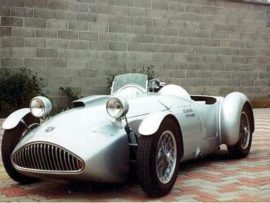
Abarth created his own racing team – “Squadra Abarth” – utilising a D46 singleseater, two 204 Spiders and two incomplete cars from the remains of Cisitalia. The company signed famous names such as Tazio Nuvolari, Bonetto, Cortese, and Duberti and at the sixteenth Mille Miglia in 1949, Abarth lined up with four cars.
One of the cars took second place in its class and fifth place overall. In the company’s first year, the Abarth 204 A Roadster won the Italian 1100 Championship and the Formula 2 title. Tazio Nuvolari won a thrilling victory in the Palermo-Monte Pellegrino hill-climb on the 10th April 1949, driving a 204 A Spider.
1950’s
Interest was soon shown by several car manufacturers, including Alfa Romeo, Maserati and Ferrari, and by 1952 Abarth was supplying exhaust systems for the Ferrari GT and World Championship cars. Abarth began his now-famous association with Fiat in 1952, building the Abarth 1500 Biposto on Fiat mechanicals.
In the 1960s, Abarth was also successful in hill-climb and sports car racing, mainly in classes from 850cc up to 2000cc, competing with Porsche 904 and Ferrari Dino. In 1955, Abarth created a small, affordable sports car using the new Fiat 600’s underpinnings and a 750cc engine developing more than double the original car’s power.
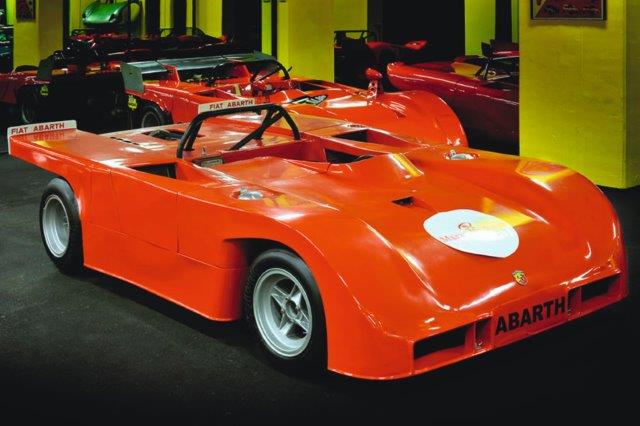
Abarth also re-bodied the car using two Zagato-designed body styles – the Fiat Abarth 750 Zagato and Fiat Abarth 750 GT Zagato. In June 1956, Abarth drove a 750 with a body specially designed by Bertone at Monza and set a series of records. Traveling 3 743km at an average speed of 155km/h, Abarth broke the 24-hour record.
He went on to break the 5 000km, 10 000km, 5 000 miles, 48-hour and 72-hour records just a few days later. At the 24th running of the famed Mille Miglia in 1957, 20 Abarth cars represented the 750 class – 16 of them finished the race, with Abarth models covering first, second and third places.
Fiat 500
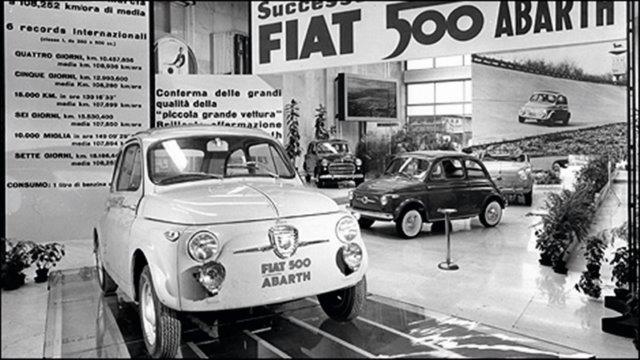
With the launch of the new Fiat 500 in 1958, Abarth created his masterpiece. A number of these cars were sent to the Monza circuit for testing, and for seven days and nights, the 500 Abarth rewrote the history books.
Covering a distance of 18 186km at an average speed of 108km/h, the 500 Abarth broke six international records, nearly one every day. Abarth proved that small runabouts could be used as the basis for fast and reliable racing cars, and for them, a new phrase was coined: “Small but wicked
1960’s
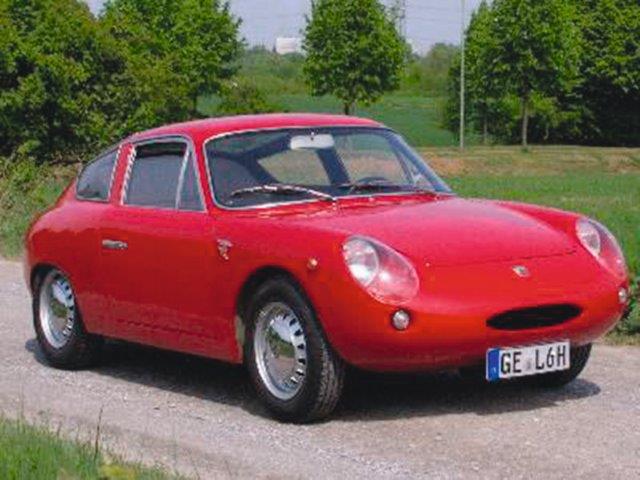
The 1960 Fiat 600D boasted a new 767cc four-cylinder unit producing a modest 21kW. Abarth bored and stroked the engine to 847cc, upping power to an incredible 43kW with the highest compression ratio option.
Maximum torque was also increased while the 140km/h top speed was as fast as saloon cars twice its size. Branded the Abarth 850 TC (Turismo Competizione), the car was entered into the Touring Competition class.
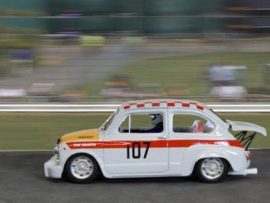
On the track, the 850 TC enjoyed countless victories – winning it’s class in the 24 Hour race at Le Mans in June 1961, collected titles for the European Touring Car Challenge in ‘65, ‘66, and ‘67, and picked up six successive Manufacturer’s Championship titles.
1970’s
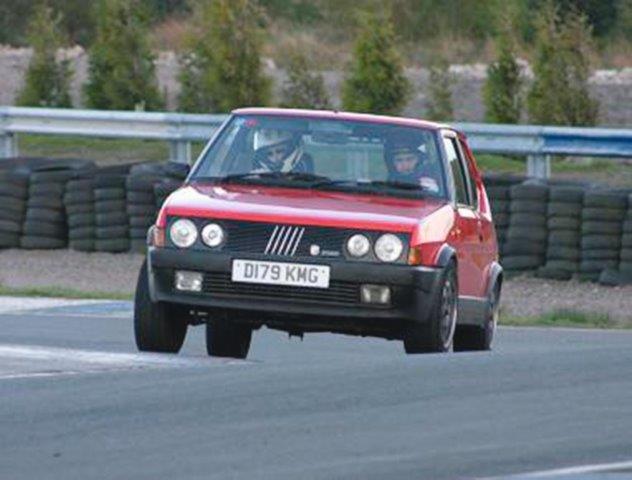
During the 1970s, vehicles built by Fiat or its subsidiaries Lancia and Autobianchi were co-branded Abarth, the most famous being the Autobianchi A112 Abarth. Probably the most popular “boy racer” vehicle of its time on account of its low weight and price, the A112 would be the last car that Carlo Abarth was actively involved with, and it enjoyed its own competitive success in rallying and a one-make series, and remained in production until 1986.
Carlo Abarth died on October 23, 1979, aged 71 due to severe illness leaving an astonishing legacy of 10 world records, 133 international records and over 10 000 track victories.
Abarth today
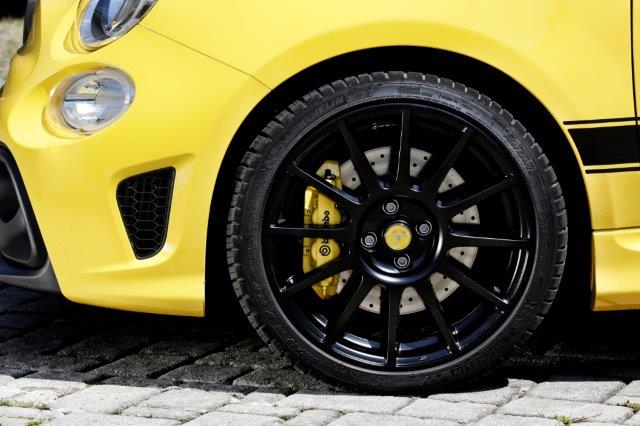
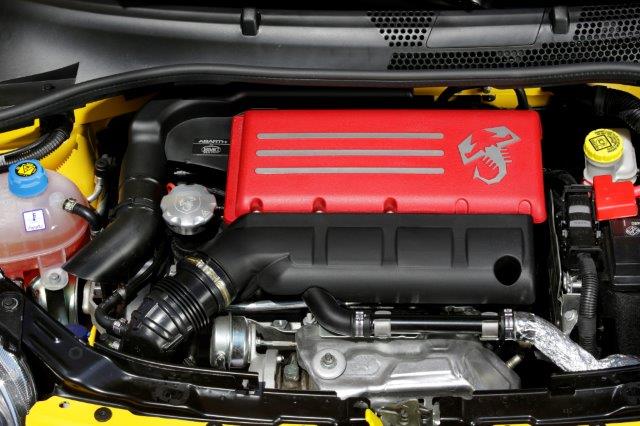
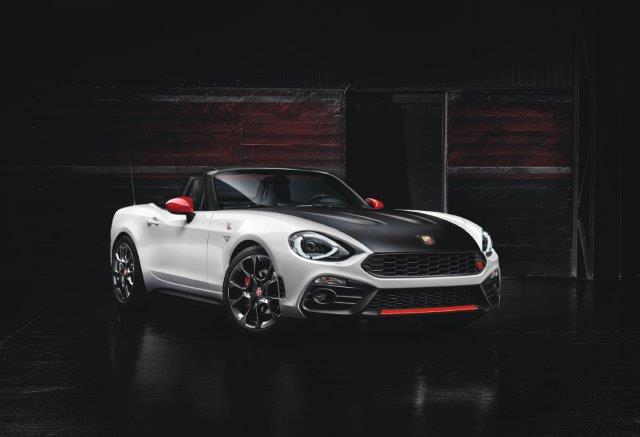
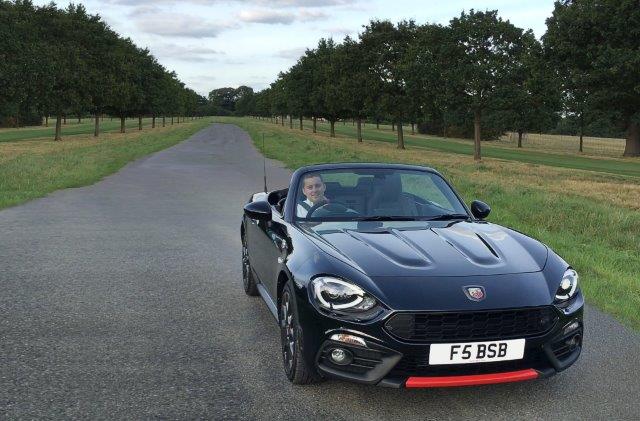
The current Abarth range includes the Fiat 500 based 595 in Corsa, Turismo and Competizione variants with the choice of two body styles; hatchback and cabriolet, as well as the recently launched Abarth 124 Spider which is the brand’s top-of-the-range offering.
Source: Quickpic