Tornado surprises the city
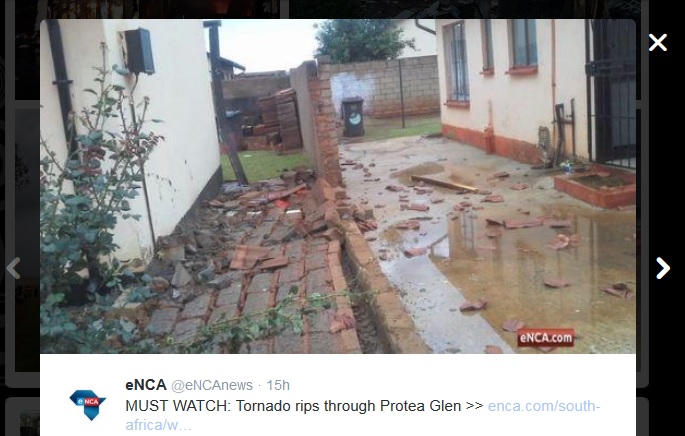
The storm that caused havoc for motorists and flooded parts the city on Friday was confirmed by provincial disaster management as a tornado.
Blocked drains on roads caused flooding in certain areas around Mbombela.
The tornado occurred about seven kilometres out of town and moved in a north-westerly direction. No hail nor damage to roofs were reported.
ALSO READ: Our Mozambican neighbours need your help to get through
Motorists were stuck in traffic due to the downpour. The Riverside area on the R40 and the Kaapsehoop Road were flooded in parts.
Well-known establishment, Feast was flooded when water gushed in from the rear of the restaurant.
The Farm Stall at Halls was also flooded.
Staff members were quick to start mopping up at both establishments, and it was back to business.
Many areas were left without power. The areas affected by some flooded substations were the CBD and Riverside, Penny and Hunter streets, as well as parts of White River and the R40 towards Barberton.
A tornado forms when changes in wind speed and direction create a horizontal spinning effect within a storm cell.
This effect is then tipped vertical by rising air moving up through the thunderclouds.
ALSO READ: Storm ravages local shelter
The meteorological factors that drive tornadoes make them more likely at some times than at others.
They occur more often in late afternoon, when thunderstorms are common, and are more prevalent in spring and summer. However, they can and do form at any time of the day and year.
Tornadoes’ distinctive funnel clouds are actually transparent. They become visible when water droplets, pulled from a storm’s moist air, condense or when dust and debris are taken up.
Funnels typically reach about 200 metres wide. Tornadoes move at speeds of about 16 to 32 kilometres per hour.
They rarely travel more than about 10 kilometres in their short lifetimes.
Tornadoes are classified as weak, strong or violent storms.
Violent tornadoes comprise only about two per cent of all tornadoes, but they cause 70 per cent of all tornado deaths and may last an hour or more.
Source: National Geographic.