Hard news journalist can’t forget 1999 Long Tom Pass crash
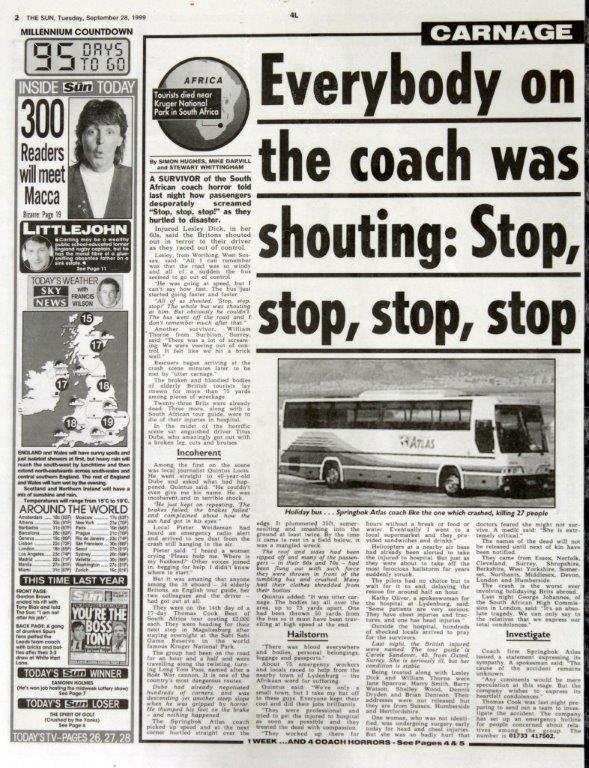
On September 27, 1999 Irma asked me whether my aviation contacts had been alerted to a large motor vehicle collision in the Lydenburg area.
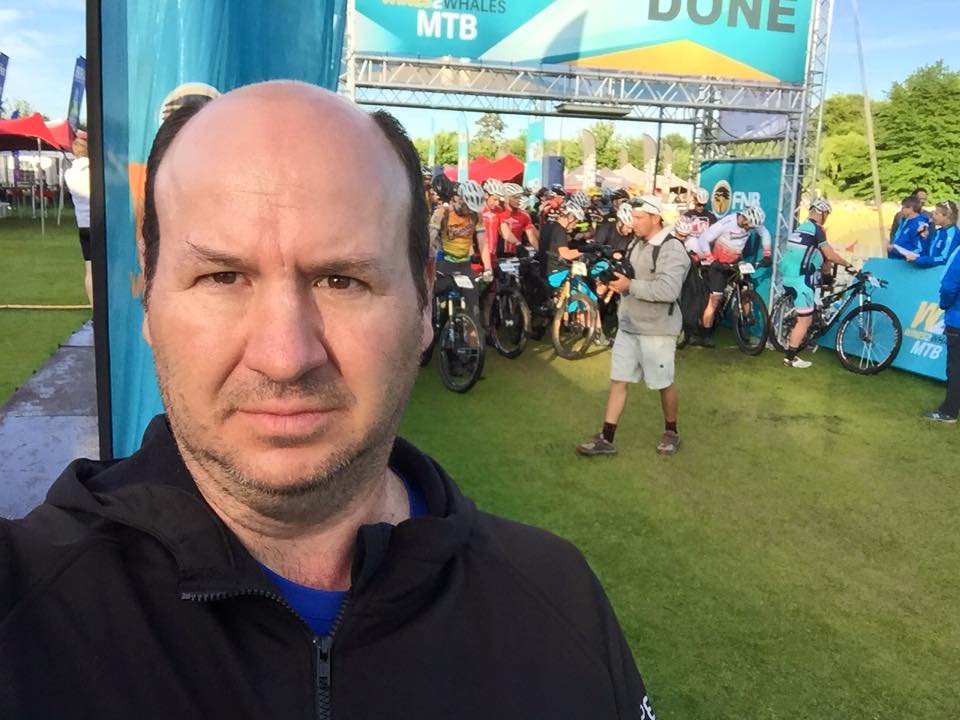
After reaching out to a few key people at the airport, I reported back to Irma – “Nothing yet”. But minutes later, Erna van Wyk and I were assigned to hit the road and grabbed our camera bags and extra film and headed out towards Lydenburg.
On the way, Erna and I were actually bemoaning the whole “m**rse ongeluk” thing, contemplating if it could be so important that we had to trek all the way. But, as we crested the last hill on the way to Lydenburg (from the Long Tom Pass), a scene of destruction assaulted our eyes.
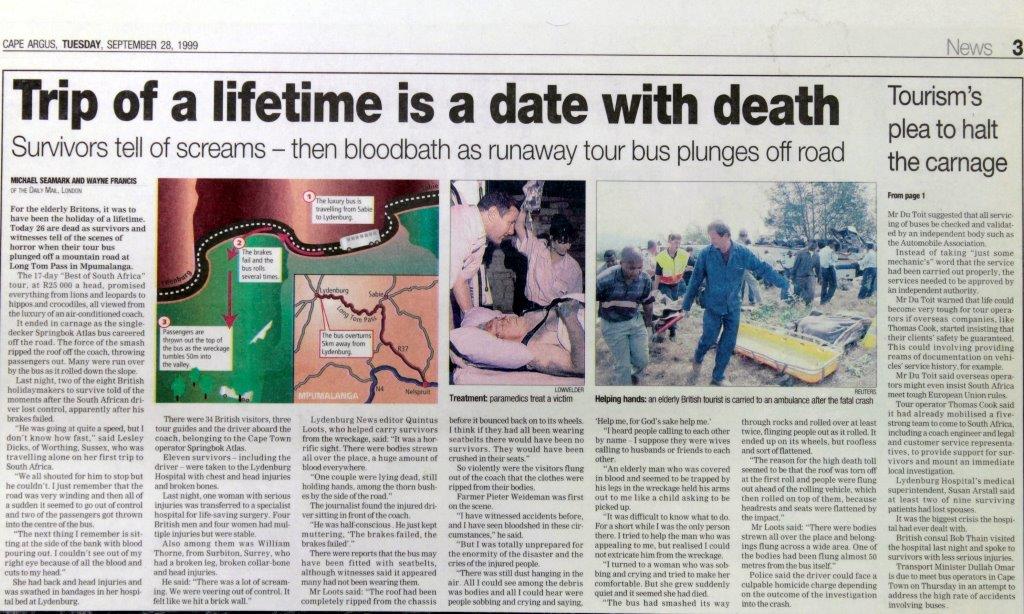
It was a scene that neither of us had ever witnessed, and both of us were experienced hard news journalists! Suitcases, clothes, papers, bus parts and bodies covered an area bigger than a rugby field.
We went to the closest SAPS member to ask him who the on-scene commander was, who happened to be Lydenburg’s station commander.
I started taking photographs and writing down occasional “observations” of the scene. It was one big mess. Before I knew it, I used two rolls of film.
ALSO READ: Interdict placed on bank strike
We got there just after the last of the survivors had been taken to Lydenburg Hospital, so the police were collecting evidence and the emergency services were recovering the bodies.
I clearly remember Erna handing me the “duty cell phone”, over which Irma asked me for the registration of the bus. She didn’t hear me so I spelled it out with the alphabet code: “Hotel, Romeo, Hotel…nine six four…Gauteng”.
She was on another line with the bus company, Springbok Atlas, which apparently didn’t know about the
incident yet.
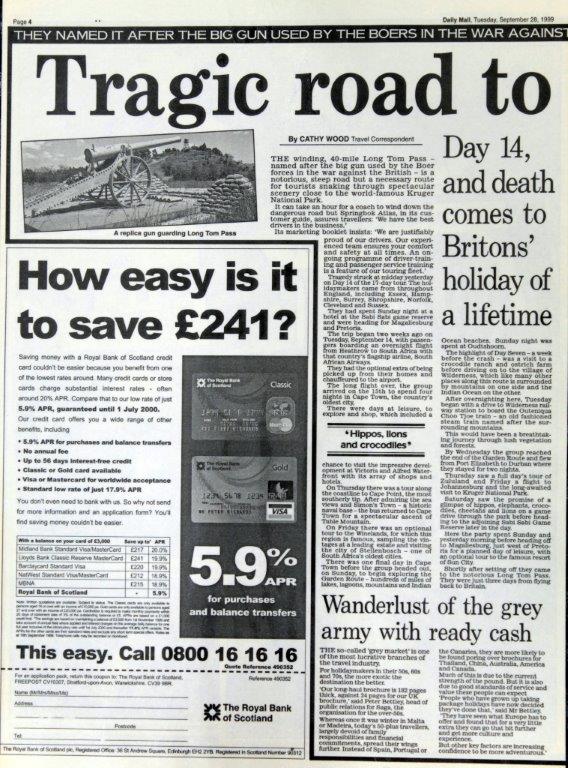
I walked around the wreckage of the bus, taking more photographs, as there were emergency workers in the bus itself. I think they were trying to free another dead body.
The smell of diesel was everywhere. And it was probably at this point I must have seen the relationship between the dead bodies and cones. Next to every dead body, there was an emergency cone.
Erna and I regrouped at a point to compare notes and discuss our options further. As we stood there, four men from different organisations carried a dead body in a body carrier towards us and past us and we instinctively snapped away, not knowing that this photograph would become one of the iconic ones used by newspapers all over the world.
After consultation with Irma back in the newsroom, it was decided we’d go to Lydenburg Hospital for an update. We drove there and, on the way, we saw a number of news helicopters flying out to the scene.
I scrounged around for snippets and then saw a familiar helicopter land on the hospital’s landing pad. My friend, Dave, was in the left-hand seat so I went and chatted to him.
He said they were taking one of the badly injured survivors, a woman named Carole Sandover, to Nelspruit Mediclinic. I phoned this through, telling Irma the estimated flight time to Nelspruit.
Eventually, another colleague, Linda de Nysschen, came and picked me up. When I got back to the office to regroup and help with writing the articles, I couldn’t help noticing a paper lying on a desk near the layout artists where Irma often sat.
On the paper and in Irma’s distinctive handwriting were the words: “Hotel, Romeo, Hotel…nine six four…Gauteng.”
ALSO READ:Long Tom Pass claimed the lives of 27 British tourists in 1999