What the fact is Africa Check?
Africa Check, the continent’s first independent non-profit fact-checking organisation, supported by philanthropic organisations and individual donors, was established in South Africa in 2012. This team has debunked inflammatory statements about the number of foreign nationals in the country and revealed errors in the national crime statistics.
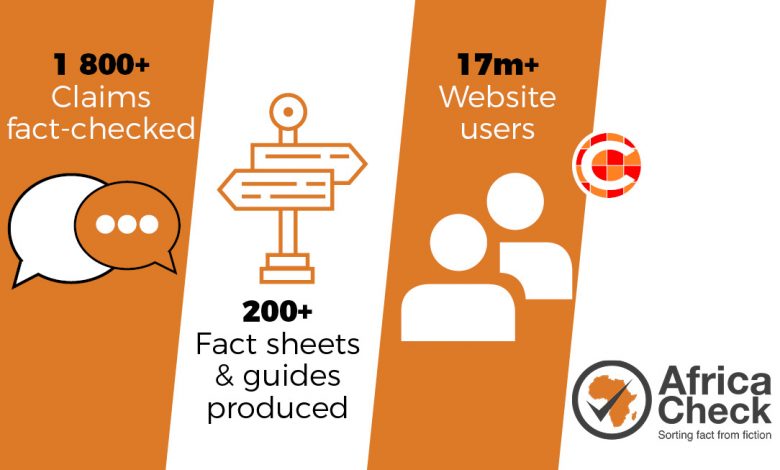
Every day across Africa, people make decisions. From simple choices like what to eat for breakfast, to choosing who to vote for in upcoming elections. To do this, they rely on publicly available information like news broadcasts, social media posts, and the newspaper you’re reading right now. But in order to make good decisions, this information needs to be accurate and reliable.
The Covid-19 pandemic has highlighted just how vital this is. Even choosing what to eat for breakfast becomes a much more impactful decision if you choose only alkaline foods based on a false claim that it could protect you from Covid-19. A claim we’ve repeatedly debunked after it was shared in several viral social media posts, including one published by the youth wing of a South African political party (read our report here).
The importance of good information has never been more keenly felt. Which is where fact-checking organisations like Africa Check come in.
Africa Check is a non-profit organisation founded in 2012 to promote accuracy in public debate and the media in Africa. We’re the continent’s first independent, non-profit, fact-checking organisation, but no longer the only one. We’ve been joined by fact-checkers like Kenya’s Pesa Check, Nigeria’s Dubawa, and many more all working to keep public debate accurate and reliable.
Anyone can do their own fact-checking just by looking up the things they see on social media or in the news. A simple internet search can stop you before you share a false claim, and pausing before sharing something can stop a false claim from going viral in the first place.
But professional fact-checkers often have the time and resources to spend hours trawling through data or researching difficult questions which a quick search can’t solve. We’re effectively a public service that does the work of interviewing experts, sourcing data, and spotting false claims so that other people don’t have to. You can read all our fact-checks and send us more suspicious claims to check on our website (africacheck.org), where we also provide guides on how to tell false claims or unreliable sources apart from accurate ones.
You can also tag us on social media (@AfricaCheck), and even forward us the suspicious messages you receive on WhatsApp; we debunk them on our podcast “What’s Crap on WhatsApp” which you can find online at whatscrap.africa.
But we could never do all of the work ourselves. We rely on the public to help us spot claims. On researchers and experts to provide us with data and explain complex concepts. And on media organisations to commit themselves to accurate and ethical journalism.
All the fact-checking in the world doesn’t amount to much if it doesn’t help people find reliable information and make helpful decisions.
This content was supplied by Africa Check, a non-partisan fact-checking organisation. View the Africa Check website here.