Load-shedding is taking its toll on business owners in Lydenburg
The negative impacts of the current Eskom load-shedding schedule is a hot topic in every household and business in town.
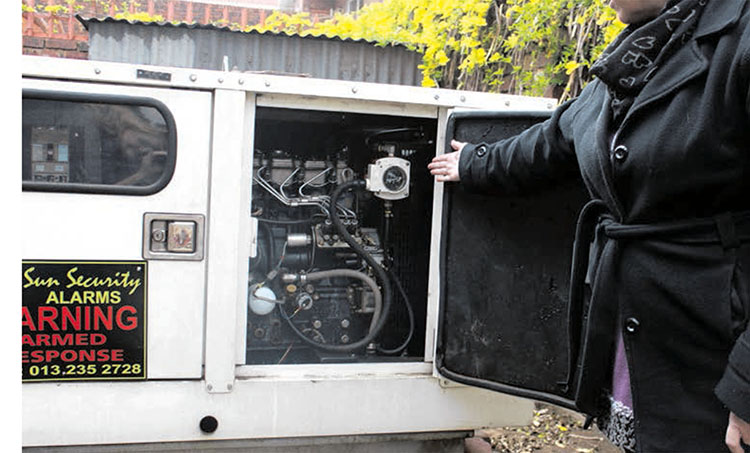
Load-shedding causes a chain reaction in Lydenburg. Generators are needed to supply water, internet and communications. In addition to this, the loss of revenue for business owners is staggering.
Steelburger/Lydenburg News contacted several businesses and asked the public on Facebook how everyone is coping with the load-shedding. On Monday, several business owners claimed that stage 5 and 6 load-shedding is the final straw.
“The current load-shedding schedule is killing my business,” said an owner of a takeaway restaurant. “I have to keep my store open. But during load-shedding, I can’t make takeaways or use the bakery. Takeaways are a huge part of my revenue. Over the weekend, my diesel costs escalated to R4 400 per day,” he said.
Also read: Solar systems, tax breaks explained in Mbombela
Several of the supermarket chains in town indicated to the newspaper that they spend between R6 000 and R8 000 per day on diesel. One of the store managers said they use a minimum of 200L diesel per day. “Whether load-shedding starts at 07:00 in the morning or at 22:00 in the evening, we have to start our generator system. We pride ourselves on the fresh produce presentation we offer customers. And it is not an option for the refrigeration systems not to work. It has to run, day or night. I am not permitted to go into specifics regarding the cost of load-shedding of our store, but it is safe to say the diesel costs have escalated to several thousand rands per day.”He made it clear that the cost to cover load-shedding is not in the company’s monthly budget.
Etli van der Merwe, the chairperson of the Lydenburg/Mashishing Business Chamber, said load-shedding has a severe negative impact on the businesses in town. “The cost to operate generators is staggering. I have also found, like most business owners and residents, that computers and other electrical appliances are damaged when the electricity is turned on again. Clients are frustrated when the internet or pay systems are offline. Most businesses are completely dependent on internet. The feedback from business owners to the chamber is that they are struggling severely, and if load-shedding continues at this rate, some may be forced to close permanently,” said Van der Merwe.
Also read: Fraud suspects allegedly include pharmacists and a pensioner
A vehicle service workshop indicated that it loses four working hours per day and that everyone has to work over the weekend to make up for the lost time. They also have to pay staff overtime for those days. “We have fixed service-level agreements with all insurance companies, so we cannot simply charge more or put our prices up to cover the cost of the generator. We use three phases of electricity to drive our machines and tools. The real loss is our reputation. We can’t offer and keep up with the promises we have succeeded in giving clients in the past. We might repair vehicles, but our service is what put us above the rest. Now with load-shedding, we can’t give completion dates without shooting ourselves in the proverbial foot,” said the owner.