2026 Solve for Tomorrow champions crowned
Collaboration equipping SA's youth with future-ready skills. Empowering learners to solve real-world community challenges through technology and innovation.
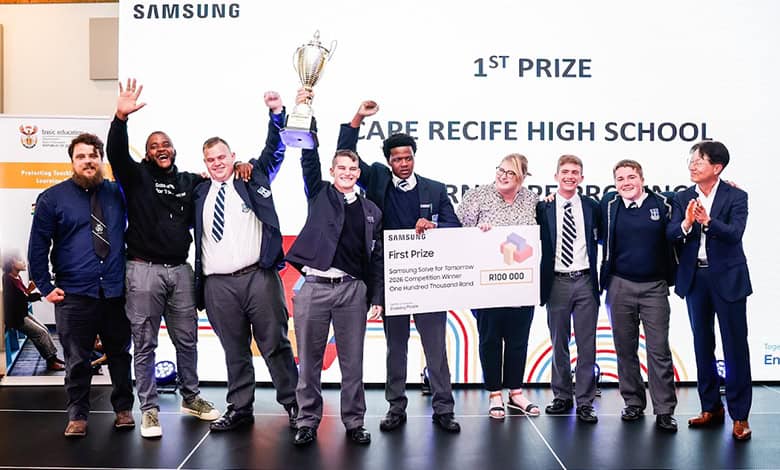
Samsung SA, in partnership with the National Department of Basic Education (DBE), has officially announced the ultimate winners of the 2026 Samsung Solve for Tomorrow (SFT) science, technology, engineering and maths (STEM)-based competition.
At the national awards ceremony, held on October 2 at the Irene Country Hotel in Centurion (Gauteng), three outstanding public schools were crowned champions. The champions took home major prizes to boost STEM learning in their classrooms. The prestigious event, a highly successful Public-Private Partnership (PPP) between Samsung and the DBE, was graced by key dignitaries, including the President and CEO of Samsung Africa, Simon Lee, and the Minister of Basic Education, the Honourable Siviwe Gwarube.
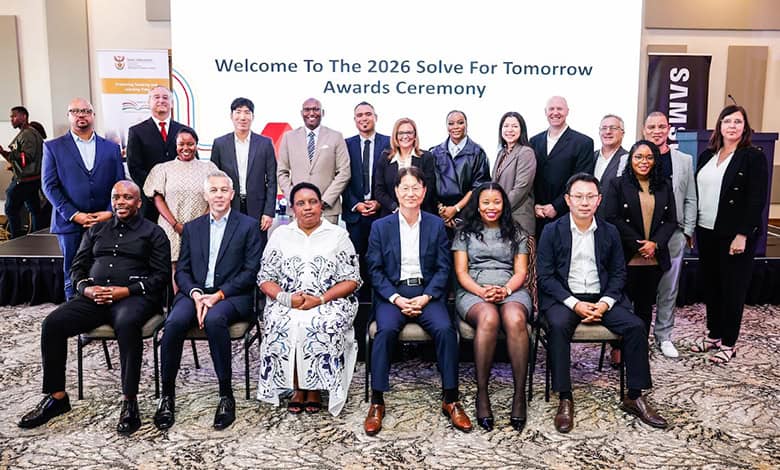
Following their prototype presentations to a panel of expert judges and rigorous evaluation, these were the winning schools:
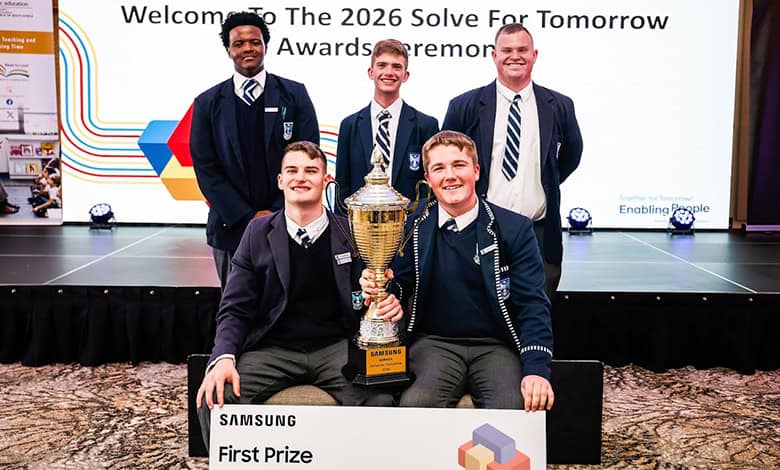
First Prize (R100 000): Cape Recife High School from the Eastern Cape was awarded for their exceptional prototype that turns plastic waste into sports equipment.
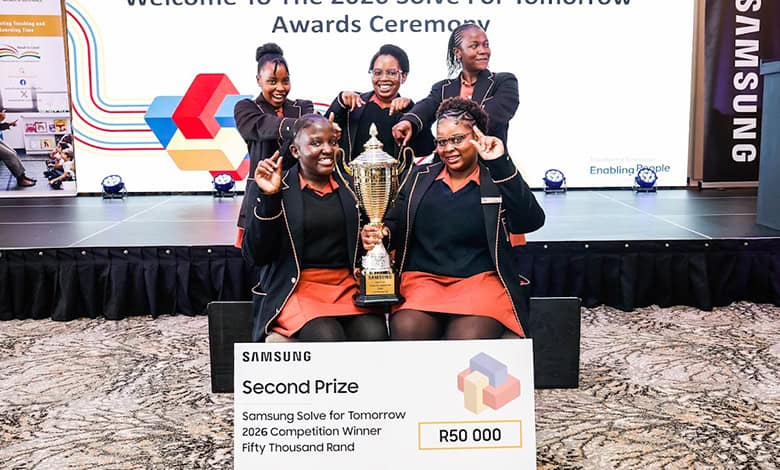
Second Place (R50 000): Mbilwi Secondary School from Limpopo was awarded for their innovative prototype project focusing on transforming pollution and waste into low-cost construction materials aimed at reducing overcrowding and supporting sustainable community development.
Third Place (R30 000): Sekete IV Secondary School from North West was awarded for their brilliant prototype that addresses a severe waste management crisis in their school and the surrounding Kanana Village. The team engineered the “Mighty Sekete Smart Bin,” a tech-driven solution designed to break the cycle of waste mismanagement. The solar-powered bin features an internal compaction system that allows it to hold five times more waste than a standard bin, preventing overflow.
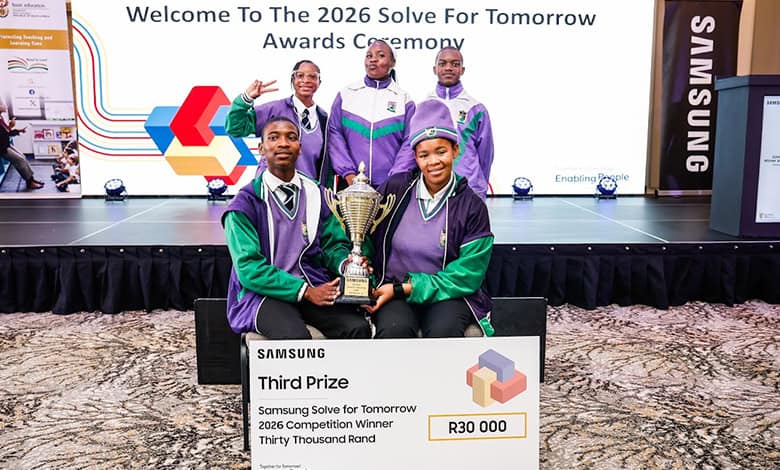
In addition to the cash prizes, which will go entirely toward purchasing vital STEM equipment for their respective schools, each individual learner from the three winning teams walked away with a brand-new Samsung Galaxy smartphone to help them continue their tech-for-good journeys.
Speaking at the awards ceremony, Samsung Africa CEO, Simon Lee, congratulated the winners and the Top 20 finalists. He highlighted how Samsung, as the catalyst for youth empowerment, remains deeply committed to driving education and technology-driven initiatives.

Lee believes the partnership with the DBE allows Samsung the opportunity to address environmental and societal challenges, while nurturing the next generation of innovators. He also expressed how convinced he is that the future of Africa lies in the hands of its young innovators. Furthermore, Lee added that, as a socially responsible company, Samsung is proud to support equipping the country’s young innovators with the skills and confidence to build a sustainable digital future.
Lee highlighted how the growth of the competition, as reflected in the number of applications, shows that young South Africans have an appetite for learning and just need opportunities. He also emphasised that Samsung sees investing in human potential, especially young people, through initiatives such as Solve for Tomorrow and the Samsung Innovation Campus, as not just an important part of its work, but something that gives its existence even more meaning. The Solve for Tomorrow initiative directly supports SA’s National Development Plan (Vision 2030) by teaching public school learners skills needed for the future. The programme champions local, sustainable problem-solving in perfect alignment with the United Nations Sustainable Development Goals (UN SDGs), specifically Goal 4 (Quality Education)[1]. By bringing practical STEM learning and expert mentorship directly to public schools, this unique initiative also actively encourages young women to participate in STEM-related fields.

Minister Gwarube expressed her optimism about what the future holds for SA if opportunities are continuously created that not only strengthen education but also access to it. She also highlighted that while challenges remain, working together as government, corporates, and communities is the best approach. “Education must help young people prepare for the future that they want for themselves, and that we want as a country. We cannot perpetuate the inequality that currently exists. The best education systems in the world focus on building strong foundations, and through initiatives such as Solve for Tomorrow, we can also build that solid foundation. We cannot solve some of the challenges alone and can only do so through partnerships like this one. Thank you to Samsung for the work that you do – it is inspiring. Thank you for investing in South Africa and the future of our young people.”
This year’s competition challenged learners to develop real-world solutions under two crucial themes: Environmental Sustainability through Technology & Social Inclusion through Sports & Technology. Behind every prototype was an intense journey of teamwork, critical thinking and design thinking.
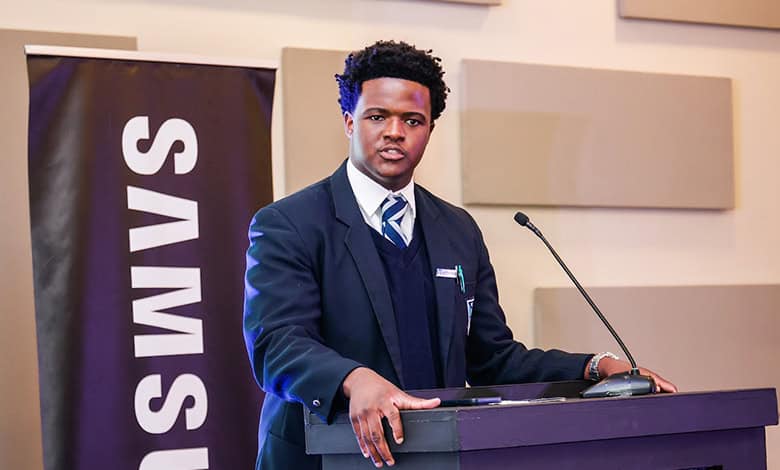
Representing the first-prize winning team, Kukhanya Mbebe, a Grade 10 learner from Cape Recife High School, shared their excitement: “We still can’t believe we won! When we started, we just wanted to fix a problem we saw in our community. Working on this project has taught us how to think like inventors and use technology to make a difference. For us, as a special needs school, to be here and announced as 2026 winners of the competition is a huge honour, and we hope our solution will go a long way towards making SA a better place.”
For their project, the team identified the problem of plastic pollution as a growing global crisis, with millions of polyethylene terephthalate (PET) bottles discarded daily, overwhelming landfills and polluting ecosystems. They also noticed that many underserved communities lack access to affordable sports equipment, limiting youth participation in sport and taking them away from social ills such as crime and drugs. As a solution, the team built an electronic device that converts recycled PET plastic bottles into 3D printer filament. They use this filament to 3D-print functional sports equipment for local sports teams.
Working alongside Samsung employee volunteers as their mentors; the learners designed physical, working prototypes using seed funding provided by the initiative. Samsung also provided tablets with data connectivity to support their work. This practical, hands-on approach has demystified science and technology, showing ordinary South Africans that STEM is a practical tool anyone can use to improve daily life.
“The fact that we had Samsung mentors guiding us throughout this journey has helped us believe in our ideas, and this experience has also changed how we see our future. This competition has shown us that public school learners also have what it takes to build the future of SA, and we are very excited to take this STEM equipment back to our school,” added Mbebe.
The 2026 competition also saw a massive national growth, drawing an incredible 143 project submissions from public schools across the country – a massive leap from just 47 entries last year. This success is actively boosted by the DBE’s MST (Mathematics, Science and Technology) education initiative, which drives advocacy for learners to participate by providing targeted resources, training teachers and monitoring implementation through the DBE MST Conditional Grant.
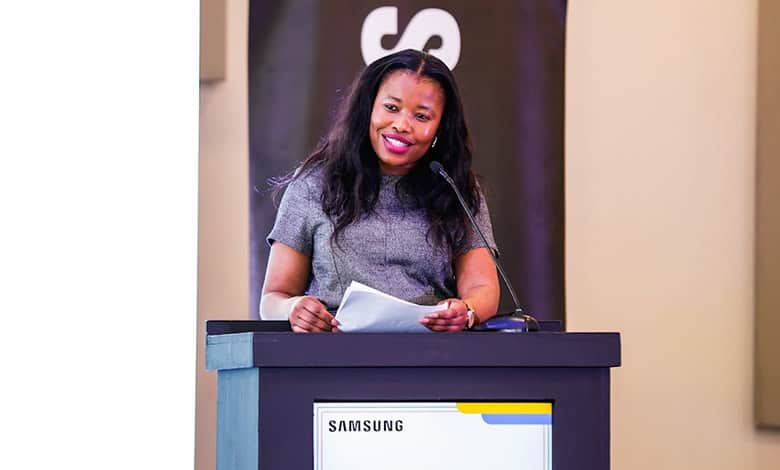
Lefa Makgato, corporate social responsibility (CSR) Manager for Samsung SA concluded: “Congratulations to all our participants. As Samsung, we strongly believe that education is the foundation that allows youth to realise their full potential. Through our strong collaborative partnership with the DBE, we are proud to continue empowering young minds and inspiring positive change across SA.”
[1] Source: Goal 4: Quality education | United Nations Development Programme