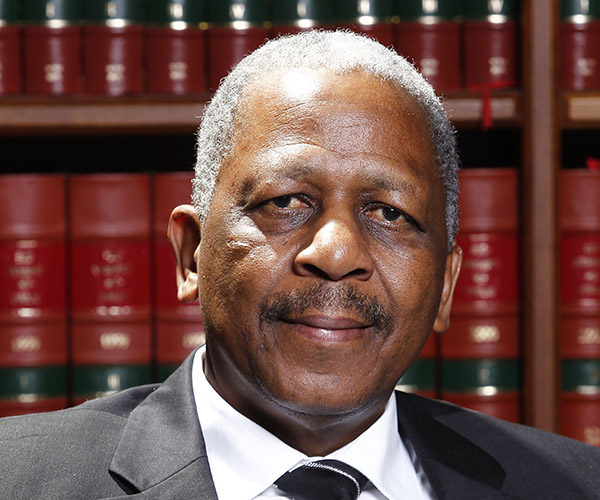
Dr Mathews Phosa recently addressed the roundtable on “Whiteness – Whites‚ Afrikaans‚ Afrikaners,” hosted by the Mapungubwe Institute for Strategic Reflection (MISTRA). What follows here is his complete speach…
We are not alone in our thoughts, desires and needs. We are not the same but we are no different. We are all migrants that arrived in South Africa over centuries, but some as recent as yesterday, to call it our home. We must not burden ourselves with the past but empower us with accepting the responsibilities that we are sharing to build a future that is admirable and deserving.
What happened to the excitement of the nation in the lead-up and immediate period following the establishment of this fledgling democracy in 1994? Was the aspiration of the father of our nation, Nelson Mandela, not to unite all South Africans under a new flag and new national anthem?
I hear that the cries for freedom, shared by all South Africans, young and old, Zulu, Venda, Afrikaans, Xhosa and many more becoming a cry of desperation.
Everywhere I go I detect an air of anxiety in our everyday lives, some of it is economically inspired, some are founded in our lack of security and the activities of criminals that has now reached our doorsteps while others are based on our intolerance for each other.
Our leaders, in society and at home, often pitch our reactions to current day challenges in our experiences of the past, such as living under apartheid oppression or the remnants of colonialism and other past events.
The time has come to firmly refocus the mind of our nation. We need to regain the excitement of embarking on a new journey that we all felt in 1994. Time for rhetoric and other pompous pronouncements belongs in the past if we want to really create a fully inclusive and understanding new order in South Africa.
For this to happen, our leaders must be out there in communities encouraging unity, not only in our distinctive cultural diversity but also in the multiplicity of our needs and aspirations that unite us all.
As South Africans we must unite to protect our extensive cultural diversity, our past as part of a great trading culture – never forget the people of Mapungubwe – and our unique natural heritage.
Although many efforts are made to protect our natural heritage, it is not only the Rhino that needs to be conserved for future generations.
Albert Einstein, in all his scientific glory once said, ‘Our task must be to free ourselves… by widening our circle of compassion to embrace all living creatures and the whole of nature and its beauty.’
This is not a difficult task in South Africa, seeing that we have such a magnitude of inspiring creatures, such as the Pickergill’s Reedfrog, the Cape Vulture, the Cheetah, the Yellow-breasted pipits and a multitude of other threatened species that live in our midst.
In gathering at roundtables, conferences, meetings and over dinner at home, we need to deal with matters of importance not only responsibly but also thoroughly.
If we cannot guide and nurture our teenagers with confidence and pride at home they take their mischievous behaviour with them into the streets of our townships and institutions.
For our democracy to mature past the prolonged teenage years, the leadership of our nation will have to become more proactive and find new solutions to old problems even before it raises its head in public.
Whilst residing on the southern tip of Africa, we cannot escape the world and the changes that is taking place in the global society in general.
Although some may argue that the world is controlled by the nations and the economic powers and currencies of the West, it is also equally influenced by aspects and activities that transpires in the East and those occurring North of our borders on the African Continent. If we choose to sit back and wait for somebody to come and rescue our economy or our people, we are living a dream.
Our responsibility as part of a global society is to participate, guide, cultivate and generate new thinking that will ensure local economic and social growth and development.
We must welcome critical debate and thinking that not necessarily reflect our own. We must dissect it, discuss it, publically debate it and form our consolidated opinion that considers all contributions and aspirations.
It’s not a good thing to shoot the messenger as you will not get the message.
Our underperforming economy is a reflection of the impact that the transformation of global society has locally. Our consistent disregard for sound economic growth principles – such as the role of the State versus the role of Private Enterprise in the creation and protection of employment – is costing our economy and our people dearly.
We can unfortunately not continue to dwell in the Kingdom of Mapungubwe anymore. We can be proud of our ancient trading skills and economic strength but the world of yesterday is not the world of today.
We are living in a new world, one with a population of approximately seven comma four billion (7,4 billion) people with a net growth of almost seventy million since the beginning of the year. The challenges to feed them, clothe them, educate them and allow them to become valuable participants in the global economy is extremely challenging and will become even more so in the years to come.
To move forward, we must learn from the lessons of history. It is often convenient to pitch our tents in the past – that way it is easy for us blame everything that is not working on everybody else – rather than building our own home of the future with due cognisance of the shortcomings and good things of the past.
The wave of change currently building around the world will catch us off guard if we decide to remain in our past dwellings. By coming together to form responses and make plans to address some of the pressing local and global issues collectively, we will be able to participate in the now order. If not, we run the risk of ending up in the museum or feature on the walls of the exhibition halls of the successful.
I don’t see a single party in this venue today that is not part of the hope and the future of our country and the African Continent. Everyone of have a role to play in making South Africa and Africa great.
We must never forget that this country raised many leaders that positively influenced world events. From the likes of Jan Smuts, Nelson Mandela and other politicians, peace laureates such as Desmond Tutu, scientists, theologians, artists and many others, South Africa – with only zero comma eight percent (0,8%) of the world population – can continue to have an impact internationally.
Every South African, and in the context of this Roundtable Discussions, the Afrikaner, has a role to play in the future of our country. I hear that some of the Afrikaners feel that they are threatened by the government’s policies on issues of empowerment, land and quotas in sport.
Whilst it is justifiable true, these are small issues that allow politicians to overlook important matters. Our leaders must be held accountable – we must not allow them to mess with our futures or that of the world.
We need to use platforms such as this to debate and make inputs to government regarding the impact that ill thought out or poorly implemented and administered policies are having on our livelihoods and food security for our nation.
I was once asked by a colleague as to when somebody can be regarded as a South African. Although the question was politically loaded, my response was that South African citizenship can, subject to the provisions of the South African Citizenship Act,1995, be acquired by birth, descent, naturalisation and previously also by registration in specific instances.
Now what this imply is that once the above requirements are met, you are a South African and should be respected, protected and valued by the State and other South Africans. Your rights in terms of the constitution must be respected and your potential contributions to the economy and society in general should be sought.
Our economy is ambling along at a substandard level as a result of our inability to gather and direct the skills and expertise that is available as well as from the interference by government in employment policies and practices.
This economy can only grow at expected levels once we acknowledge that everybody has an equal role and responsibility in making it successful.
Successful nations are built on education, skills development and harnessing experience. They also allocate substantial resources to research & development and entrepreneurial support.
You noticed, no reference to culture, colour or language – only Education, Skills Development and Experience!
Let’s open the doors and welcome those skilled and experienced Afrikaners and other whites that abandoned their beloved country in search of security, stability and acknowledge their skills in our economy. Let’s make it easy for them to return and to stay.
As for social stability, the momentum of the student challenge of the past weeks appears to be unstoppable and should provide a guide for what may come in the future.
We have seen dissent in the past. Protest action, occupation of public spaces, militant rhetoric and destruction of critical infrastructure. We have indeed seen it happening time and again.
Following this, as always, is a nervous middle class joined by business and institutions, scrambling to protect assets and making plans to abandon projects and growth plans.
Often, government is nowhere to be found, only arriving on the scene when the smoke is thick and the security forces are tested to its limits. Then we get the promises, the political jostling for position and the masses dispersing. They often regroup in another form, with another agenda. But they certainly regroup.
Will the next crisis stem from the grannies occupying Parliament in search of higher pension and other social welfare benefits putting a further strain on the economy?
Only time will tell, but be careful, every time it happens it is worst.
Our thoughts, aspirations and wishes of a new South Africa where we all work together for the wellbeing of all is a distant memory. With current events fresh in our memory, we must define the foundations of a new dispensation before further militant action, equivalent to those of the 1980’s, is forced upon us by opportunistic populist and racist politicians and pseudo leaders.
The exiting road we chose in 1994 is long gone. Deep potholes and divisions are now threatening the very order on which our democracy is build. Populist calls for unfair land alienation and other suicidal economic policies threaten South Africa and its place in Africa and the World. A realisation of the need for change and the establishing of a new economic and social order in South Africa must become a priority.
More than twenty years have passed since Nelson Mandela became the first president of a free and democratic South Africa.
Although measurable progress was made in a number of areas, prosperity can only become the norm if we abandon the idea that we are a revolutionary state. I call on all our leaders to engage in debate and to ensure that South Africa become the society we all desire. South Africa became a Constitutional Democracy in 1994 and its leaders cannot continue to believe that revolutionary leadership will lead to Nation Formation and Social Cohesion.
Careful examination and planning the extension of tertiary education to include aspects such as the training of healthcare professionals, education colleges and vocational training institutions will have to include addressing the critical shortage of skilled and experienced faculty at the tertiary education level.
Partnerships and other joint ventures, including calling on qualified professionals in the private sector, needs to be sought to alleviate the pressures and shortages experienced in the training and education sector.
Before we seek to become a powerful nation on the continent we need to grow our economy. With the current Debt to GDP level projected to be more than 45% in 2018 (from approximately 28% in 2009) we need to ask serious questions regarding our government policies. The current capital expenditure of approximately 12% of the national budget is fast being caught by the 2015 interest expenditure budget of 10% of the national budget.
I see trouble on the horizon if we don’t address this issue by either cutting the expenditure budget or by emancipation of the economy to provide the required growth in GDP. The recent and forthcoming increases in taxation is a certain recipe for a further reduction in economic growth in favour of instability and social tension.
We all have a role to play in restoring trust and building mutual respect between all South Africans. Engaging on matters of national importance through roundtable debates such as this, allowing free thinking and engagement in robust debate form the building blocks of our nation.
To build a new order in South Africa, where whiteness and blackness does not matter, our leaders must:
· Engage in unselfish public debate that is void of populism, racism and rhetoric;
· Have mutual respect between them and have respect for our constitutional and social institutions;
· Must share a vision for the development of South Africa to be a respected global citizen – nations without a shared vision and distrust between leaders leads to a broken nation where moral decay is the order of the day; and
· Promote inclusive nationalism without tribalism.
In closing,
A conflict free South Africa, reinforced by sustainable economic growth and full employment, will support the long term economic and political stability of the continent and the world.
Whereas human rights and human development feature equally high with regards to economic stability and development, conflict resolution, the establishment of stable democracies and long term capital investment and economic growth are preconditions to fairness and regional stability.
A successful and cohesive nation engages in practices where everybody is treated equally, without favour. They apply the law in all aspects of social life consistently and without prejudice. Their leaders leads from the front, engaging in constructive debate taking responsibility for nation building and condemn corrupt activities.
With powerful functioning business and community structures such as the Afrikaanse Handels Instituut (AHAI, the Afrikaanse Taal en Kultuur Vereniging (ATKV) and local Sakekamers, the Afrikaners have an important role to play in the development of South Africa.
Our antagonism towards a language or those peaking it as a first language at home is often based on our perceptions or lack of information. An analysis of the results of the 2011 census indicated that more black, coloured, and Indian South Africans speak Afrikaans at home than white South Africans.
According to a study by the SA Institute of Race Relations (SAIRR), only 40% of those who speak Afrikaans at home are whites. This means that out of 6.9 million people who speak the language at home, 2.7 million are white, while the rest are from other racial groups.
In short, the results from the 2011 census indicated that Afrikaans is spoken at home by 13,5% of the population, second only to the 22,7% of the population that speak iSizulu at home.
I call on all white Afrikaners to engage in forming an inclusive and cohesive cultural bond between all Afrikaans speaking South Africans as the foundation for inclusiveness and nation building without elitism and exclusion of other cultural and population groups.
We are all South Africans, be it by birth, descent, naturalisation or another Home Affairs action. Let us not overemphasise Whiteness, Afrikaners, Afrikaans or any other popular term. We must all stand up and hold hands to build a future that Madiba can be proud of I dare you to do it now – stand up, hold hands – you will realise it is easy and does not require undue effort or energy.
Thank you.