Is Uplands’ equestrian centre unstable?
Horse owners believe that unreasonable strain is placed on the animals.
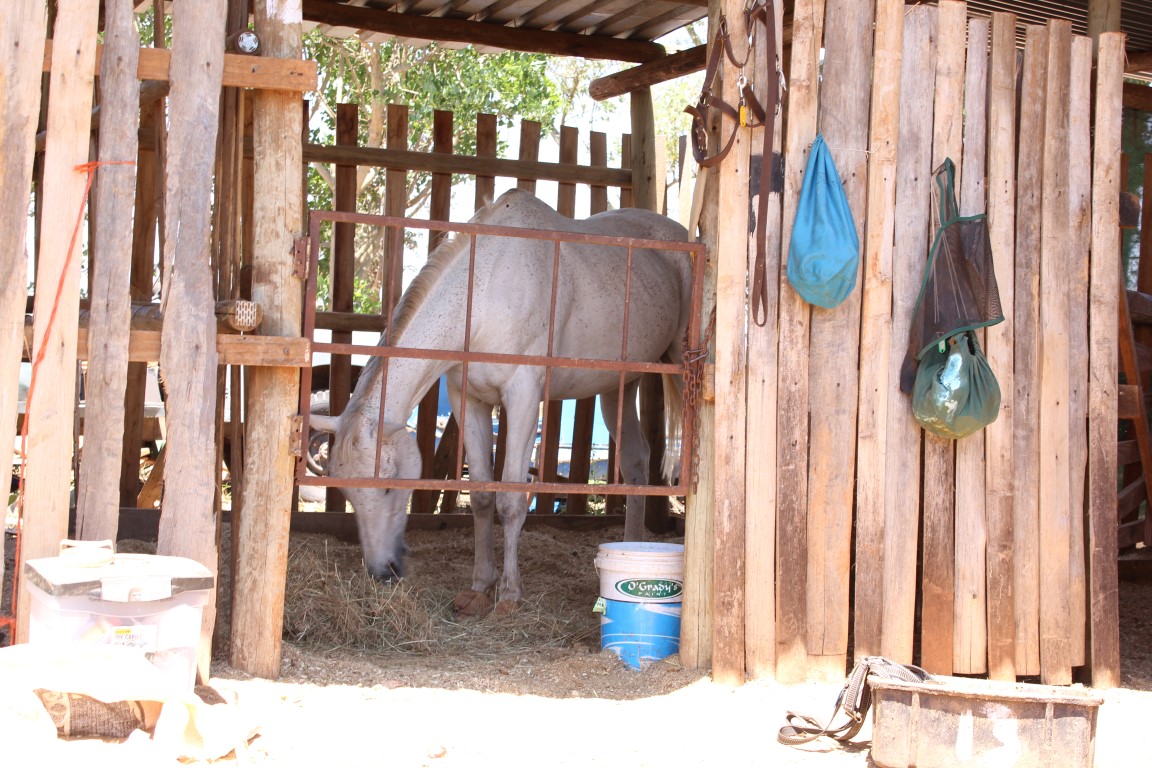
WHITE RIVER – A handful of parents of Uplands College pupils, who were once very proud of the school and its stables, feels that a so-called “quantity riders over quality horse care” approach has been to the detriment of the animals’ lodgings. Principal Mr Austin Clarke denied this, saying that the school had never boasted more horse riders.
This follows after the stables on the school grounds changed hands on July 1. Since then, many feel that the horses on the premises have not been taken care of properly. Horse fanatics feel that an increased number of them lodging on limited infrastructure places strain on expensive resources. They also fear that the increasing number of riders may become too much for the available trained horses.
Slight disagreements on these and other issues turned into full-blown chaos when an alleged sabotage rocked the stables on Tuesday morning.
When equestrian centre manager Ms Shannon Claase Jaume arrived, she discovered that three horses had been let out of their stables. Bags of feed had been ripped open and one of the animals had sustained a head wound. The incident was never reported to the police. In the same week, an alleged case of horse flu sent shock waves through the equestrian community before a veterinarian check-up confirmed that one of the horses at the stables was suffering from enchephilitis. Apart from offering riding lessons to the school’s pupils, the equestrian centre also leases stables to private horse owners.
A group of them, who are also parents at the school, have complained that centre manager Ms Shannon Claase Jaume is not suitably qualified for her job. Upon enquiry, Clarke said he was satisfied with the service rendered by Claase and her assistants. This upset a concerned parent, Mr Graham Hewlett, who said Claase’s assistants were not aptly qualified either.
“I took this up with Clarke, who merely washed his hands of it. To me, that is the exact opposite of what Uplands stands for.” Hewlett, a former Uplands pupil, explained that the school’s ethos needed to be upheld. “The school promises to teach more than academics – it teaches morals, social obligations and raises creative, critical thinkers.”
In an address to Lowvelder, Hewlett raised the collective concerns of five individuals, alleging that Claase purported having qualifications that she had never obtained. Clarke, who spoke on behalf of Claase, denied that she had ever misrepresented herself.
Following reports that previous groomsmen had been dismissed illegally, Clarke said no issues had been raised with the CCMA or other authorities. Another anomaly lay therein that Clarke and the school intended to involve as many pupils in horse riding as possible, while the concerned group felt that this might be to the detriment of the horses.
According to Clarke, Claase was tasked with growing and developing the sport on campus. “We’ve never had more students participating in the sport,” he said on Wednesday. He emphasised the school’s child-centred approach to running the stables and said parents and community members who identified with this purpose and vision were also welcome.
The strain that this placed on the available horses, worries horse owners. Out of the 47 stables, 45 were currently occupied. “The horses do not have enough hay and grass. One horse can only handle that many lessons per day,” a concerned parent commented. “At the moment, on top of our horses’ lodging, we are paying extra per month. That’s because we anticipate that an increased number of horses and riders will inevitably mean an increased demand for money.”
Hewlett echoed this. “We sent our children to a first-class school and expect the facilities to be first class. The stables have deteriorated and when the school does not react to our complaints about the issue, that is most definitely anything but first class. When their failure to react prejudices animals, it becomes immoral,” he said.