The silent killer strikes again
After a couple from Cairn contracted malaria without visiting a high risk malaria area, it is feared that parts of the Lowveld not previously classified as transmission areas may now pose a danger.
MBOMBELA – A woman from Cairn is fighting for her life after she and her husband contracted malaria three weeks ago.
Neither of them had recently been out of the area, fuelling fears that parts of the Lowveld not previously classified as transmission areas may now pose a danger.
According to the husband, who preferred not to be identified, they fell ill at the same time. He was treated at Temba Hospital and discharged this week, but his wife is still in a coma.
She was first treated in Mediclinic Nelspruit, but recently transferred to Rob Ferreira Hospital where she is undergoing haemodialysis. A tracheotomy was inserted to make her breathe easier.
Robyn Baard, patient experience manager at Mediclinic Nelspruit, confirmed that it admitted 37 confirmed malaria patients in September.
Six were from Mbombela, four from Steelpoort (all members of the same family), three each from Barberton, the Kruger National Park and Burgersfort, and two each from Malalane, Tekwane, Hazyview, Sabie Sands and Hectorspruit. White River, KaNyamazane, Hoedspruit, Marloth Park, Kamhlusha, Swaziland and Mozambique produced one case each.
Chris Nobela, of the Mpumalanga Department of Health, confirmed that 552 malaria cases were reported in primary health-care facilities and hospitals in the province in September, with 548 cases in Ehlanzeni, a malaria-endemic district.
“The most affected subdistricts are Bushbuckridge, Nkomazi and Mbombela,” he said.
Only 132 cases were reported during the same period in 2016. Last year 976 were identified in the province from April to September, with 933 from Ehlanzeni.
Nobela explained that the severe drought last year contributed to fewer cases. “Mosquitoes need conditions like humidity and rain to breed.”
He added that malaria cases were reported each month of the year. “Early this year we had good rain, hence we experienced an outbreak in Limpopo and Mpumalanga.”
Baard confirmed the unusual outbreak in the Hoedspruit area in May. “Current trends are more scattered,” she said.
Nobela insisted that most cases reported in Mbombela, White River and other traditional low-risk areas, where patients did not visit endemic areas, were “imported” due to the movement patterns of people.
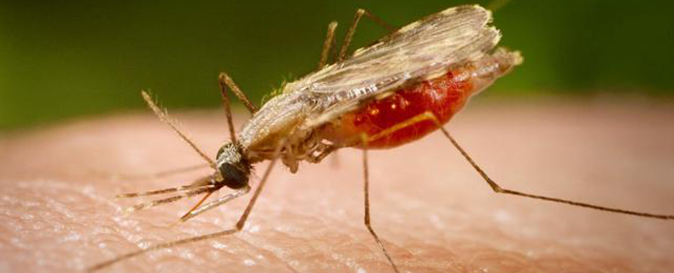
A local medical professional conceded that it could be ascribed to mosquitoes feeding on “carrier” hosts. A mosquito is infected with the malaria parasite when it sucks blood from an infected human.
Parasites reproduce in the gut of the mosquito and accumulate in the salivary glands, ready to infect another human host with the next bite.
Dr Ben Prinsloo, a pathologist from Lancet Laboratories in Pretoria, quoted the National Institute for Communicable Diseases (NICD), indicating that mild winter conditions in the region were favourable to ongoing mosquito breeding.
The institute advises health-care workers to be more alert for malaria in any person living in, or recently returning from, a malaria area and who presents with a fever or flu-like symptoms. “This is important given a prolonged influenza season and overlapping symptoms in the early stages of both diseases,” he said.
The Mpumalanga Department of Health runs several projects to curb malaria. It started its annual indoor residual spraying programme in Bushbuckridge, Mbombela and Nkomazi subdistricts in September and will larvicide breeding sites using insecticides.
“We have intensified activities to make communities understand malaria and health facilities are on high alert for suspected cases,” Nobela said. “More malaria, drugs and test kits have been procured and vector surveillance is used to check what type of mosquitoes we will deal with.”
He said no vaccine is available yet, but is in developmental stages in other countries.