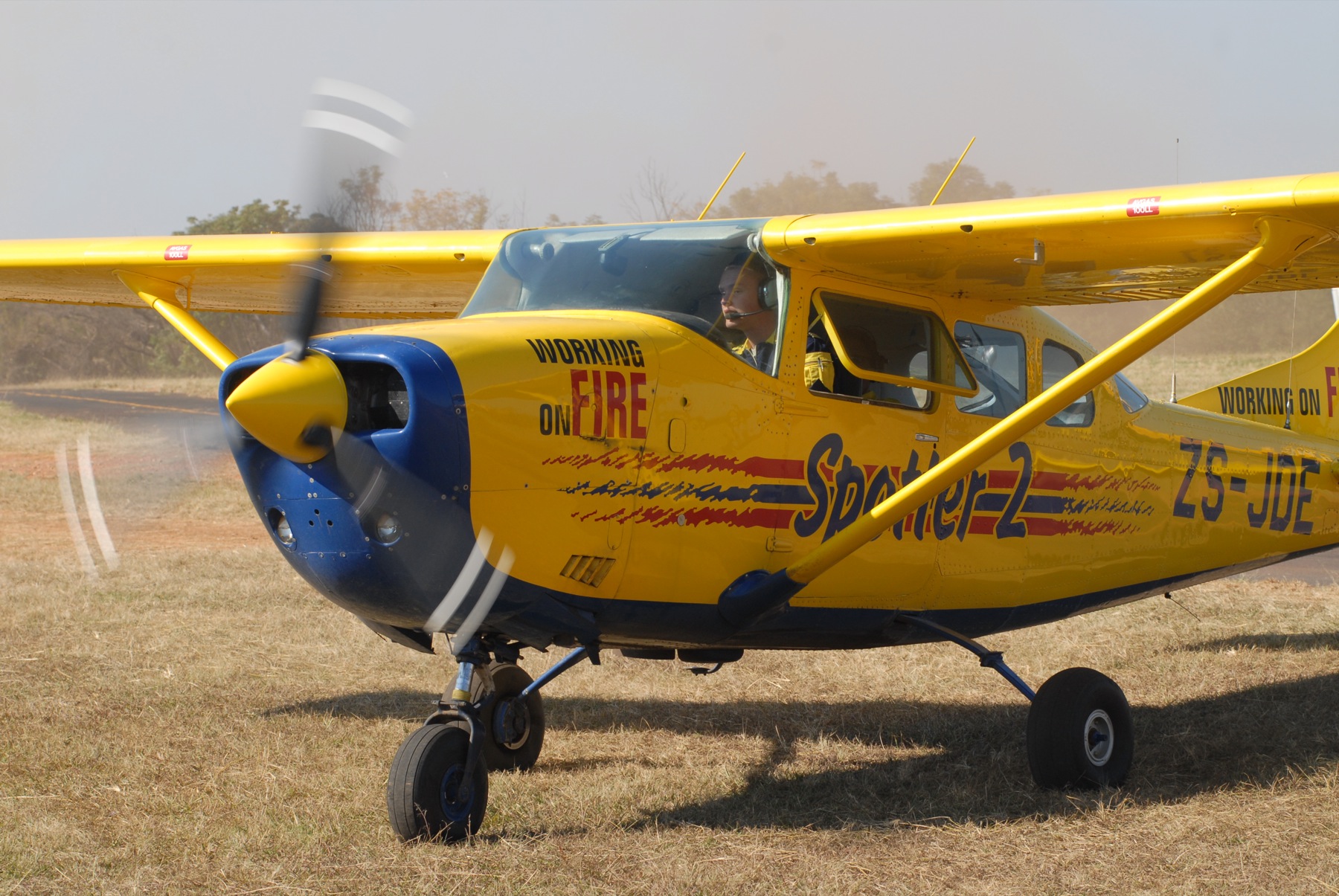
A spotter pilot is crucial in the fight against fires
These pilots are specifically trained to ensure that aerial firefighting operations are undertaken safely and efficiently.
When wildfires threaten farms and destroy hectares worth of commercial plantations and farmland, aerial firefighters are called in.
Fires raging and spreading through Mbombela’s surrounds
Aerial firefighting has a positive impact on wildland firefighting operations. Aerial bombing does not necessarily put out fires but these aircraft are able to cool down the fire line, enabling ground teams to move in closer and extinguish the flames. Successful firefighting operations take teamwork, and aerial firefighters are integral members of that team.
Circling above the fire, we find another, less visual but vitally important, aerial firefighting resource – the command and control aircraft, also referred to as the “Spotter”.
30 years ago, the command and control aircraft (usually high-wing Cessna’s) were coined spotter planes, as they were essentially commissioned to fly out and “spot” the fires.
Modern technology has introduced electronic fire detection cameras which largely fill this fire detection role, while the spotter’s main priority now is the safety of the operating aircraft and ground resources through a command and control function.
The Spotter forms part of initial attack. It is usually dispatched ahead of the other resources. These pilots are specifically trained in advanced fire behaviour and are able to assess the fire and offer relevant real-time information to the Incident Commanders (IC) on the ground, who need the information to make informed decisions regarding tactics and resources.
Apart from air-to-ground communication, the spotter also manages air-to-air communication – primarily to ensure safe separation of aircraft and optimise water drops. They fly at a higher altitude than the other operational aircraft to maintain situational awareness and – in cooperation with the IC – direct the Hueys, with their Bambi buckets, and AT 802 fixed-wing water bombers to where water is most needed.
UPDATE: CBD fire being brought under control
FireFly camera systems are installed on-board the command and control aircraft, which records and streams live footage to the IC and landowners in their office. This gives the ground operations immediate and accurate insight into the fire’s behaviour and the effectiveness of the aerial and ground suppression actions.
The spotter usually only stands down once all the other aircraft have been demobilised and ground teams no longer require its assistance. As a result, the spotter may circle a fire for up to four hours before it has to land and refuel.
“Spotting is a very challenging job and you need to multitask well,” explains one experiences Kishugu® Aviation Command and Control pilot currently flying for Working on Fire (WOF) Aviation.
“The cockpit can get very busy with all the observing and radio work – and then you still have to keep the plane in the air. But, I have been in aerial firefighting for 12 years and I think it is one of the most rewarding aviation jobs you can find. It is an honour to be part of a team who fights to save lives and livelihoods.”
Also read: Dam levels continue to drop as mercury rises