Wildlife through Kim Wolhuter’s eyes
He prefers to go barefoot into the veld to show respect when moving in nature.
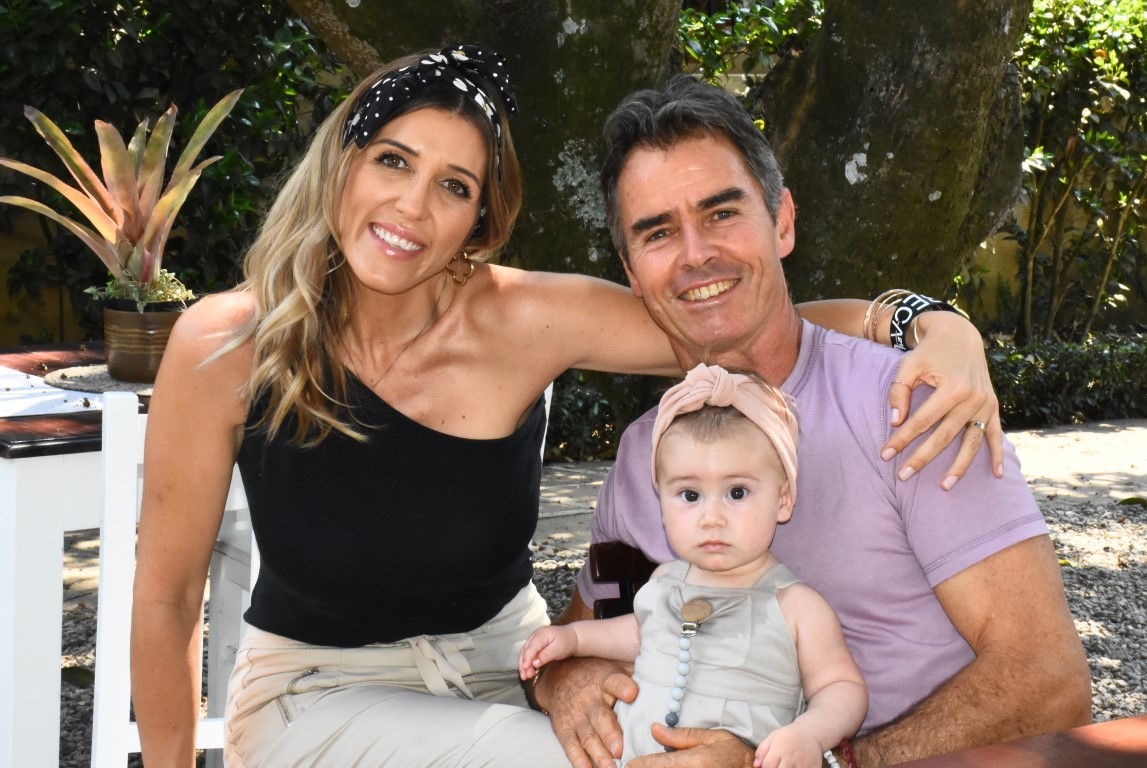
WHITE RIVER – He arrived at the restaurant barefoot and she followed a while later, wearing a moonboot and pushing a stroller from which a baby girl smiled happily.
This was not the way I anticipated to meet Kim Wolhuter, the famous film-maker, but learning the reason why he prefers not to wear shoes, made me realise exactly why his films are so farreaching and highly esteemed in the realm of conservation.
The story behind his wife Saskia’s moonboot, however, is much less romantic. She broke her ankle recently.
Describing his life and work from one interview in one article is impossible, but during a two-hour conversation, this journalist for one, is hooked on his work.
The reason for going barefoot, he explains shortly into our conversation, is to show respect when moving in nature. “Have you realised how destructive it is to walk with boots in pristine veld?” he challenged. “Never mind disturbing the silence with your crunching through grass and bush.”
Listening to him makes one realise he was almost destined to do what he does.
He himself unashamedly admits that using the Wolhuter name opened doors for him: His grandfather being one of the first rangers and his father later a head ranger of the Kruger National Park, gave him credibility when he started off making films.
After obtaining a degree in ecology he first managed a game farm in Botswana and was later a ranger of a reserve in Swaziland, but eventually turned to film-making due to an invitation by well-known film-maker Richard Goss.
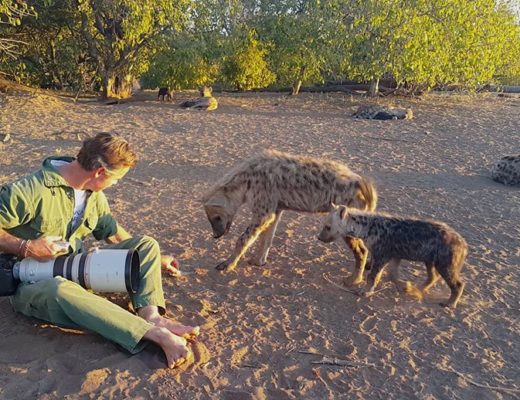
Kim and Saskia spent the previous years in Mashatu Game Reserve in Botswana, where he filmed hyenas for his latest wildlife movie on these mammals.
His work there was abruptly stopped when the Botswana government pulled the plug on filming licences. Fortunately he had enough footage and spent the time since May 2017 in postproduction with the film, Myenas (after my hyenas) and in preparation for his next production on honey badgers.
A series, called Bos, on his life in the bush was shown on the Via channel at the time, with all the footage shot by himself. “In that way I could bring in small things like dung beetles and talk about conservation issues that would otherwise go unnoticed,” he said.
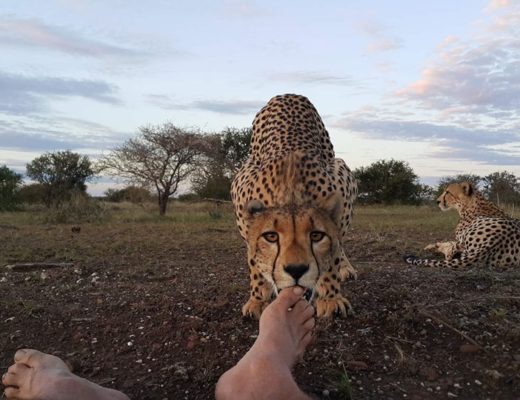
On his close-up interaction with animals, which some people find controversial, he explains: “The animals make the rules. I also thought touching wild animals is wrong but soon realised the worth of it. To film them in natural circumstances, I need to get out of my vehicle and on their eye level. They come to accept me as one of them, which is a huge compliment to me.”
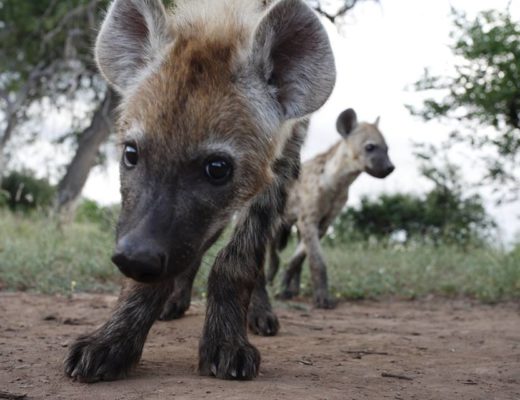
He recalled the moment a hyena approached him and put her head in his hand: “Instead of nibbling on my fingers, she appeared to ‘ask’ for a scratch, which I did.”
In Zimbabwe he had a wonderful moment with a cheetah when she (known to him from previous filming) got up, came to him and started licking his face!
Kim and Saskia and their baby daughter Kiki are off to Zimbabwe soon again, where they will reside “on the banks of a river in a ‘double-storey tent’ for two years while filming honey badgers”.
They can be followed again through a next series on their lives, this time called Untamed. The series will again provide the finances to make the movie.
The story of these honey badgers will, however, only emerge after a few months of filming. “My stories happen naturally after spending time filming,” he explains.
During the interview he talked about “my animals” and then gave his view on naming animals: “People need to connect with nature. When we become disconnected, we don’t care any more.” He mentioned the outrage about the shooting of Cecil the lion as example. “If he didn’t have a name, it would have been a non-event.”
Kim has of course learnt a lot about animals, affecting his life among people, like the absolute importance of body language.
“Hyenas are masters of body language,” he laughed. “They avert leopard charges by just ignoring them!” This came to good use for himself when he tried the same thing once by escaping a leopard charge by just breaking eye contact.
In Saskia he found someone who enjoys life in the bush just as much and the family is looking forward to the next two or more years in a private game reserve in Zimbabwe – chosen as ideal venue to get to know honey badgers better, and giving nature lovers another stunning film to enjoy.
Random interesting facts about Kim
*His real name is Henry Roy, but he was nicknamed Kim by the family maid because he was quite a naughty boy and every time she shouted at him, his father (also Henry) would get confused.
*Although a Lowvelder by birth, he grew up in Johannesburg after his father died when he was five years old. They used to visit the Lowveld for holidays, when he spent a lot of time with Mike English, then ranger in the KNP.
*He has three daughters, aged 22, 20 and seven months.
*Following Kim on his Facebook page also reveals a skilled writer as he records his experiences in the bush.
*He never carries a weapon.
*Kim is famous for a long list of movies and television programmes, including Hyena Queen (TV show) Killer Dogs of Africa (TV show) Hyenas at War (TV show) Nature (TV show) The Cheetah Children Shooting the Big Cats – 2006 Man, Cheetah, Wild (TV show) Stalking Leopards and Living with Leopards.
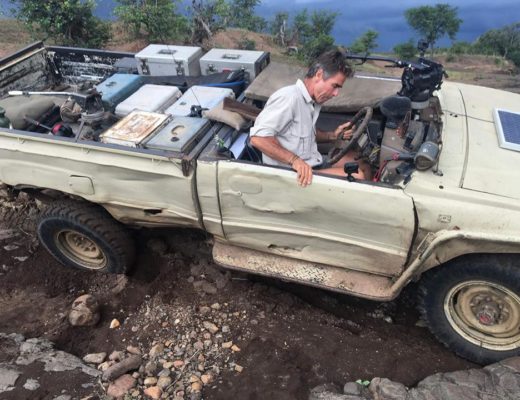
Photos from Kim’s Facebook-page about his experiences while filming: