
A magical night counting elephants in Land Rovers
A journey to remember spotting elephants while driving Land Rovers.
On August 14 I received an invitation from a Mr Frank Basson from Botswana, on behalf of Team Land Rover Botswana (TLRBW) and Elephants Across Borders (EAB), to take part in their annual elephant census.
The invitation encouraged the participation of other interested people as well. The count was scheduled for October 24 from noon till October 25 the same time. It was a 24-hour period under full moon.
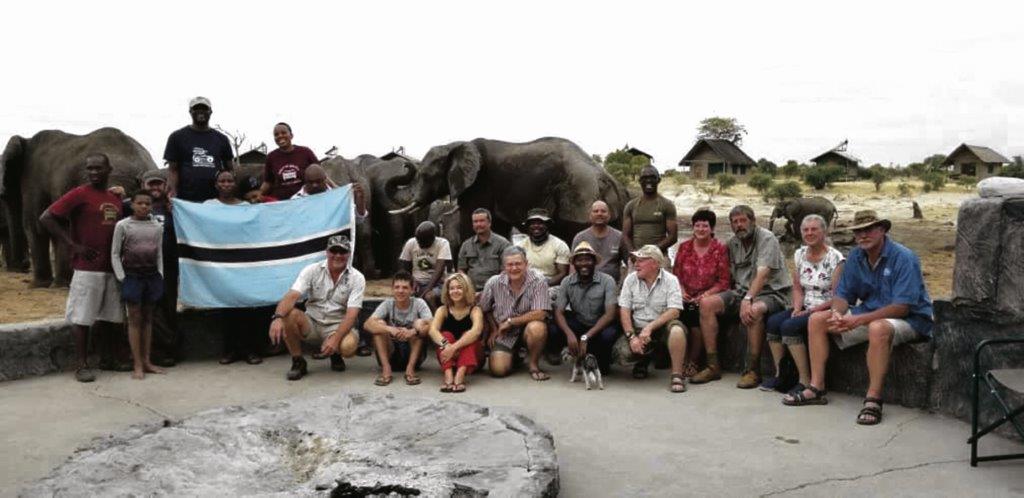
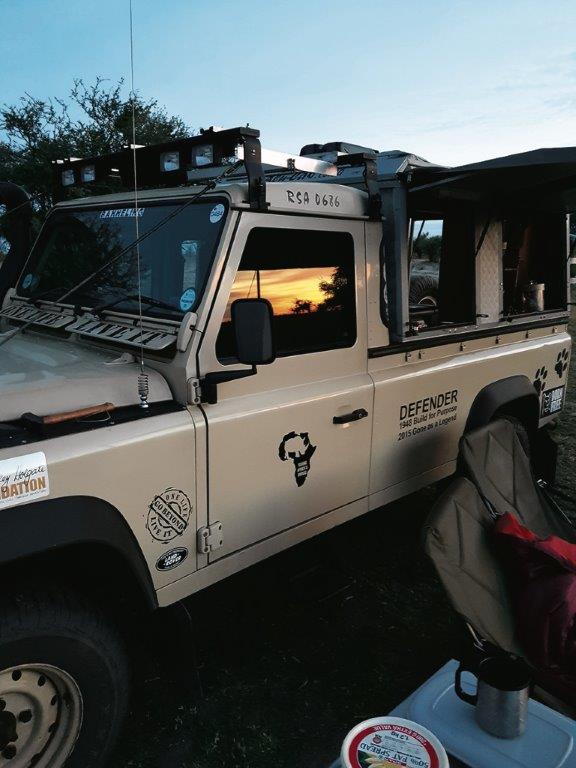
On completion of many prior arrangements, four South African-registered Landies crossed the border at different times to explore more of Botswana. We all gathered at Elephant Sands Lodge on Tuesday October 23.
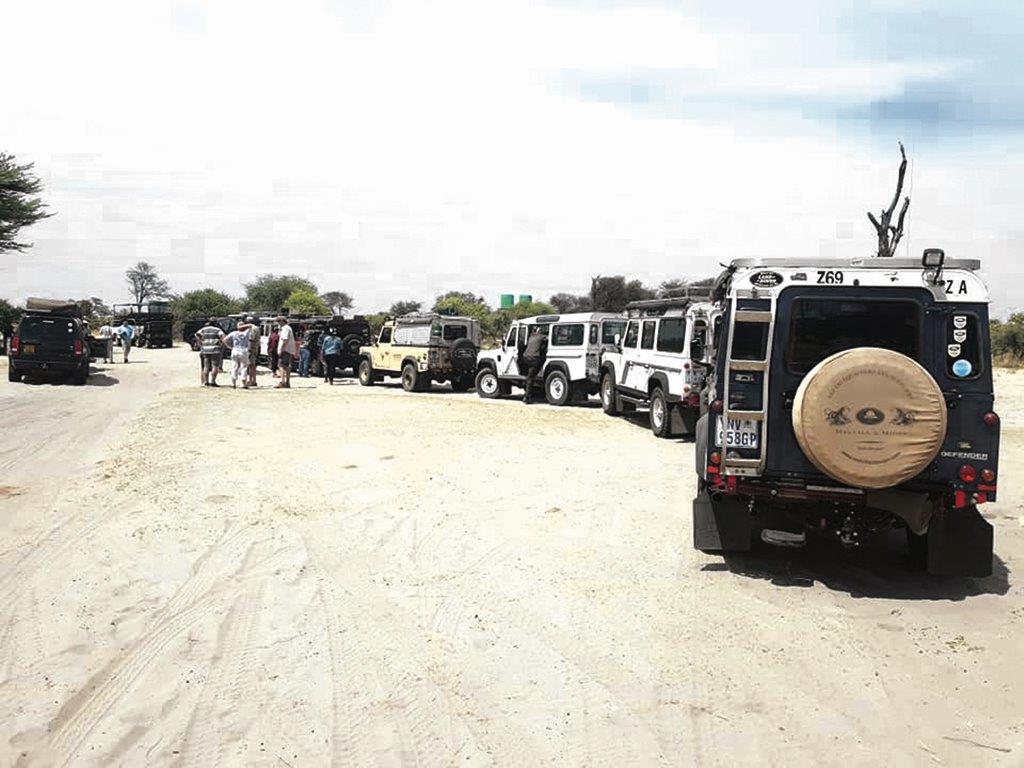
The next day and after a hearty breakfast, we were briefed about the counting rules and expectations. In total we were 32 people and 11 vehicles – four Landies from South Africa, one from Katima Molilo and another couple from South Africa with a Toyota Hilux.
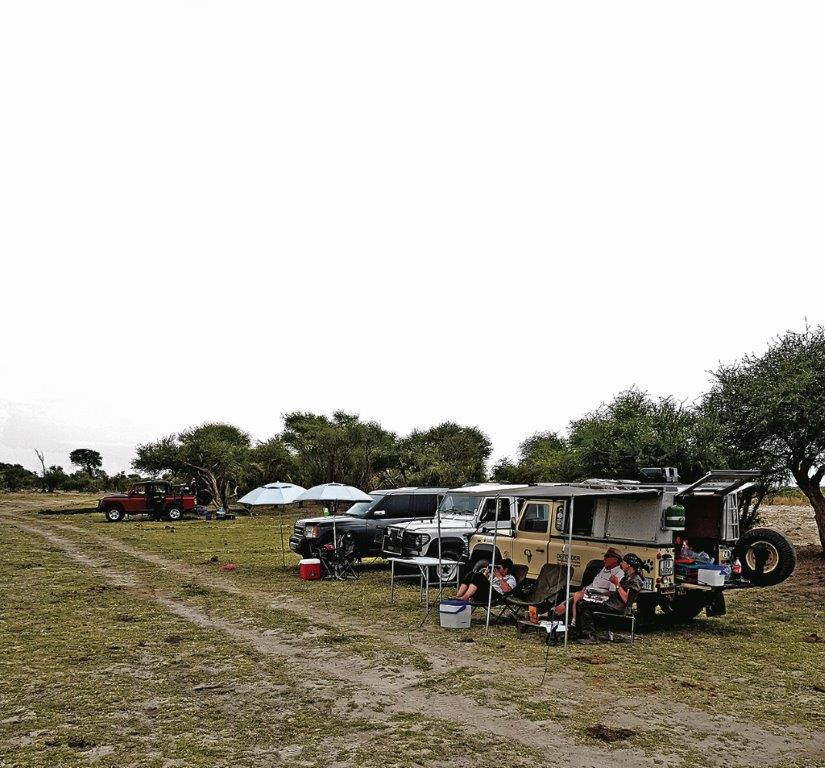
The other Landies were all Botswana registered. We left Elephant Sands in convoy and were taken to the different watering points for the game within a 30km radius from Elephant Sands Lodge. The latter is situated about 70km north of Nata.
We were based at various water points and had radio comms with one another, which certainly added to the enjoyment of the whole exercise and was a privilege to participate in. After we settled in, the counting started at noon.
We were 20km from the main road from Nata to Kasane and about 18km from the Zimbabwe border on the so-called Hunters’ Road. The Hunters’ Road used to be the main ox wagon trail between North Africa and the then-Delagoa Bay.
This is a part of the history, and a very interesting one at that, especially as to how the various waterholes got their names. As the day went by, elephants of all sizes came and drank and disappeared into the African bush.
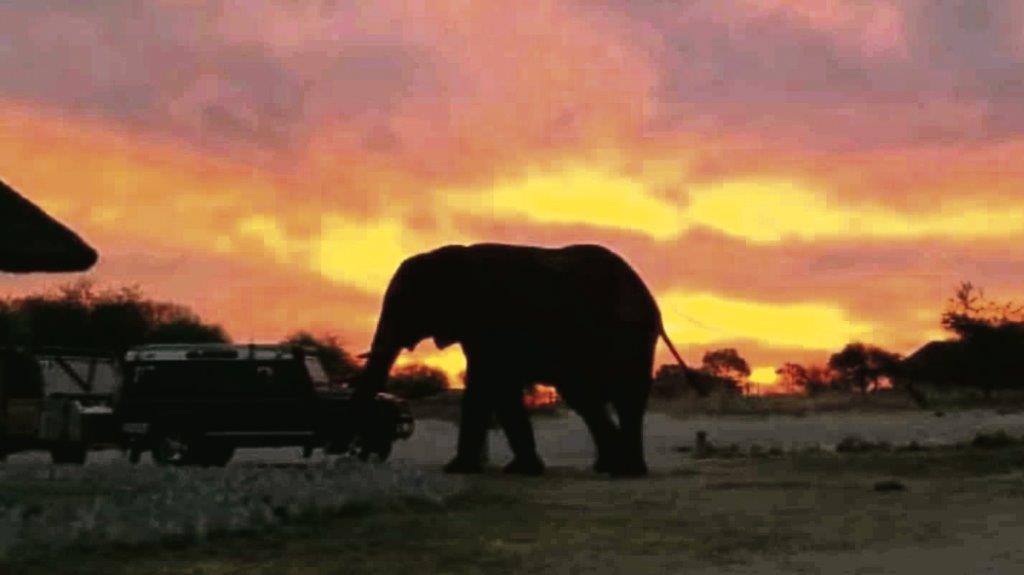
Buffalos also came and went. Big and small herds visited. A tendency which we recognised soon enough was that of single young elephants that made their way to drink and then suddenly leave in quite a hurry – sometimes without drinking any water.
Afterwards learned that these were ellies from Zimbabwe. They would, the moment they smelled humans, just take off. This was the result of hunting and poaching going on in Zimbabwe.
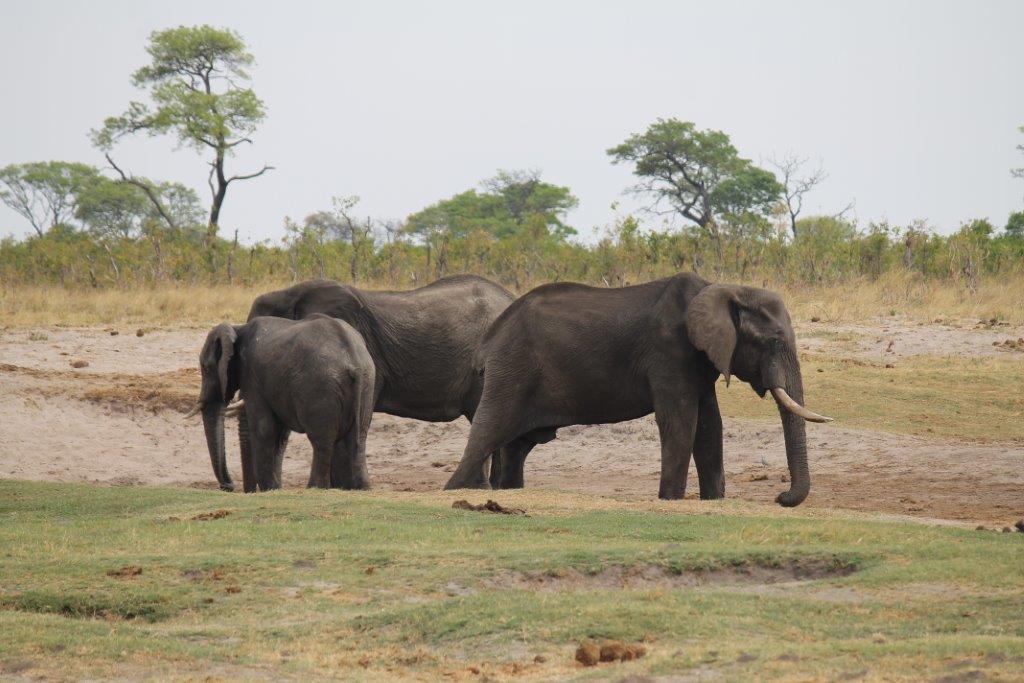
We also saw many female ellies with one or two calves not much younger than the mother. The reason for this seems to be teenage pregnancies among the Zimbabwe ellies.
They look like brothers and sisters. The problem appears to be that they are not accepted in the Botswana herds and roam around by themselves. According to information these cows become pregnant at as young as 16 years instead of 24 to 26.
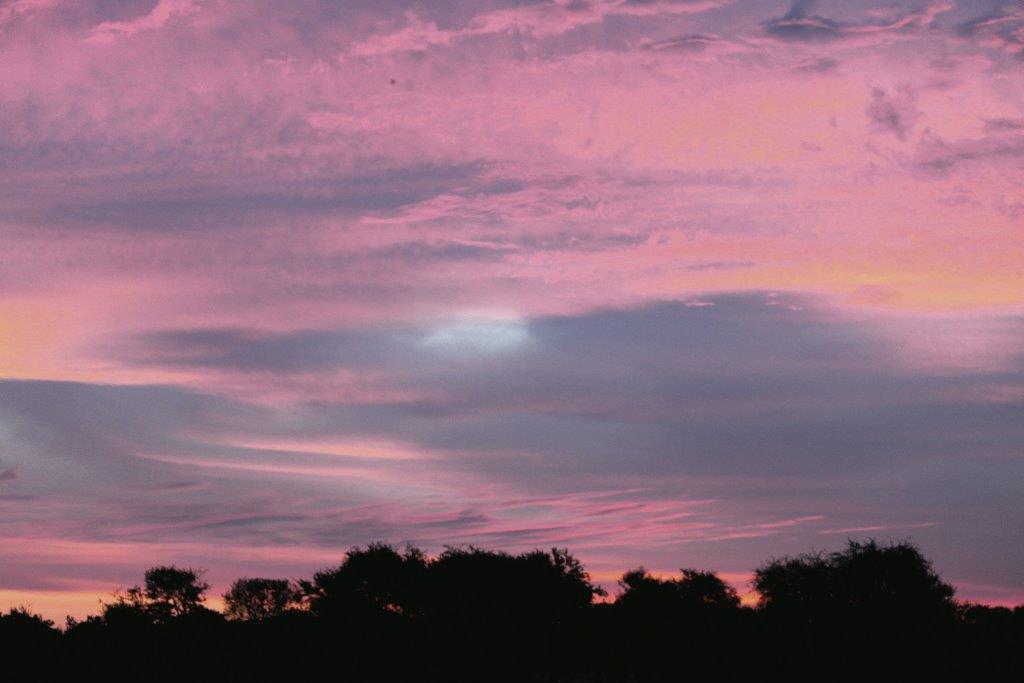
The only conclusion drawn from this is this happens because they are not controlled or mentored by an older matriarch. As the day progressed more and more animals visited and we were treated to spectacular, authentic African sunsets.
As night fell and the moon presented itself, we were treated to magnificent night sounds, including the roars of lions in the distance. A game ranger offered some Jagermeister for the cold.
We learned from him that the lions had caught a baby ellie about two kilometres from where we were. At about 03:00 it was bitterly cold, there were a few clouds covering the moon.
This made it extremely difficult to identify the sex of the animals visiting the waterhole, but one could still see whether they were adults, half-grown or youngsters.
We also had a visit from a jackal. I must admit, it was the coldest night I have ever experienced in Botswana. We normally visit during June and July.
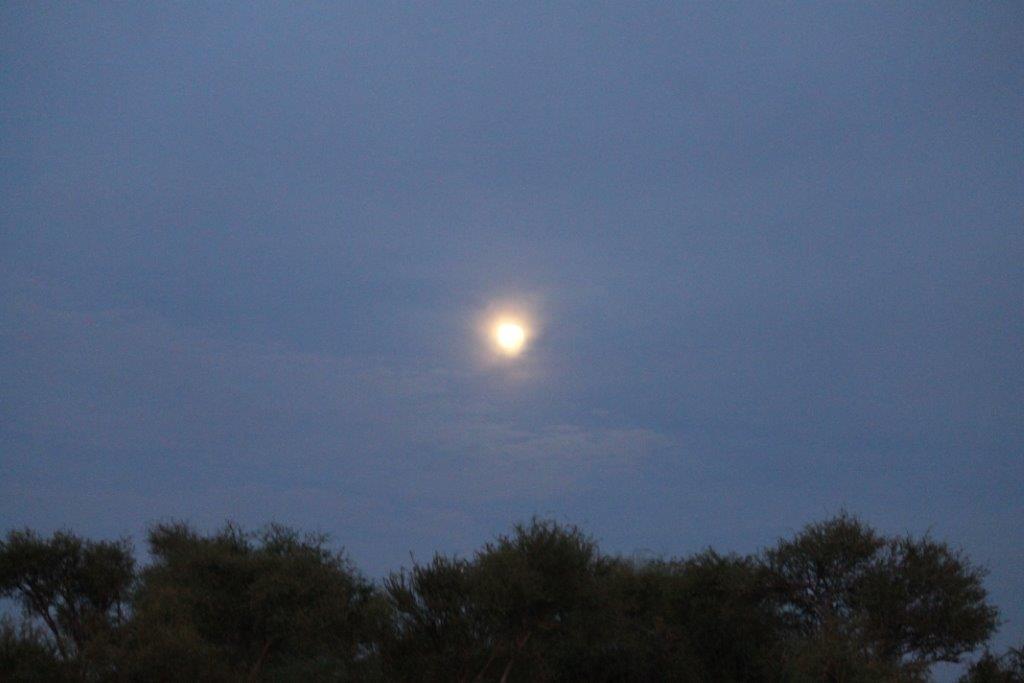
Because of the clouds, the sun showed up later than expected, but the beauty of the African bush was unmistakably awesome and breathtaking. So, just after 12:00 on October 26, we packed up and returned to the lodge – tired and overwhelmed by this experience.
We counted 334 ellies and 105 buffalo in the 24 hours. In total 2 594 ellies, 105 buffalo, three lions, a leopard and four hyenas were counted between the five waterholes.
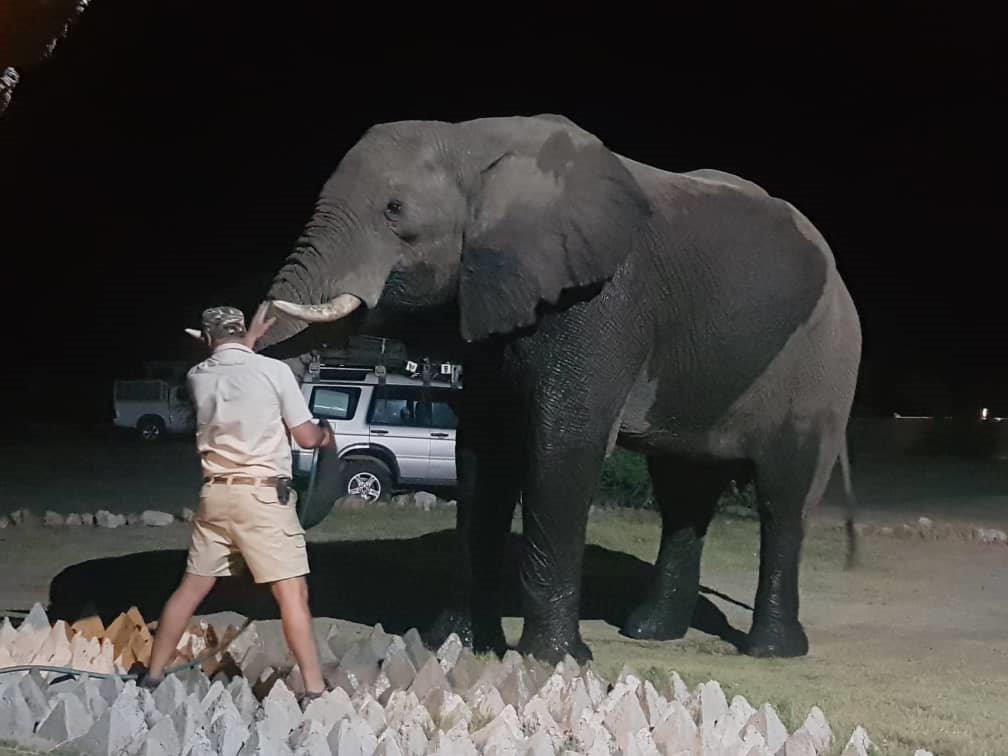
And then, there was Bennie. He is a fullgrown ellie bull that arrived at the lodge more than a year ago with a trap around his leg. The lodge staff removed the wire trap and Bennie, as he was named, disappeared into the bush.
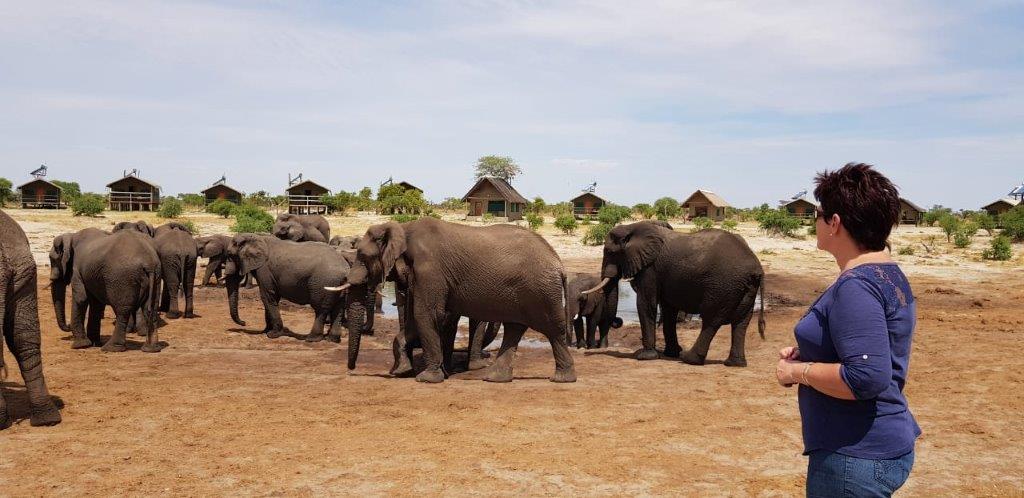
A year later he returned to the place where the trap was removed from his leg – near the back. Since then he has returned to the lodge every second or third night.
And of course, he and lodge owner, Mike, have become close friends – a friendship which has resulted in Bennie receiving some special treatment.
My wife Linda and I, together with the other members of Team Land Rover SA had an experience that will not soon be forgotten. I have committed to taking a larger team from SA to share this experience in 2019.
Should you be interested, email me on jaco.prinsloo1@gmail.com.