SA game ranchers accept responsibility for self-regulation of wildlife species
About 100 wildlife farmers gathered in Pretoria on 25 October 2019, to establish various species and game societies that will regulate the 33 wildlife species that had been listed under the Animal Improvement Act (AIA) through a notice in the Government Gazette in May this year.
This Act, which falls under the jurisdiction of the Department of Agriculture, Land Reform and Rural Development, allows for the breeding of animals and for the establishment of societies to develop best practices, by-laws and standards to self-regulate the breeding of species listed in its regulations.
This recent listing follows on a similar listing in 2016 when 12 antelope species were included.
Last Friday’s meeting was convened by the Game Ranchers’ Forum (GRF) which is an unaffiliated initiative led by Dr Gert Dry and Dr Peter Oberem, both well-known role-players in the wildlife sector.
 Photo: Farmer’s Weekly
Eight interim species societies were established to make provision for all listed game species; grouped under a society.
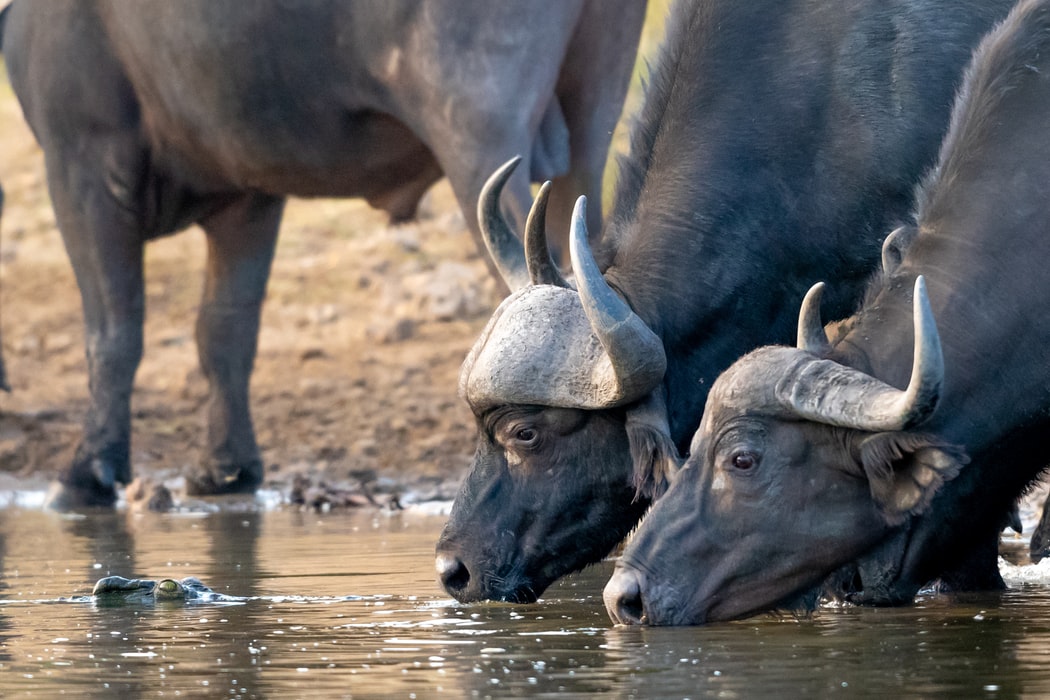
The interim societies will cater for Roan and Sable; Rhinoceros (black and white); Bontebok and Blesbok; Buffalo; Megafauna (Elephant, Hippopotamus, Giraffe); Predator (Cheetah, Leopard, Lion, Wild Dog, Brown Hyena, Spotted Hyena); Game Cluster 1 (small antelope species such as Klipspringer, Springbok, Steenbok etc); and Game Cluster 2 (large antelope and Zebra).
It was agreed that an AGM for each of the species societies will be held before the end of April 2020.
A Game Meat Value Chain Society will develop a roll-out plan for the game production value chain and increase consumer access to safe and healthy game meat products.
Over the next three months, these societies will develop governance structures and best practice models to mitigate and prevent prohibited game ranching practices and in doing so, ultimately contribute to food and economic security in South Africa.
Game ranchers will be able to register with an appropriate species society and at the same time qualify to be a multi-species member of all the species societies.
According to Dr Gert Dry, the inclusion of wildlife species under the AIA is widely welcomed by game ranchers because it removes the irrational biocentric-driven regulatory jurisprudence of the Department of Environment, Forestry and Fisheries (DEFF) that had prevented the game farming sector from reaching its full potential for the past 15 years.
 Photo: Farmer’s Weekly
“We will no longer have to negotiate with a department that applies an arbitrary approach to environmental legislation and gives officials discretionary powers to issue a permit, or not.”
Game ranchers that are part of this initiative believe that the listing of wildlife species under the AIA will contribute to the four pillars of the industry, i.e. eco-tourism, hunting, game meat production and breeding.
According to Dr Peter Oberem this move will allow the industry to reach its potential unfettered by rules made by those that do not understand the industry. He listed some of the benefits of this development to both game ranchers and conservation, namely:
- Self-regulation of the industry versus imposed regulations, rules, and norms and standards;
- Protection of species’ integrity through scientifically developed standards of excellence;
- Enhancing the responsibility of population management;
- Establishing a database with accurate information on the numbers of game ranches, hectares under game ranching, numbers of animals per species, and the movement of animals;
- Access to the same tax benefits, disaster and drought relief as domestic stock farmers; and
- Creating a better platform for research and access to funds.
Dr Oberem said that there were numerous other advantages for game farmers under the Department of Agriculture which recognises game farming as a commodity producing activity that takes place on agricultural land and not an extension of state conservation activities.
However, there are concurrently huge conservation benefits that will accrue. It will also enhance transformation in the sector which is long overdue.