Dung beetle, more than just a poop scooper
If you find yourself thinking that your job sucks, just remember out there in the wild is a beetle shuffling poo around for a living, and they seem to love it.
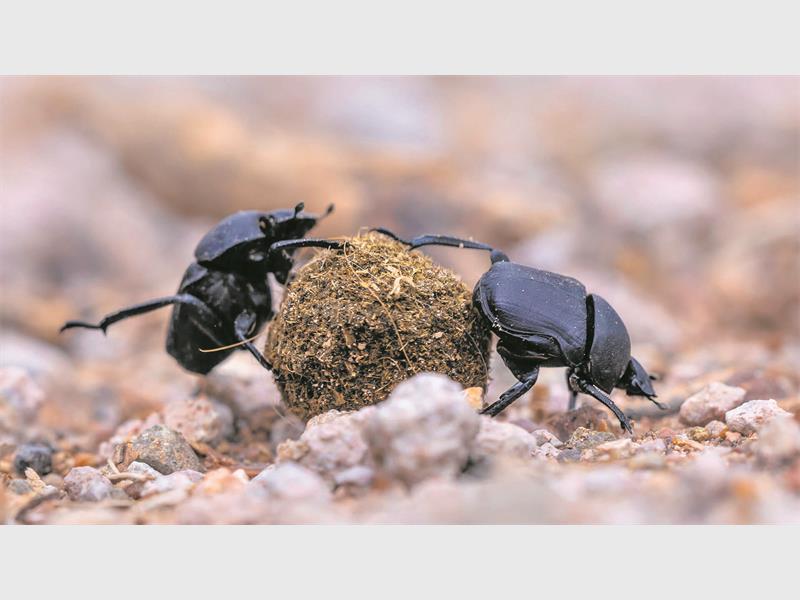
There is more to the little dung beetle than people are aware of. They are intelligent little beings devoted to do the dirty jobs in nature.
Most people will just walk past them, not giving a second glance, without knowing the important role these beetles play in the eco-system. Beetles are not quite so little. Depending on what gender they are, they are quite big in size.
There are beetles that hide away and are not often seen when there is no dung around. As soon as fresh dung hits the ground, these guys are already making their way to their next food source and means to reproduce. For a creature doing such a dirty job, they are in fact quite beautiful. Caught in the correct sunlight, they shine off a rainbow colour from their bodies. Under close inspection, little finger-like extensions are visible on the front legs. It almost seems as though they survived from the Stone Age with their armour-plated like bodies. They have one goal in mind: take waste and turn it into something useful. Strange enough, just like ants have different functions, so do dung beetles.
There are three types sorted according to their job description. You would often find two beetles on one ball of dung. The one is a roller and the other most likely a digger. The reason for the ball is just to make moving it easier.
The roller will identify dung and whether it is usable. He will then start to roll a ball. By the time he has a big enough ball, the digger will have joined him. They are often referred to as the lazy ones, seen riding on the ball while the roller does all the work. The roller has great navigation skills. He uses his hind legs to push the ball, and often walks away from the ball to make sure he is still going the right way. When soft soil is reached, the digger will stop the roller and start to burrow a hole. Within minutes, depending on the size of the ball, it will vanish into the ground. This is where the third type of beetle, the dweller comes in. Dwellers constantly live in the hole with the dung. Female dwellers lay their eggs in the dung, using the solids as food and the liquid as water. They are usually smaller in size and their colour ranges from black to copper.
Next time you pass a beetle hard at work, be considerate towards them. They do a job that few of us will.
Here are some interesting facts about the dung beetle as stipulated by Heritage Tours and Safaris (www.hluhluwegamereserve.com):
• They prefer fresh dung; it is easier to roll and they detect that with a keen sense of smell.
• Most dung beetles prefer herbivore droppings.
• If you see dung being rolled it is primarily to feed their young.
• They are one of the few insects that show parental care to their young.
• They can push weights of up to 50 times their own weight.
• They are found on all continents except for Antarctica, and may live in all habitats.
• The nocturnal African dung beetle, Scarabaeus satyrus, is the only known non-human animal to navigate and orient itself using the Milky Way.