Covid Alert App does not ask for access to your personal contacts, says law expert
Two days ago the president of South Africa urged the country to download the Covid Alert SA App. The SA Covid Alert App was specifically designed to warn South Africans if they are in the same area as someone who has tested positive for the virus.
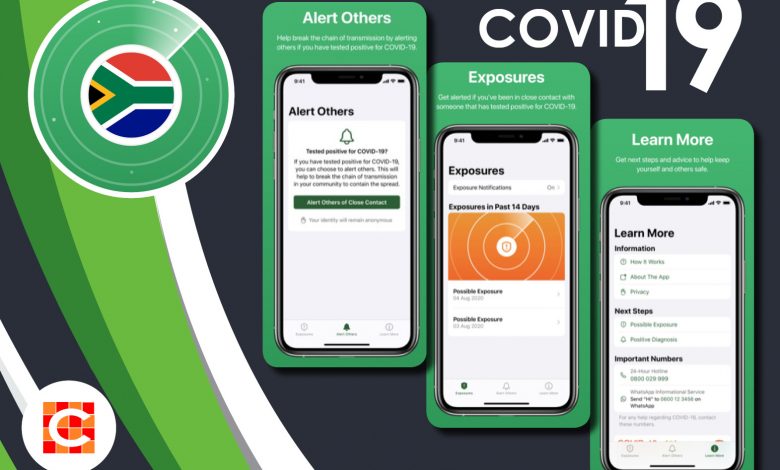
Many South Africans have been circulating a notice on social media alleging that his application asks users to access their contact list. They have urged their friends and family not to download the app.
South African lawyer and journalist, Helene Eloff has personally studied the terms and conditions of the app in question. Eloff confirms that the allegations made against this app are untrue and that it does not ask for any access to your personal contact list.
She downloaded the app herself and gives readers a three-minute guide.
Eloff took to social media with an explanation video that will serve three more purposes.
1. She explains what the law and regulations say about what government and this app may and may not record.
2. She explains what this app does indeed record, and
3. If you are concerned about apps and social media platforms recording your moves, harvesting your data and accessing your contact lists, she will bring your attention to some platforms that may have been doing that to you already.
Eloff gives her take on the app:
Firstly she explains that:
As per South Africa’s lockdown regulations and directives, the Department of Health must ensure that the personal information of Covid-19 patients is recorded.
This enables them to ask around and figure out whom else may have been at risk of infection. South Africans who have tested positive for Covid-19 may be forced to provide their information for this purpose.
This information must be destroyed after a limited time period and may not be distributed if not for purposes specific to the prevention of the virus.
“But that is not what Covid Alert SA App is for. The Covid Alert SA App can be voluntarily downloaded. It is different from the mandated patient contact lists in that it is anonymous,” she says.
This brings me to her second point: how does this app work? What info does it obtain?
“Its terms and conditions, on a first reading, seem contradictory,” Eloff says. “It promises not to record your movements, but also promises to notify you if you have been in close contact with someone who has tested positive for the virus.”
A question comes up: If you are not tracking me, how do you know where I have been?
The app uses a function called the “Exposure Notification System,” or ENS. This is an infrastructure on your cell phone that works only if you opt in to it.
The infrastructure and its functions were developed by Google and Apple in June. “You may have to upgrade your PlayStore for it to become available,” she says.
How does ENS work?
Once you have opted in, it works with Bluetooth and can be used to detect two devices that are close to each other without revealing where these devices are.
“If this is scary to you, you can begin to test the concept by experimenting with Bluetooth on its own,” she suggests.
One Bluetooth phone is able to identify another and match up with it, but they do not need to know where they are for that to happen. According to Eloff, the connecting devices do not need to exchange any personal information of their owners.
“The Covid Alert SA App does not use your name, ID number, telephone number or any other identification number to refer to you or to store your data,” she says.
According to the Ts and Cs, a unique, random and ever-changing number is assigned to your device when you sign up. This is not linked to your identity in any way. It simply serves the purpose of allowing you as an app user to be distinguished from all other app users, which enables the exchanging of information.
Explain.co.za notes that although the app never knows where you are, it registers when you are close to someone who has tested positive for Covid-19.
How do they know it?
“The app knows this if it was voluntarily submitted to the app by an anonymous user who has confirmed his/her diagnosis,” Eloff says.
Thirdly, she says:
If you are concerned about apps and social media platforms recording your moves, harvesting your data and accessing your contact lists, you should take some time to review the terms and conditions of the social media platforms and web search engines you are using.
ALSO READ: Instagram Ts and Cs – what you must know
Google keeps an eye on what you search and has an automatically created profile of sorts based on what you have searched before. This influences outcomes of your future searches. “Take a look at Netflix’s documentary The Social Dilemma,” she suggests.
Facebook cannot guarantee that third parties will not take your profile information and abuse it. This happens every day. When you sign up for social media platforms, you grant them the right to use your content. Yes, that includes images of you as well as photos of others you upload.
Instagram, Twitter, Snapchat, you name it… these sites record your likes and dislikes and suggest content based on it. They have your name, your surname and other personal information based on what you had voluntarily provided to them.
And these are not just one country’s government. These are borderless international entities.
Eloff concludes, “Read the terms and conditions of a platform before signing up for it and before commenting on it. The world really needs more mindful social media users.”
Click here to see Eloff’s video.
Click here for Eloff’s Facebook page.
Dear reader,
As your local news provider, we have the duty of keeping you factually informed on Covid-19 developments. As you may have noticed, mis- and disinformation (also known as “fake news”) is circulating online. Caxton Local Media is determined to filter through the masses of information doing the rounds and to separate truth from untruth in order to keep you adequately informed. Local newsrooms follow a strict pre-publication fact-checking protocol. A national task team has been established to assist in bringing you credible news reports on Covid-19. Readers with any comments or queries may contact National Group Editor Irma Green (irma@caxton.co.za) or Legal Adviser Helene Eloff (helene@caxton.co.za).