Employees with disabilities – what you must know
Ari Seirlis and Pieter du Toit provided insights on the International Day of Persons with Disabilities on December 3.
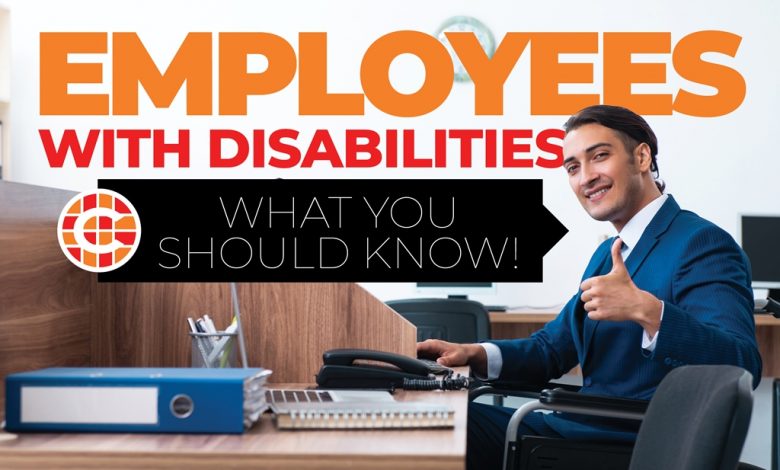
Successfully integrating someone with a disability in the workplace may be easier, and more advantageous, that you think. When the world celebrated the International Day of Persons with Disabilities on December 3, Employment Equity Compliance Management Services (EEEMC) hosted a webinar presented by Ari Seirlis.
Seirlis is the former CEO of the QuadPara Association for persons with disabilities (QUASA) and a member of the Presidential Working Group on Disability. He spoke on the understanding and tools one needs to successfully integrate persons with disabilities in the workplace.
His presentation can be accessed at the bottom of this feature.
What to say and how to say it
Ari spoke a great deal about the power of words. “Words are powerful as they convey attitudes and can have a positive or negative impact depending on how they are used,” he warned. Ari also shared a few dos and don’ts.
If you refer to someone who has a disability, refer to the person first, then the disability.
In practice, this would mean replacing the phrase ‘a quadriplegic, Tracy,’ with ‘Tracy, a quadriplegic’. Ari elaborated: “We are people with disabilities. We own our disabilities, they do not own us.”
Terms like ‘people with disabilities’ are acceptable, while ‘differently-abled’ and ‘physically challenged’ are not. Instead of saying that someone ‘suffers from cerebral palsy,’ ‘is afflicted with blindness’ or ‘is a victim of paraplegia,’ stick to ‘a person with cerebral palsy,’ for example.
Refrain from referring to a person’s disability unless it is relevant. Treat people as individuals, not conditions. Each person has their own mixture of abilities and disabilities – this should be taken into account.
Never make assumptions about a person’s level of knowledge and understanding. Instead of assuming or guessing what the implications of an impairment are, ask and find out. If someone with a disability appears to be struggling, it is okay to offer assistance. That person may either accept or decline the offer.
There are many clichés that people use when describing people and their disabilities. Ari explained that getting the terminology right is important. Someone who uses a wheelchair is not wheelchair-bound or confined to a wheelchair. To the contrary, it empowers them and allows them to move around more easily. Lastly, Ari said that someone with a disability should never be referred to as a patient or invalid. When speaking about them, use the words you would usually use, like client, customer or guest.
The disabled employee
“The hiring of people with disabilities makes good business sense,” said Ari. In a section of his presentation titled ‘The Value Proposition’, he indicated that staff with a disability tend to demonstrate high levels of loyalty. “The level of employee turnover for people with a disability is low and their retention rates are high.”
According to Ari, employing people with disability has been shown to build staff morale and teamwork. It will also have a positive impact on your brand and reputation. “On average, staff with disability have productivity rates comparable to other employees…organisations that employ people with disability are often regarded by their employers to be good employers,” he added.
The Employment Equity Act
In terms of South Africa’s Constitution, all residents of the country are equal. Unjustifiable discrimination based on disability, for example, is not allowed. Employers must take all reasonable steps to ensure that their disabled employees can do their jobs.
The Employment Equity Act is one piece of legislation that entrenches the rights of disabled employees. According to Ari, employers should see its requirements as opportunities to experience the value proposition of people with disabilities in the workplace. He added that, in light of the recent observance of Disability Rights Awareness Month in November and December, society noted the importance of ensuring that people with disabilities get meaningful economic and employment opportunities. This, he added, would be a game-changer in the life of such a person.
Ari elaborated on legal requirements set out in the act. His webinar was followed by another presented by EEEMC’s Pieter du Toit. Pieter offered an information and training session on the summary of the Employment Equity Act number 55 of 1998, the Amendment Act and Regulations.
Both presentations can be viewed in the video below.