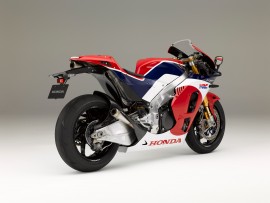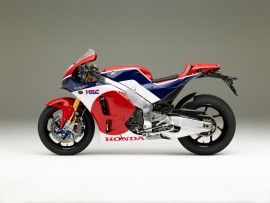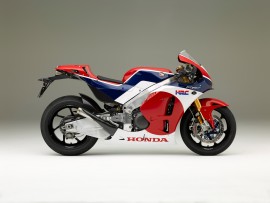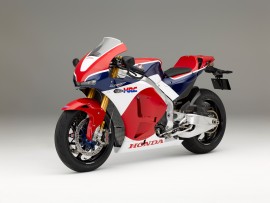
Isle of Man shapes fastest RC213V-S
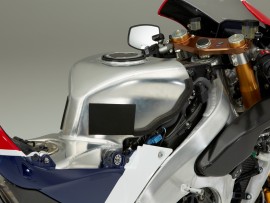
The new RC213V-S is not merely the result of a feedback of technologies created by Honda through its competition in races into a commercially available model, but rather represents a wholly new endeavour to make it possible for a machine developed for competition in MotoGP races to run on public roads.
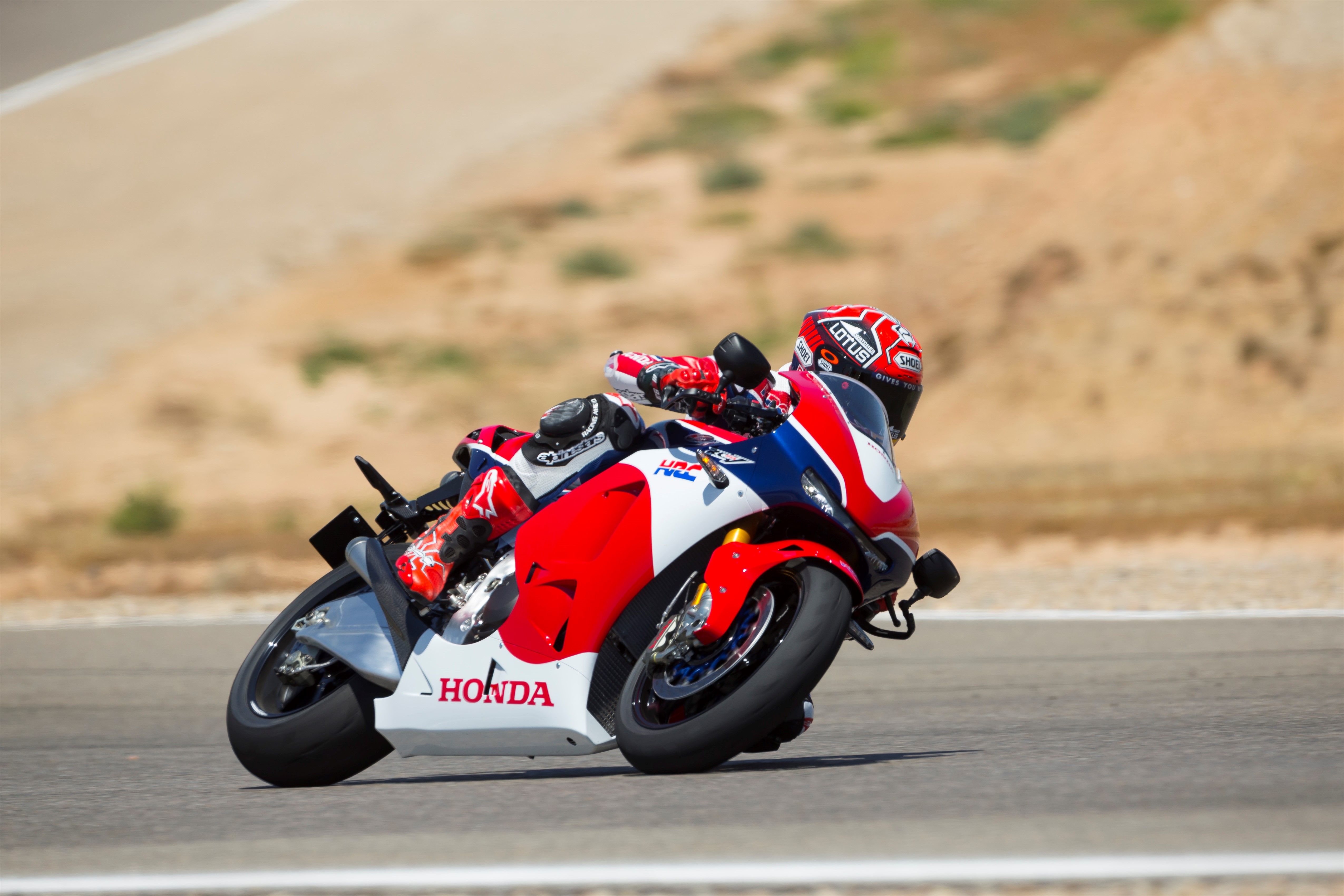
The RC213V is a machine exclusively for racing that has won consecutive championships in the MotoGP class of the FIM Road Racing World Championship Grand Prix (hereinafter called “MotoGP”) in 2013 and 2014. Honda has made changes to some of the specifications of the RC213V, and will now introduce this as the RC213V-S. It is possible to ride the RC213V-S on public roads.
In 1954, Honda declared its intention of participating in the Isle of Man TT races, which were a part of the Road Racing World Championship Grand Prix at the time. Honda developed its own racing vehicles and in 1959, five years after the declaration, started competing in the Isle of Man TT races. In 1961 it successfully won the TT race championships in the two classes it entered. The total number of cumulative racing victories for Honda reached an unprecedented 600 wins in 2005, which rose to a cumulative 695 victories as of June 11, 2015.

Since the Isle of Man TT races, Honda has positioned its racing activities in a wide variety of races as its “laboratory on wheels,” and has incorporated the feedback from the wide-ranging technologies developed for competition in these races into its commercially available production models, relying on these technologies as a way to help maintain and evolve the excellent performance and reliability of Honda motorcycles.
The new RC213V-S is not merely the result of a feedback of technologies created by Honda through its competition in races into a commercially available model, but rather represents a wholly new endeavour to make it possible for a machine developed for competition in MotoGP races to run on public roads.

To win in the world championship races, Honda has a principle that the fastest machine in the world should also be the machine that is the easiest to manoeuvre in the world. The RC213V-S has been developed according to this Honda principle. It has inherited the specifications of the RC213V that set it apart as a MotoGP machine from ordinary mass production models. In addition, the RC213V-S is equipped with control technologies used on the RC213V.
In this way, the RC213V-S makes it possible to experience the riding feel of the RC213V on public roads, while also enabling riding at a higher level on closed circuits. The RC213V consists only of the necessary parts for winning races, based on the idea of changing specifications according to the rider and course. But given the premise of riding on public roads for the RC213V-S, minimum possible changes and additions have been made to the RC213V as requirements for running on public roads, while inheriting all other elements of the RC213V.