Pellet gun leaves young hawk fighting for recovery
A juvenile African harrier-hawk rescued in Groblersdal is recovering in Dullstroom after being shot with a pellet gun, leaving the bird with a fractured wing.
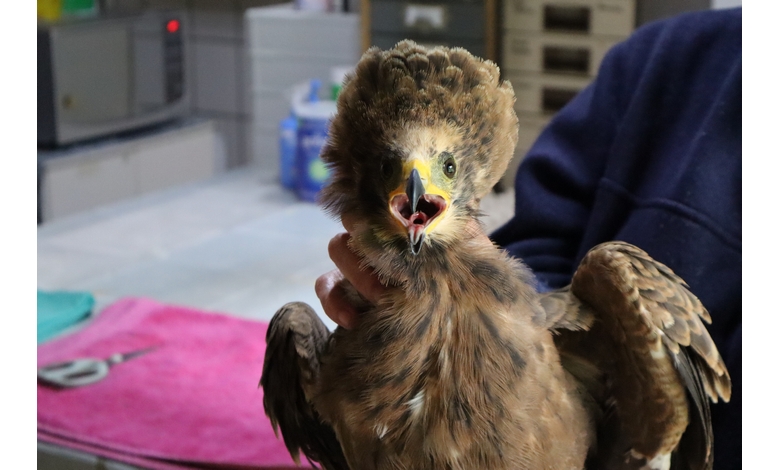
The young African harrier-hawk found earlier this month in Kruger Street, Groblersdal, is now safe at a rehabilitation centre in Dullstroom, where it is receiving treatment.
Events leading to the hawk receiving treatment
Residents discovered a large bird of prey sitting outside a home in Kruger Street in Groblersdal on March 2. The bird was later taken by Natalie Grobler, from the local animal welfare organisation Vallei Dierefonds, to the Loskop Animal Clinic, where it was confirmed that the bird was not an eagle, as previously thought by residents, but a juvenile African harrier-hawk with a fractured right wing.
Later the same day, the hawk was transferred to the Birds of Prey Rehabilitation Centre in Dullstroom for further treatment and rehabilitation.
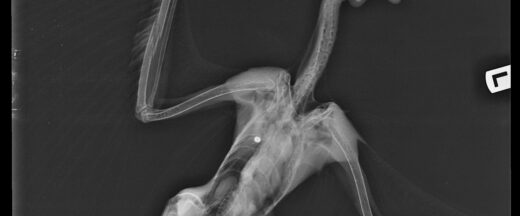
The hawk is recovering at the rehabilitation centre in Dullstroom after being shot with a pellet gun, leaving the young raptor with a fractured wing and a lodged pellet near its spine.
Identifying the African harrier-hawk
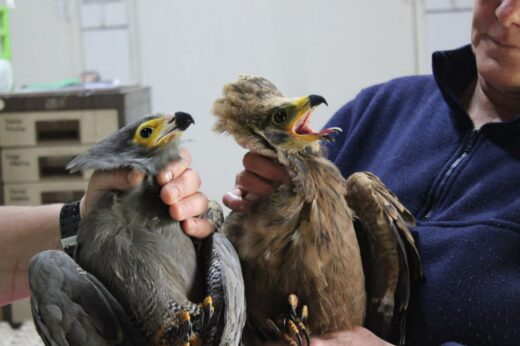
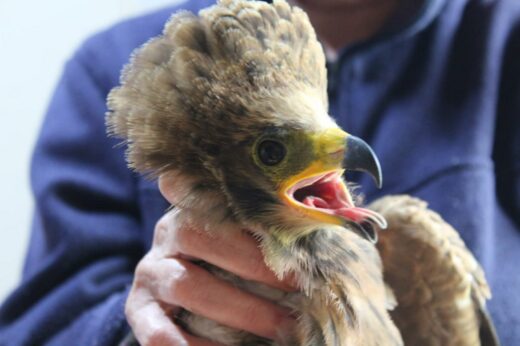
Frith Douglas, trustee and manager at the Birds of Prey & Rehabilitation Centre in Dullstroom, confirmed that the bird is a juvenile African harrier-hawk (Polyboroides typus), commonly known in Afrikaans as a kaalwangvalk.
“Adult African harrier-hawks are pale grey with finely barred white bellies, black tails with a broad white band, and red or yellow facial skin,” Douglas explained.
“Juveniles look quite different, with blotchy brown plumage, barred flight feathers and yellow-green facial skin. It takes approximately three years for them to develop the adult plumage.”
Hawk stable but recovering from serious injuries
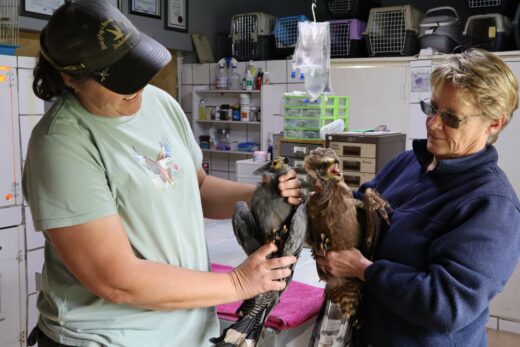
According to Douglas, the bird is currently stable and eating well, but remains confined while its injury heals.
“The hawk is eating well but is confined to an appropriately sized cubicle as its wing is strapped to allow the fracture to heal,” she said.
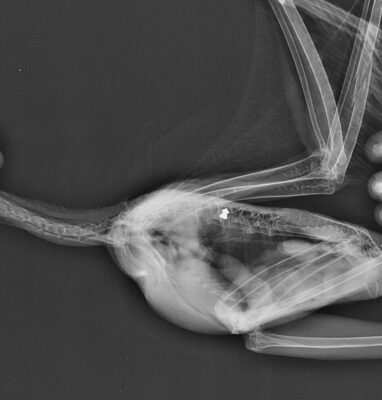
X-rays confirmed that the bird had been shot with a pellet gun. “The bird was seated when it was shot. The pellet fractured the ulna of the wing, travelled through the body and lodged near the spine,” Douglas said.
Pellet too dangerous to remove
Due to the pellet’s location, surgical removal is considered too dangerous. Instead, veterinarians have opted for a conservative treatment approach.
“The pellet is too deep to safely remove, so the bird has been placed on antibiotics as a precaution, along with daily pain medication. We hope the body will encapsulate the pellet in scar tissue.”
Fortunately, the second bone in the wing, the radius, has helped keep the fracture in good alignment.
“Our veterinarians decided not to pin the fracture. Instead, the wing has been strapped to the body so the bone can heal naturally,” Douglas explained.
The rehabilitation process could take weeks
The hawk will undergo weekly physiotherapy during bandage changes, with further X-rays planned in three to four weeks to assess healing before deciding on the next stage of treatment.
Despite the seriousness of the injury, Douglas says the centre remains hopeful.
“We have had similar cases in the past where birds have successfully recovered and been released, so our prognosis is optimistic.”
If recovery proceeds well, the rehabilitation process could take several weeks.
“We are looking at about three to four weeks for the fracture to heal, followed by roughly the same period to assess the bird’s flight, fitness and hunting ability. However, there is no definite timeline – the bird ultimately determines when it is ready to progress through the rehabilitation stages.”
Pellet gun injuries are common in birds of prey
Douglas added that pellet gun injuries in birds of prey are unfortunately common across South Africa, “These injuries are very common, not just in your region, but across many urban areas.”
She warned that the impact of such incidents on ecosystems can be significant.
“If an adult nesting bird is removed from the ecosystem, the consequences can be huge. A single irresponsible act could theoretically result in the loss of several individuals if chicks are dependent on that parent.”
Raptors play an important ecological role
Birds of prey play a vital role in maintaining ecological balance.
“African harrier-hawks specialise in raiding nests for eggs and chicks, helping to keep populations of species such as weavers and queleas under control. Without natural predators like these, some species could increase to numbers that damage crops and vegetation.”
Douglas emphasised the importance of public awareness and the protection of raptors.
“Birds of prey are indicator species of our environment. Scientific data is increasingly showing that ecosystems are under severe pressure. We cannot afford to lose any raptor species.”
Community plays a key role in wildlife rescues
She also praised the vital role played by community members and organisations in rescuing injured wildlife.
“Individuals and organisations such as Vallei Dierefonds are critical in getting injured wildlife into professional care quickly. Without this network of ‘earth angels’, we would not be able to release the number of animals we do.”
The Dullstroom centre, although relatively small, releases between 60 and 200 rehabilitated animals back into the wild each year.
What to do if you find an injured bird of prey
Douglas advises residents who find an injured bird of prey to handle the situation carefully.
“The best thing to do is gently cover the bird with a towel or jacket and place it in a box with air holes on a soft base. Do not give it food or water, as this can cause shock. Keep the box in a quiet, dark and warm place and contact a permitted wildlife rehabilitation facility as soon as possible.”
The centre can be contacted via WhatsApp on 082 899 4108, where residents can send photos, a location pin, and details to help co-ordinate a rescue.
Possible legal consequences
Authorities may also investigate the shooting. Discharging a firearm in a residential area and shooting indigenous wildlife without the necessary permit are criminal offences under South African law.
Douglas said that if the person responsible can be identified, residents should open a case at their local SAPS station so that appropriate legal action can be taken. The rehabilitation centre will assist authorities with evidence such as photographs, X-rays and medical reports if required.
Hope for the hawk’s return to the wild
“The state of birds of prey is dire,” Douglas added. “Not just the iconic species like vultures, but raptors across the entire spectrum. We need to start paying attention.”
For now, the young hawk’s future depends on its recovery – and the hope that it will one day return to the skies.
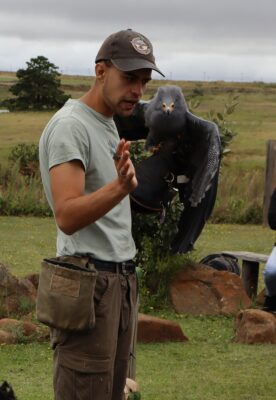
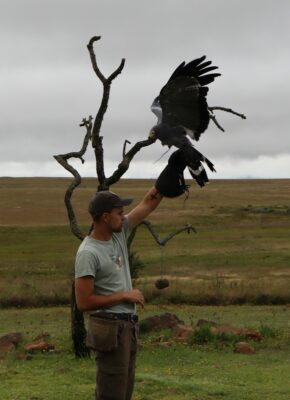
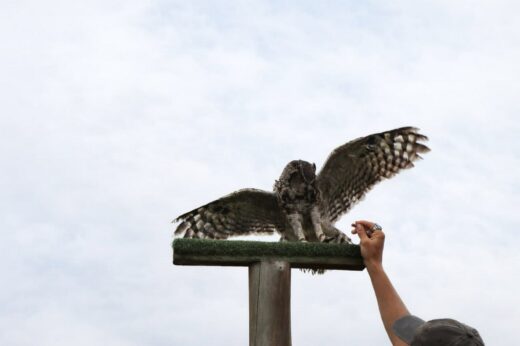
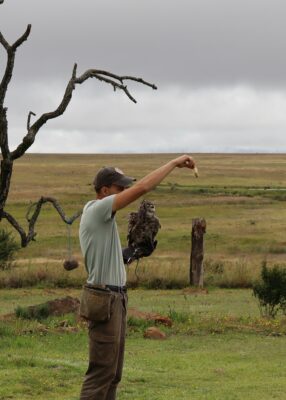
•During the Observer Daller’s visit to the Birds of Prey Rehabilitation Centre in Dullstroom, other birds of prey could also be visited in their enclosures, as well as the flight demonstration. The following photo’s were taken at the flight demonstration.