
Listening is about more than hearing, says deaf community advocate
Dirk Venter, director of Deaf Friendly and a pastor at a deaf congregation in Pretoria, believes society’s greatest barrier is not an inability to hear, but a failure to try to understand.
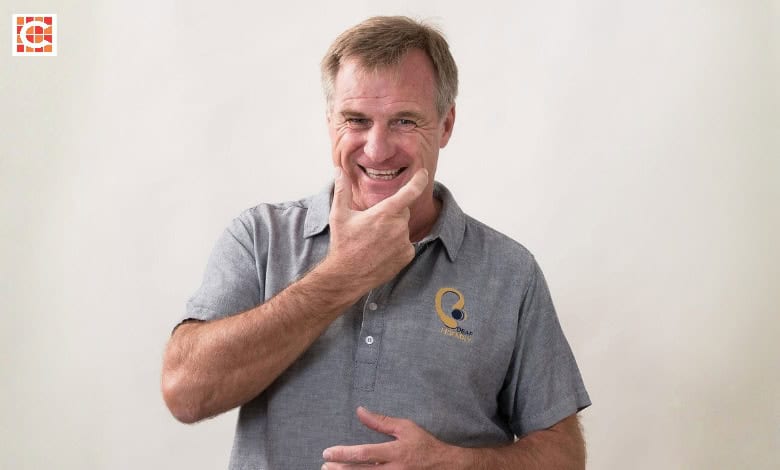
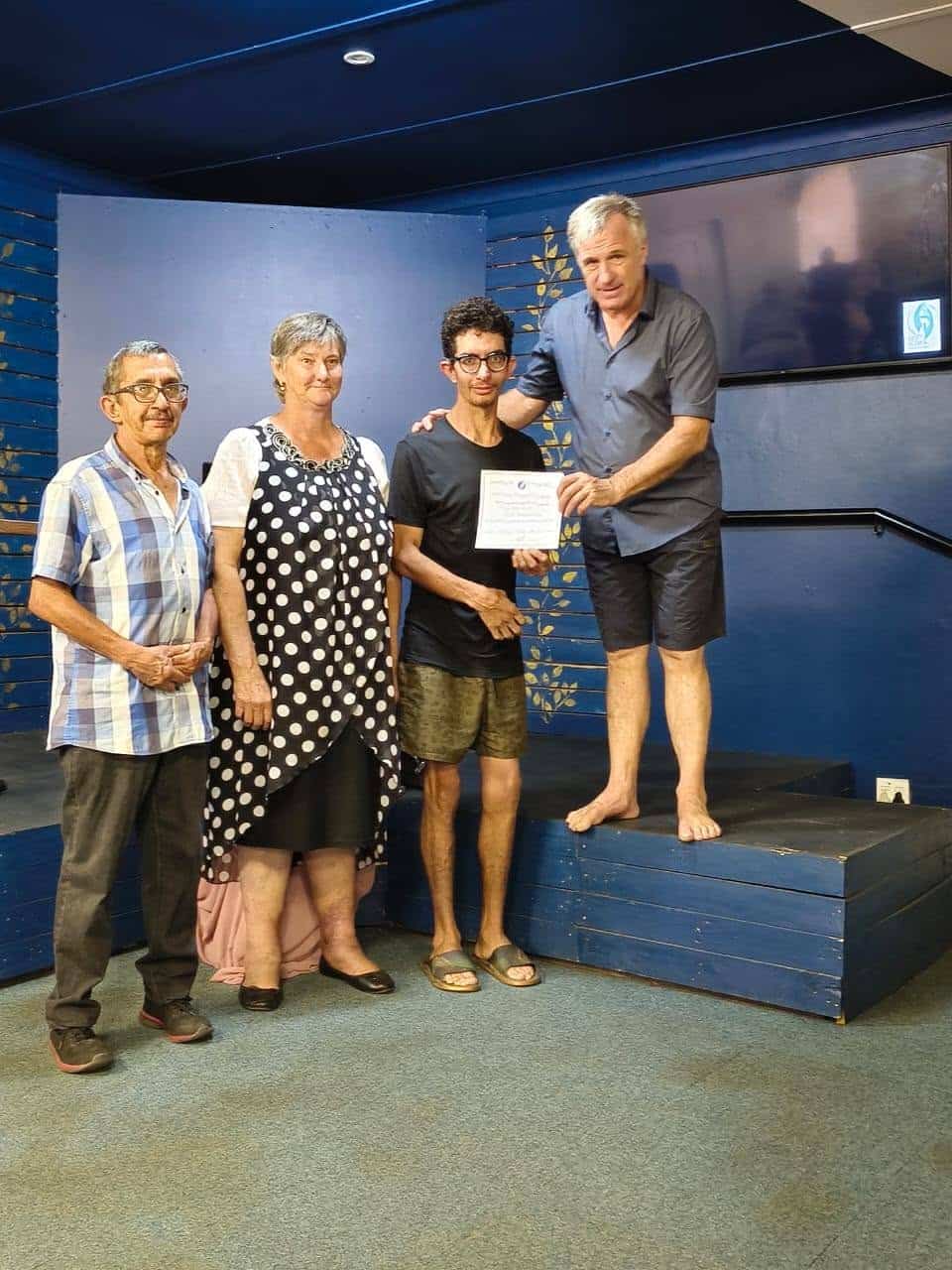
It is a picture one does not see every day: A barefoot pastor in shorts, speaking sign language to his congregation, as everyone watches his every move and hangs on his every sign.
This is Pastor Dirk Venter in action every Sunday at the small Deo Gloria Gemeente in Claremont, west of Pretoria.
In the deaf community, Venter is somewhat of a celebrity. He has travelled as far as Mahikeng in the North West to interpret for a rape survivor who needed to make a statement to the police. He has appeared in court to assist deaf people in legal proceedings, assisted during labour relations proceedings and interpreted songs so deaf audiences can enjoy live music.
But perhaps his most important work is bringing the word of God to deaf people who may not be able to read a language other than Afrikaans.
Venter believes the challenges facing the deaf community extend beyond the availability of interpreters. “We listen, but we do not listen to understand,” he says.
He has seen how an ordinary interaction can become an exhausting exercise in explanation when two people do not share the same language.
The incident involving a young deaf woman who needed to make a statement to the police after a rape has stayed with him, although it happened about a decade ago.
The woman needed to explain what had happened, but communicating the details was difficult. She had to repeat and clarify information while Venter tried to convey her account accurately.
He remembers the policewoman involved as particularly sensitive and considerate. She tried to understand the young woman’s circumstances and help, but the process was still deeply uncomfortable.
“It was trauma on top of trauma,” Venter recalls. “I left that day with concerns that the statement did not accurately reflect everything the woman had tried to explain.”
Growing up between two worlds
For Venter, the deaf community is not a world he discovered through his work. It is the world he grew up in.
Both his parents, Aletta and Jan, were culturally deaf. Sign language was part of everyday family life, and from an early age he learnt to move between the hearing and deaf worlds.
His childhood was not without its difficulties. He recalls a complicated family environment, particularly during his father’s earlier years and the changes that followed his religious conversion.
“I do not only remember my father for the difficulties, but also for his skills as a tradesman. He even featured in newspapers,” he says with a laugh. “That was unheard of for a deaf person in those days.”
Venter’s involvement in interpreting began informally, particularly in church settings. As his father’s faith changed the family environment, Venter became increasingly involved in church activities and started interpreting for deaf people.
What began informally eventually developed into a much larger part of his life.
“Deaf people have a culture,” he says.
“Sign language is not simply a collection of gestures used when spoken language is unavailable. It carries its own nuances, expressions and ways of conveying meaning.”
He believes culturally deaf people can also be particularly attuned to body language, facial expressions and subtle signals that hearing people may overlook. He says word choice can also change how a message is received.
“The distinction becomes even more important when interpreting.”
Venter gives the biblical verse, ‘The Lord is my shepherd; I shall not want,’ as an example.
A literal translation of ‘I shall not want’ can be confusing because the phrase does not necessarily carry the same meaning in sign language. The intended message is closer to: “The Lord is my shepherd. I have everything I need.”
The interpreter must therefore find another way to express the intended meaning without changing the message.
Lost in translation
Venter has been involved with the Helping Hand LIG-concerts since their inception in 2020.
Seeing him in action on stage is like watching a show in itself. He interprets every word of the song while simultaneously keeping the rhythm. “To me, it is a way of giving a deaf person the joy of music.”
During this year’s concert, Afrikaans singer Elvis Blue was one of the main attractions. “I found his songs relatively easy to interpret because he articulates clearly and does not swallow his words.”
Other songs present a greater challenge. Venter points to colloquial expressions such as boerepompie in a song by Ricus Nel. The term, loosely referring to a concertina, cannot simply be translated word for word.
“If I translate it literally, I lose the gist of the song,” he explains.
An interpreter has to consider the expression’s meaning in context and find the closest equivalent. The challenge is to preserve the song’s essence without losing its meaning.
When communication stands between a person and justice
The incident at the police station is an extreme example, but Venter says the difficulties deaf people encounter are not confined to traumatic situations.
He has also experienced problems in court proceedings where cases are delayed because interpreters arrive late or are unavailable.
Venter is concerned about people securing interpreting work without necessarily having the required professional skills.
He says professional interpreters can also face difficulties when they are contracted to assist in legal proceedings. Arrangements are not always properly made, and payment can sometimes become a problem.
“When an interpreter is late, a hearing may be postponed. When an unsuitable interpreter is appointed, the accuracy of communication can be compromised.”
A language recognised by the Constitution
South Africa has taken an important step towards recognising the linguistic rights of deaf people, but turning legal recognition into everyday access remains a challenge.
On July 19, 2023, President Cyril Ramaphosa signed the Constitution Eighteenth Amendment Act 3 of 2023 into law, recognising South African Sign Language (SASL) as the country’s 12th official language.
The White Paper on the Rights of Persons with Disabilities, adopted by Cabinet in 2015 and gazetted in 2016, calls for the promotion of SASL, interpreter training and improved access to information and public services.
However, a Pan South African Language Board readiness report, published in March 2025, found uneven preparedness among government institutions.
Based on submissions from 49 institutions, the report identified budget constraints, limited capacity and difficulties recruiting interpreters.
The barriers begin in childhood
Venter believes deaf learners need the right support to reach their potential, not lower expectations.
He recalls helping a deaf vocational student with Afrikaans study material so he could keep up with his course.
“It was not easier for him than for an ordinary student,” he says.
The student still had to work, write examinations and earn his qualifications. Venter believes deaf learners should be given the tools to succeed, not qualifications they have not earned.
Venter also questions the assumption that oralism, which focuses on speech and lip-reading, and manualism, which emphasises sign language, must compete.
“For me, it is not oral or manual,” he explains.
Each deaf person has different needs. “I believe the right balance of approaches can help learners communicate and progress.”
The right to speak for yourself
For Venter, the issue ultimately comes down to dignity and independence.
A deaf person should not have to rely on a family member, friend or acquaintance to make a bank enquiry, understand an insurance policy, report a crime or participate in a workplace meeting.
Interpreters play an essential role, but access to one should not depend on luck, personal connections or whether an institution is prepared to pay for the service.
There are also questions of privacy. Discussing a medical condition, a financial matter or a personal experience through a third party can be uncomfortable. It can leave people feeling that they have lost control over information that should remain private.
Venter has spent much of his life interpreting between hearing and deaf communities.
It requires a willingness to listen, understand and recognise that people experience the world differently. And sometimes, the problem is not that hearing people cannot hear the deaf community; it is that they do not listen to understand.
Breaking news at your fingertips… Follow Caxton Network News on Facebook and join our WhatsApp channel.
Nuus wat saakmaak. Volg Caxton Netwerk-nuus op Facebook en sluit aan by ons WhatsApp-kanaal.
Read original story on www.citizen.co.za