Ramaphosa’s bold EV promise, but is it too little, too late?
President Cyril Ramaphosa addressed the 2024 South African Auto Week with a bold commitment to embracing electric vehicles and sustainable fuels.
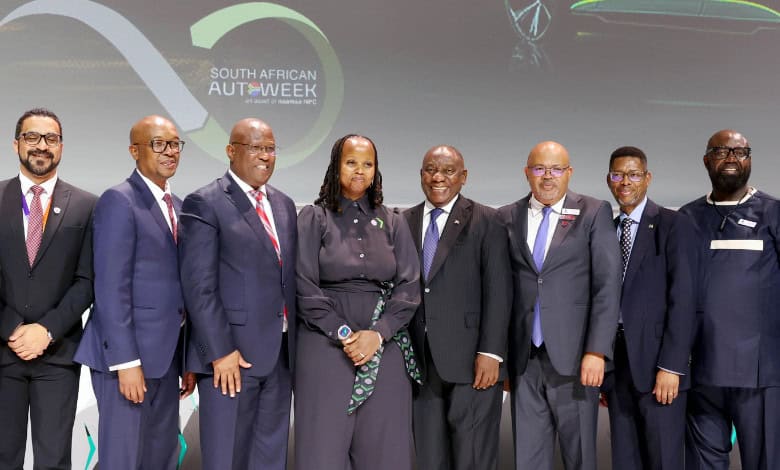
At the 2024 South African Auto Week at the Cape Town International Convention Centre, President Cyril Ramaphosa on Thursday delivered a keynote address with a strong sense of urgency and ambition. With the global automotive industry undergoing significant shifts towards decarbonisation, South Africa is striving to catch up with the adoption of new energy vehicles (NEVs) and sustainable fuels.
Browse thousands of new and used vehicles here with CARmag!
Ramaphosa said:
“The global transition towards decarbonisation presents a fundamental challenge to the industry. And the transition towards cleaner and more sustainable fuels, together with stringent regulations in key markets, put a number of automotive firms and some industries in, what one could say, vulnerable positions. Even as the journey to net zero poses a challenge for the auto industry, there is, at the same time, what I would call immense opportunity.”
The president’s speech underscored the country’s delayed response to electrification but emphasised a focused determination to now align with international standards.
[Photos] The success of the automotive sector since the advent of democracy is testament to the success of transformative industrial policy #SAAW2024 pic.twitter.com/cDLjdxRPKQ
— South African Government (@GovernmentZA) October 17, 2024
A delayed response?
Many leading automotive markets, such as the European Union, China, and the United States, began their transition to cleaner vehicle technologies over a decade ago. These nations not only implemented strict emission regulations but also invested in research, infrastructure, and the production of electric and new energy vehicles.
South Africa, by contrast, remained dependent on fossil fuel-powered internal combustion engines (ICEs). While the automotive industry contributes 5.3% to the country’s GDP through exports and employment, the slow shift to electrification left it vulnerable.
Firstly, global markets, particularly in Europe, are enforcing bans on ICE vehicles from 2035. Without sufficient progress towards producing and exporting EVs or NEVs, manufacturers in South Africa face the risk of losing access to these markets. The country now faces the challenge of playing catch-up to stay competitive globally.
Secondly, infrastructure to support electrification has been slow to develop. Charging stations, renewable energy integration, and sustainable fuel alternatives are only now gaining attention. This delay places additional pressure on the government and industry to accelerate the development of these systems.
Why it matters now
Ramaphosa’s address signals a turning point, with the government now prioritising cleaner automotive practices. He said:
“The local automotive sector needs to position itself to take advantage of the demand for electric vehicles, new energy vehicles, and sustainable fuels.”
However, while his words offer hope for the future, the window of opportunity is shrinking.
South Africa’s automotive sector plays a crucial role in meeting the country’s climate targets. Transitioning to EVs and NEVs offers a dual benefit: reducing carbon emissions and increasing energy independence.
As the world moves towards a decarbonised future, South Africa has the potential to leverage its industrial capacity and participate in the global supply chain for EVs. The production of batteries, for example, could become a key export if the country taps into its rich mineral resources such as platinum and lithium, both essential for EV batteries. However, substantial investment in technology, skills development, and partnerships with the private sector, both locally and internationally, will be needed.
Ramaphosa expressed confidence that South Africa can play a significant role in the global NEV value chain. He noted:
“The Department of Trade Industry and Competition, together with the National Treasury and the Department of Mineral and Petroleum Resources, are in conversation about implementing the electric vehicle white paper. This work includes the beneficiation of our critical minerals for the production of new energy vehicles and their associated value chains.
“It also includes the production of batteries for battery electric vehicles and the development of value chains in the green hydrogen fuel cell market. We are working to finalise comprehensive NEV policy guidelines that do not exclude alternative technologies such as hybrids and plug-in hybrids. This is not just about creating a greener future but also about ensuring South Africa remains competitive in the global market.”
A future of opportunity
Although South Africa’s automotive industry missed early opportunities to lead in electrification, there remains significant potential. The global decarbonisation shift provides a chance for the country to reshape its automotive sector, both domestically and as a global player.
With strong government commitment and collaboration from the private sector, South Africa could still position itself at the forefront of the electric vehicle revolution. The time to act is now.
Browse thousands of new and used vehicles here with CARmag!
The post Ramaphosa’s Bold EV Promise, But Is It Too Little, Too Late? appeared first on CAR Magazine.