


Concerns were raised regarding the NPA’s lack of autonomy.
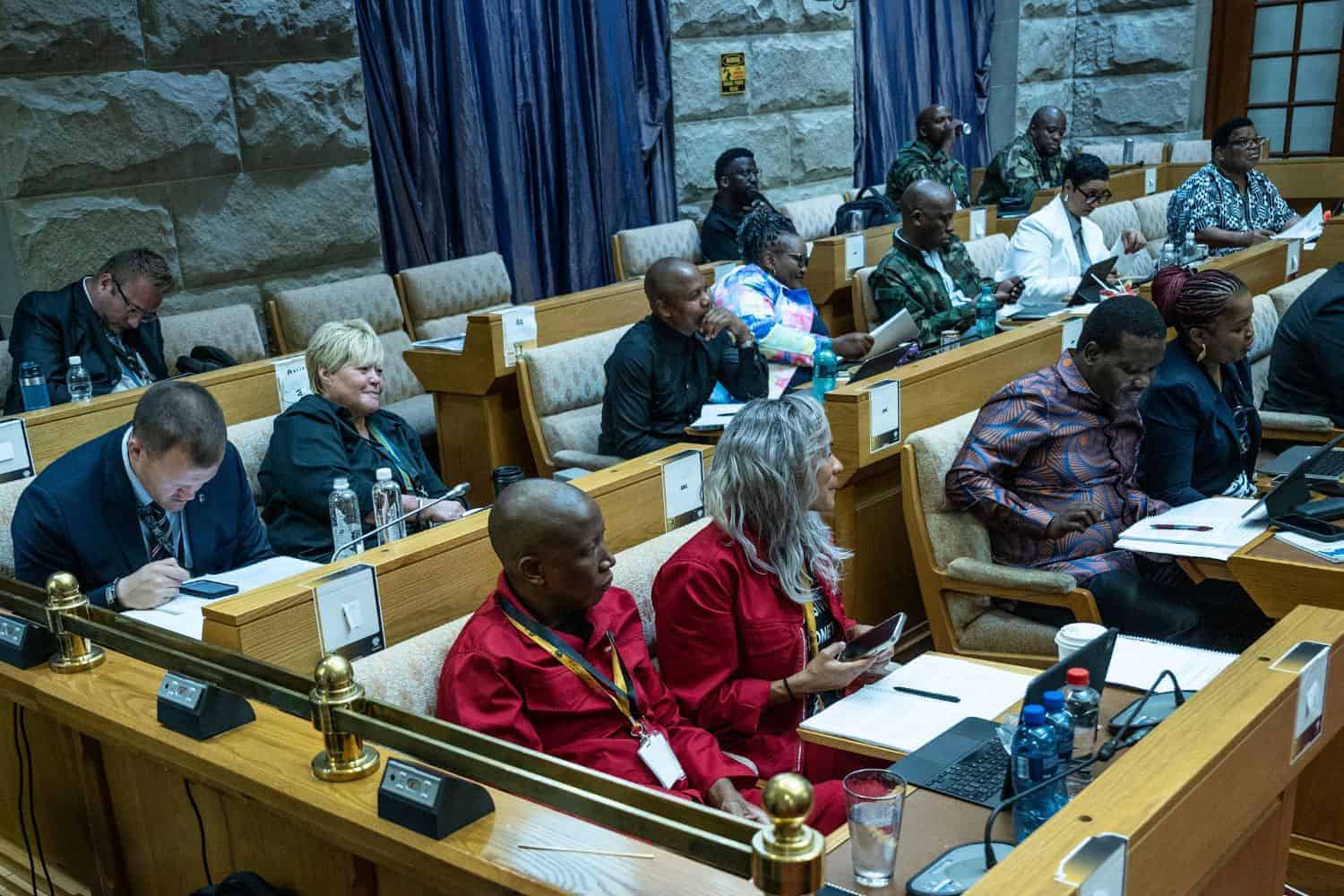
MPs during the parliamentary ad hoc committee inquiry at the Good Hope Chambers in Cape Town on 23 October 2025. Picture: Gallo Images/Brenton Geach


The National Prosecuting Authority (NPA) and the Hawks are unable to effectively deal with corruption and an independent body should be established, parliament’s ad hoc committee has heard.
The committee, which is investigating allegations raised by KwaZulu-Natal (KZN) Police Commissioner Nhlanhla Mkhwanazi, on Tuesday resumed its inquiry held in Cape Town.
Following testimony from several implicated witnesses, the committee opened the floor to civil society organisations, inviting the public to contribute written submissions relevant to the inquiry.
These submissions will form part of a public participation report, which the committee will compile, approve, and release for public access.
Rampant corruption
Accountability Now’s Paul Hoffman told the committee that the criminal justice administration in South Africa is dysfunctional because “corruption with impunity is rampant in the land.”
The Hawks, officially Directorate for Priority Crime Investigation, was criticised by Hoffman for “struggling” to deal with corruption effectively.
“The reason for that is not hard to find. The Hawks are not a body outside of executive control,” he said.
ALSO READ: Ad hoc committee hears complaints about absence of MPs and Paul O’Sullivan
He said the committee itself was prompted by Police Minister Senzo Mchunu’s disbandment of the political killings task team, which he viewed as an effort that also dealt with corruption.
“Political killings happen because hitmen are greedy and because those who engage the hitmen are hungry, crazy for power and that toxic combination is a form of corruption, which has not been addressed.”
Hoffman argued that South Africa’s current multi-agency approach to fighting corruption is outdated.
Watch ad hoc committee below:
He warned that corruption is slowing the country’s economic growth, despite its capacity to lift half of the population out of poverty.
He cited the disbandment of the Directorate of Special Operations, known as the Scorpions, in 2009.
According to Hoffman, the Scorpions’ prosecution-led investigations had effectively held politicians accountable, and since their closure, criminality in the country has been “unpunished” and “well-rewarded”.
NPA independence
The NPA’s lack of independence was also highlighted.
Hoffman pointed out that the minister of justice has final say and “veto rights” over the authority’s policy direction and that it does not control its own budget.
“Its accounting officer is the director-general in the department of justice, an employee of the minister.
“The effect of not having control of the purse strings within the NPA is to hobble it from the point of view of trying to effect changes that may improve its efficacy and effectiveness in the fight against crime in general,” he told MPs.
READ MORE: NPA struggles with high-profile corruption cases
“We have a structural problem in South Africa, which relates to separating the investigative work – which is the work of the police – from the prosecutorial work, which is a constitutional function of the National Prosecuting Authority,” Hoffman continued.
He added that the NPA’s Investigating Directorate Against Corruption is now expected to do work the Hawks have failed to carry out.
“We know that the Hawks are not up to dealing with corruption in high places. They are part of the police and the police must, as things are structured now, answer to the ministry of police.”
Hoffman advocated for establishing a chapter 9 anti-corruption commission that would report directly to parliament rather than the executive to address the “mess” within the criminal justice system.
Calls to strengthen parliamentary oversight
Sean Tait from the African Policing Civilian Oversight Forum told the committee that parliament’s oversight function must be strengthened and that the operational command of the South African Police Service should be insulated from political interference.
He referred to Mkhwanazi’s allegation that he had submitted statements to parliament about political interference, but no action was taken.
This led to Mkhwanazi holding his explosive 6 July 2025 media briefing.
“We think there is certainly pause for thought in terms of parliament’s ability to strengthen its responsiveness to allegations or concerns that are brought to their attention,” Tait said.
Tait stressed that addressing political interference was not optional, but a “critical duty” requiring urgent attention.
“It is beyond an issue of political discretion for the committee. This is something that goes to the heart of the separation of powers.
“It goes to the heart of independence, democratic policing and these allegations demand serious and immediate attention and action by parliament.”
NOW READ: NPA head Shamila Batohi admits ‘SA losing fight against organised crime’
Support Local Journalism
Add The Citizen as a Preferred Source on Google and follow us on Google News to see more of our trusted reporting in Google News and Top Stories.

