



South Africa and Kenya remain among the most pessimistic, with majorities saying the continent is moving in the wrong direction.
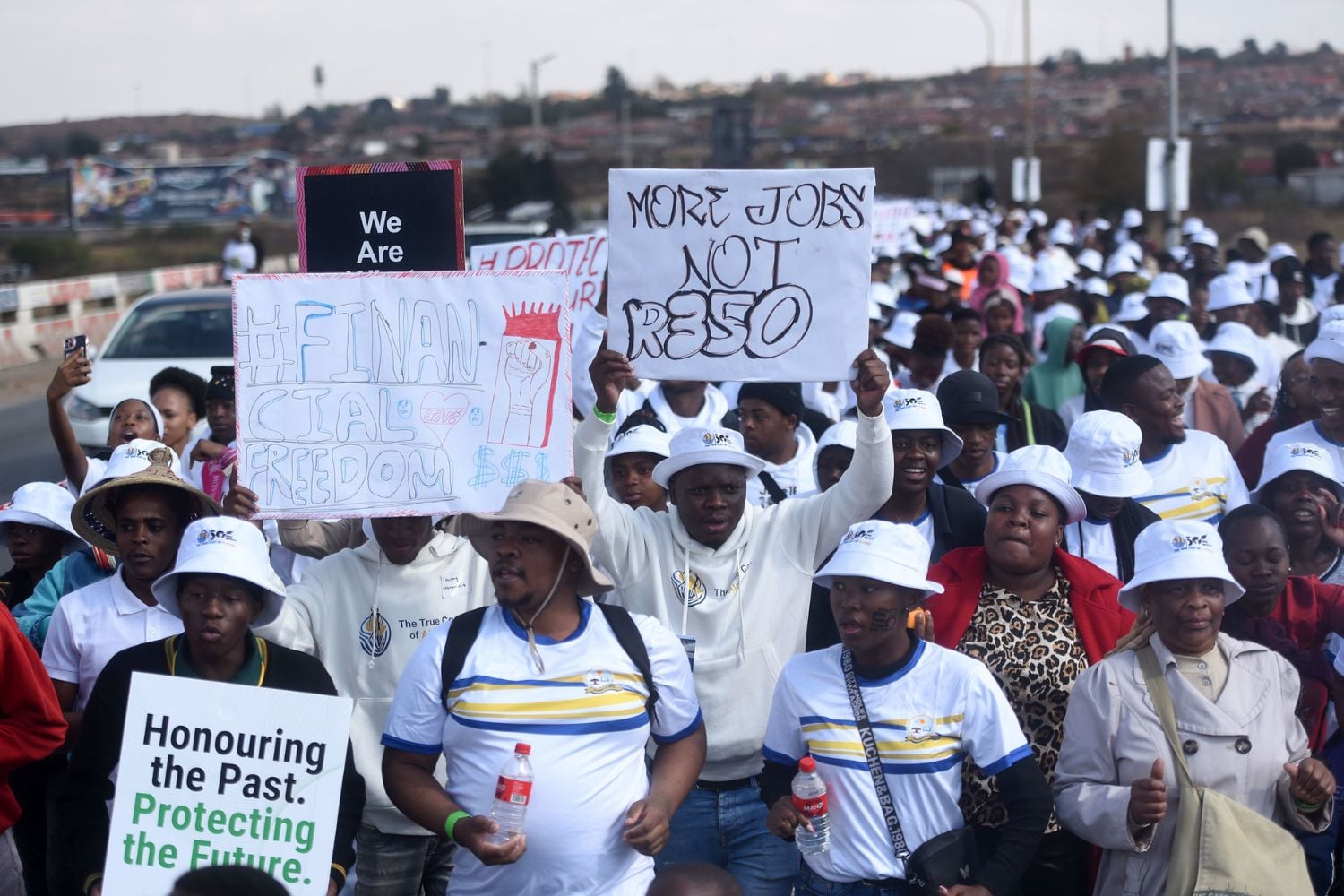
Civil society orginasations takes part in a commemoration March in Soweto,16 June 2026, and keeping the flame of memory alive and honoring the brave students of 1976 who changed the course of our history. Image: Nigel Sibanda/ The Citizen


Africa’s youth are more optimistic about their countries and economies than at any point since the pandemic, but the 2026 African Youth Survey warns leaders that this “delivery generation” will no longer accept slogans without jobs, clean government and democracy that reflects African realities.
The latest African Youth Survey, commissioned by the Ichikowitz Family Foundation and conducted by PSB Insights, interviewed 4 901 young Africans aged 18 to 24 across 16 countries in March 2026.
It is the largest edition yet of the recurring survey, which was launched in 2020 to give governments, business, civil society, and the media a rigorous understanding of the views of Africa’s rising generation.
Africa’s rising generation
The survey showed that Africa’s rising generation is showing renewed confidence in their future, with optimism levels at their highest since Covid‑19, according to the 2026 African Youth Survey released in Johannesburg on Wednesday.
Yet the findings caution that this optimism is not a vote of confidence in the status quo, but a demand for urgent delivery on employment, accountability, and governance.
It found that 47% of respondents believe their country is moving in the right direction, up from 30% in 2024, while 45% say their national economy is improving, compared with 26% two years ago.
Cost of living
The cost‑of‑living crisis remains the single biggest issue affecting the continent, cited by 27% of respondents.
Job creation (27%) and reducing government corruption (25%) top the list of priorities for Africa’s youth.
“Do not mistake this optimism for satisfaction. It is not a vote of confidence in the status quo. It is a warning,” said Ivor Ichikowitz, Chair of the Foundation. “This is a generation that wants delivery, not slogans. The age of speeches without delivery is over.”
South Africa
The survey highlights striking rebounds in Ghana, Ethiopia, and Zambia, where confidence in national direction has surged.
By contrast, South Africa and Kenya remain among the most pessimistic, with majorities saying the continent is moving in the wrong direction.
Democracy continues to enjoy strong support, with 73% saying it is always preferable. However, 56% believe Western‑style democracy is unsuitable for Africa and call for a new African model that prioritises unity, stability, and delivery.
“Young Africans still strongly support equality before the law, elections, and freedom of speech,” Ichikowitz noted.
“What they reject is imported institutions that fail to deliver dignity, opportunity and accountability.”
Unemployment
The findings also reveal that unemployment and poverty are seen as the biggest threats to safety, with 56% saying job creation should be governments’ top priority for improving security.
Ichikowitz said for Africa’s youth, “unemployment is not just an economic challenge – it is a governance and stability challenge.”
Further Key African Youth Survey 2026 data:
- 60% say their country should build strong alliances with one or two major global powers to secure long-term benefits, while 37% prefer neutrality.
- When choosing international allies, 43% prioritise infrastructure and economic investment, followed by respect for natural resources at 39%, democratic values and human rights at 34%, sovereignty and non-interference at 34%, technology transfer at 30% and military and security support at 29%.
- 72% are concerned about asylum and immigration, while 57% are satisfied with their government’s efforts to limit illegal immigration.
- 80% worry about human trafficking, 79% about the smuggling of drugs or weapons and 78% about armed groups crossing borders.
- Concern about illegal migration is highest in Ghana at 91%, Mozambique at 90% and Liberia and South Africa at 88%.
- 68% believe their country would be better governed if more women held senior positions in government, while 65% support reserving a set number of government positions for women.
- Only 22% are familiar with AfCFTA, but among those who are, 69% are optimistic about its economic impact.
- 80% agree that the UN Security Council needs to be reformed to include permanent African representation.



