
AfriForum says access to procurement records is essential to assess whether the tender evaluation was conducted properly.
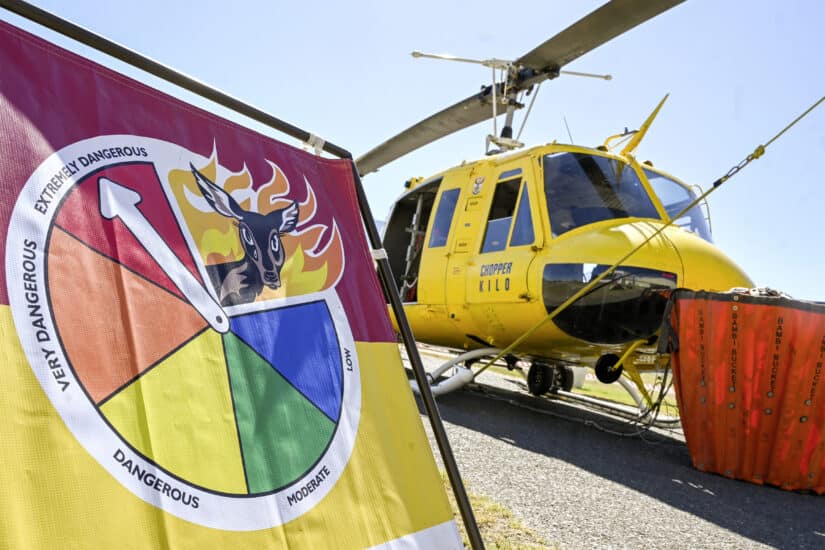
A Bell UH-1H helicopter used by Working on Fire with a bambi bucket in front of it. Concerns have been raised about the readiness of a new company awarded the Working on Fire tender. Picture: Gallo Images/Die Burger/Jaco Marais


The department of forestry, fisheries and the environment’s awarding of the R1.8 billion Working on Fire contract to Tefla Group continues to attract scrutiny, with civil rights organisation AfriForum now pursuing access to procurement records to establish how the successful bidder was evaluated.
In May, AfriForum lodged an application in terms of the Promotion of Access to Information Act (Paia) after becoming concerned Tefla appeared to lack the specialist expertise, personnel, equipment and operational capacity to implement one of government’s most critical wildfire fighting drives.
AfriForum seeks procurement transparency
According to the organisation, aerial firefighting and wildfire management require highly specialised technical expertise, aviation resources and operational infrastructure that, based on its assessment at the time, Tefla did not appear to possess.
Tarien Cooks, AfriForum’s disaster management specialist said: “We questioned the tender award because Tefla appeared to have no resources to deliver the service. Wildfire management is a highly specialised field that requires specific expertise, equipment and operational capacity.”
AfriForum says the department responded to its Paia application on 1 July, informing it that while an award letter had been issued to Tefla on 8 April and accepted by the company, no binding contract yet existed because a service level agreement had not been concluded.
According to the department’s response, the absence of a signed agreement meant it could not provide the procurement records requested.
AfriForum also sought documents relating to the existing Working on Fire contract managed by a Kishugu joint venture. Those were also withheld, forcing the organisation to pursue an internal appeal under Paia.
AfriForum says it is prepared to exhaust all available legal remedies, including the courts.
“This is a matter of clear public interest. Taxpayers’ money must be used for its intended purpose, especially to ensure that wildfire season is properly managed and that loss of life and property is minimized,” Cooks said.
Capability concerns remain under scrutiny
In June, Tefla emerged victorious when the High Court in Pretoria dismissed an urgent bid by Working on Fire/Kishugu to block the transfer of the contract. The ruling cleared the way for the department to proceed to announce
Tefla as the successful bidder after a court ordered the re-evaluation of the tender. While litigation over the tender has largely been settled, AfriForum says questions remain about the procurement process.
Among its concerns is whether Tefla possessed the personnel, firefighting equipment, aircraft, vehicle fleet, operational systems and specialist expertise to execute the contract independently when the bids were evaluated.
“The fact a tender of this magnitude was awarded to a company that appeared to lack the skills and resources to prevent and combat wildfires raises serious questions,” Cooks said.
AfriForum says its concerns relate both to the procurement process and Tefla’s apparent technical capability. However, it acknowledges because it has not yet obtained the evaluation records, it cannot determine whether the department properly assessed bidders, or identified any specific shortcomings in the adjudication process.
“The absence of records is precisely why we have insisted on access to the full documentation,” Cooks said.
Subcontracting claims add to questions
Industry sources say Tefla may subcontract substantial portions of the aerial firefighting component, allegedly valued at R650 million a year, to Kishugu Aviation, the long-standing operator of the programme that unsuccessfully bid to retain the contract.
“This raise concerns Tefla would have to rely on subcontractors to carry out the work on its behalf, which further questions its ability to perform the contract itself,” Cooks said.
The department said the contract to Tefla followed a court-directed re-evaluation process, and five bidders submitted proposals. It added it was not aware of any subcontracting deal between Tefla Aviation and Kishugu Aviation, although Tefla had indicated its intention to subcontract to designated groups.
Timeline of the Working on Fire tender
How a 20-year incumbent was extinguished from the multibillion-rand fire contract:
- The courts have settled the R1.8 billion Working on Fire (WOF) contract procurement dispute, but questions over Tefla’s operational capability, alleged subcontracting arrangements and transparency of the evaluation process continue.
- 2022: The department of forestry, fisheries and the environment advertise five-year tender. Tefla, with no demonstrable aviation background, and Kishugu Aviation, which has run the programme for 20 years, bid for the contract;
- November 2022: Kishugu is awarded the tender. Tefla is disqualified during the procurement process;
- December 2022: Service agreement signed. The department and WOF conclude a memorandum of agreement, allowing Kishugu to continue implementing the wildfire management programme;
- 2023-24: Tefla launches judicial review proceedings challenging both its disqualification and awarding of tender to Kishugu;
- April 2025: The High Court in Pretoria sets aside original award, finds procurement process defective;
- 2025-26: The department re-evaluates original bids rather than issuing a new tender;
- Early 2026: Tefla is identified as preferred bidder. Since over three years of the original tender period had elapsed, the parties negotiate a reduced two-year implementation period instead of the five-year contract; and
- 19-20 May: Kishugu approaches the court for an urgent interim interdict to prevent the department from signing an agreement with Tefla. The application is dismissed.