


Poverty, unemployment, high compliance costs and limited access to land push miners to operate outside the law.
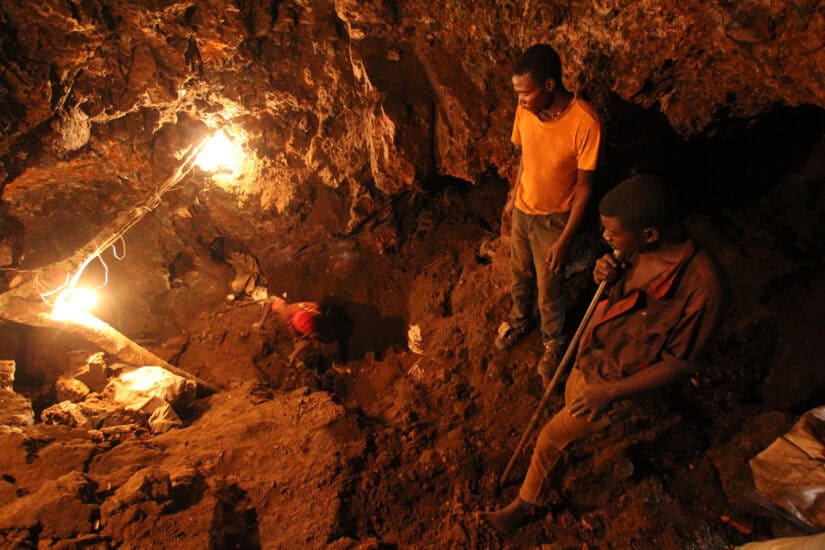
Picture for illustration: iStock


Artisanal miners from across SA have called on government to create an enabling environment that will allow them to participate meaningfully in the mining economy.
The call was made during the National Artisanal Miners Lekgotla in Johannesburg on Tuesday and Wednesday.
Artisanal miners call for enabling environment to join economy
The gathering was attended by representatives of the National Association of Artisanal Miners (Naam), Industrial Revolution Artisanal Mining, Federation of Environmental Movements and Mining Affected Communities United in Action (Macua).
The talks focused on challenges facing small-scale mining operators, particularly difficulties in obtaining permits, accessing financial assistance and securing land for mining activities.
“Poverty, unemployment, high compliance costs and limited access to mining land continue to push us to operate outside the law,” said Naam spokesperson Zethu Hlatshwayo.
Delegates said artisanal mining should not automatically be associated with criminality, adding many people turn to abandoned mines, rivers, mine dumps and other mineral-rich areas because they have few economic alternatives and need to support their families.
In a joint statement, the organisations acknowledged organised criminal networks, violence, illicit mineral trading and exploitation existed within parts of the informal mining sector.
However, they reject the blanket classification of all informal miners as criminals.
Artisanal mining and illegal mining shouldn’t be treated as the same
SA Human Rights Commission commissioner Sandra Makoasha told the gathering artisanal mining and illegal mining should not be treated as the same thing.
She told delegates that poverty, informality or suspicion of violating mining laws did not diminish people’s dignity.
Mokoasha said law enforcement must remain lawful and proportionate, warning against the indiscriminate treatment of artisanal miners in efforts to combat organised criminal activities.
One of the major concerns raised was that obtaining a mining permit did not necessarily translate into meaningful economic participation.
Miners said formalisation required more than paperwork, saying they also needed access to mineral-bearing land, geological information, affordable environmental compliance, equipment, technical support, training and rehabilitation funding.
They said some cooperatives had been established and applications submitted, but mining operations remained impossible because of limited access to finance, equipment and markets.
Access to mining land a major challenge
Access to mining land also emerged as a major challenge, with delegates questioning how they could be expected to formalise their operations when abandoned mines, dormant mining rights, mining dumps and tailings remained inaccessible.
The organisations also raised concerns about the cost of complying with environmental requirements, saying consultants’ fees, technical studies and rehabilitation obligations could run into tens or hundreds of thousands of rands.
While acknowledging the importance of environmental protection and safe mining practices, they said compliance requirements should be proportionate to the size of artisanal mining operations.
The lack of government funding for artisanal and small-scale mining projects was another major concern.
Delegates questioned the identities of the 20 beneficiaries of a department of mineral and petroleum resources funding programme previously announced as having been approved for financial assistance amounting to tens of millions of rands.
The programme provides support for equipment, operational costs and rehabilitation guarantees.
Mines repeatedly applied for assistance
Some established miners and cooperatives said they had repeatedly applied for assistance, without success.
Participants also alleged that politically connected individuals and those with access to government officials could be benefiting from opportunities created through the struggles of established artisanal miners.
The miners are demanding that the department disclose the beneficiaries, the amounts allocated, the selection criteria and the officials responsible for assessing applications.
They have established four commissions and assigned to develop policy proposals covering formalisation and criminalisation, access to land and mineral resources, environmental and occupational safety, and the economic viability of artisanal mining.
Their proposals are expected to be presented to government representatives for consideration.
“The central message from the gathering was that government must create practical opportunities for poor and working people to mine legally, safely and sustainably rather than leaving them excluded from the country’s mineral wealth,” said Macua national coordinator Sabelo Mguni.


