Gauteng health department's account of Charlotte Maxeke dialysis crisis disputed.
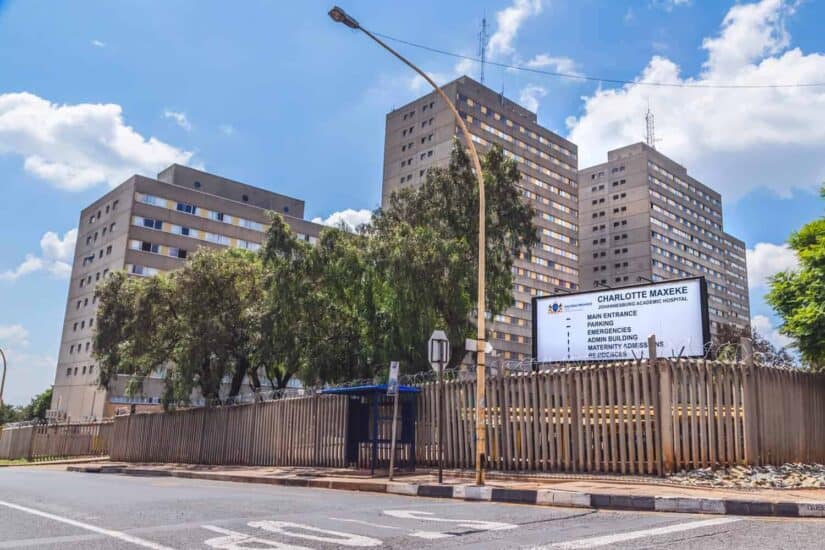
Charlotte Maxeke Academic Hospital. Picture: iStock


A person close to operations at Charlotte Maxeke Johannesburg Academic Hospital has warned that if the issues plaguing the facility are not resolved, the hospital risks a broader medical collapse.
The source, who asked to remain anonymous for fear of retaliation, disputed the department’s version of events regarding recent shortages of dialysis consumables and said patient care had been directly compromised.
The claims follow an earlier report in which Gauteng department of health spokesperson Steve Mabona said dialysis services at the hospital had continued without interruption despite supply challenges.
Last week, Mabona said the hospital experienced low levels of sodium bicarbonate solution roughly three weeks earlier due to delays in the procurement process, but that contingency measures kept the service running.
“Contrary to reports that the hospital had completely run out of consumables, the facility maintained continuity of care by implementing contingency measures. As a result, no dialysis treatments were missed, no procedures were cancelled or postponed,” Mabona said at the time.
Gauteng health dialysis crisis account disputed
The reliable source rejected this version of events, telling The Citizen the situation had been serious enough to compromise patient care over an extended period.
According to the source, the intensive care unit had gone without filters required for continuous renal replacement therapy for two months and no other facility had been able to lend the hospital supplies because the account with the filter supplier had allegedly been placed on hold.
“The statement that they had borrowed filters for the dialysis machine and ICU is nonsense,” the source said.
They described continuous renal replacement therapy as a life-sustaining intervention required by roughly two intensive care patients a week, meaning between eight and 10 patients a month would likely have gone without the treatment during the two-month shortfall.
“So [it] absolutely compromised patient care,” the source said, alleging that major surgeries had also been deliberately postponed because the hospital could not guarantee dialysis support afterwards.
Filters released after account settled in part
Pressure following media coverage of the shortage appeared to prompt some movement from the department and its supplier, according to the reliable source.
“The province then finally agreed that they would start payment runs again in August. The company has agreed to release limited stock until the account is settled,” the source said.
Even so, they maintained that the broader chronic dialysis service run by the renal unit remained under strain and had not yet received its full complement of stock.
Supply shortages are allegedly a recurring feature of working at the hospital rather than an isolated incident.
“On a weekly basis, there will be something else that is out of stock, whether it is a medication that can’t be accessed, surgical consumables, anaesthesia consumables. It’s a wide range,” the source said.
“Most of us are now just so fatigued that we have to start speaking out. Eventually it will be by name as well. Eventually something’s going to break and then there will be no health care,” they warned.
Shortages linked to non-payment of suppliers
The reliable source attributed much of the disruption to the department’s failure to pay suppliers on time, which had eroded relationships with companies that had historically extended the hospital credit.
They claimed some long-standing suppliers had previously continued deliveries despite unpaid invoices out of goodwill, but many were no longer willing to do so.
“Most of them now have a tendency to draw the line because they just can’t afford to keep doing business where they’re not getting paid.”
The source added the hospital’s vascular surgery service was also affected, with stents and catheters needed for endovascular procedures unavailable because of unpaid accounts.
Attempts to escalate the shortages internally, including through clinical governance committees involving management, supply chain and finance representatives, were allegedly in vain.
Procurement delays and budget concerns raised
According to the source, purchase orders submitted by hospital units were often delayed for months at head office level, and orders left unresolved on the system for longer than three months were automatically deleted, requiring the process to begin again.
The source said this had affected planning even for routine, predictable needs.
The Citizen has seen a series of WhatsApp exchanges regarding the supply chain which appear to support the source’s account of the shortages.
These include a follow-up request on the supply of dialysis filters and the claim that a procedure had to be “cancelled for the fourth time” because of the shortage.
The source, when questioned whether the department’s difficulties stemmed from inadequate funding from the National Treasury or from mismanagement of the budget it already received, pointed to the hospital’s history of returning unspent funds.
“We know for a fact, based on previous parliamentary questions, that Charlotte Maxeke returns money to the Treasury every single year. So they cannot tell us that they are broke when they’re returning money to Treasury,” the source said.
In a parliamentary response last month, the Minister of Health explained that the department had a monthly expenditure monitoring tool to “track budget performance, identify emerging risks and ensure that corrective measures are implemented timeously”.
This would identify and resolve any shortages or supply issues at the facility.
Department issues update on stock levels
When approached for comment on the allegations, the Gauteng department of health had not responded by the time of publication. This article will be updated once a response is received.
However, despite the pending request and a commitment that it would “check” and revert, the department issued a statement on Monday addressing the availability of dialysis consumables at the hospital.
It said the hospital had received a partial delivery of haemodialysis consumables from its supplier, which had replenished stock levels and allowed dialysis services to continue without interruption.
“This has replenished stock levels and enabled dialysis services to continue without interruption,” Mabona said.
He added that the delivery had been structured in phases as part of efficient stock management and that the department was continuing to engage the supplier to secure consistent future deliveries.
“The department continues to monitor stock levels closely and engage the supplier to ensure timely and consistent deliveries of dialysis consumables. These measures form part of ongoing efforts to maintain continuity of care and safeguard patients’ access to life-saving dialysis services,” he said.