


Conservationists believe fishing practices and shark control measures are contributing to the collapse of South Africa's great white shark population.
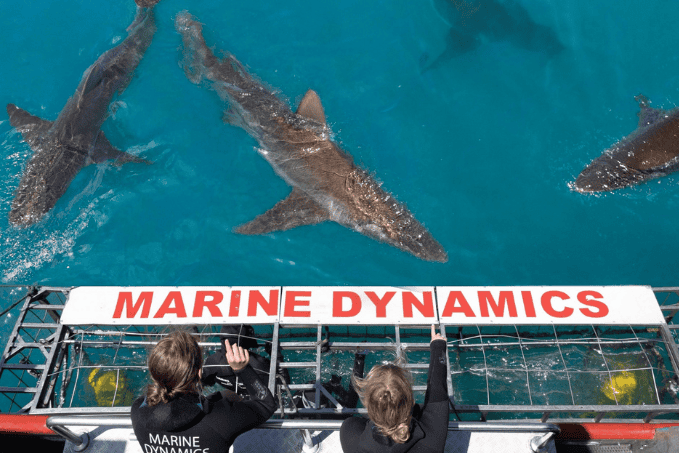
Bronze whaler sharks are now the most spotted in shark diving tours in the Cape. Picture: Supplied


One of the first “touristy” things American skateboarder Jason Vanporpal did after completing his epic 106-day, 5 500km fundraising journey from Uganda to Cape Town was to go shark cage diving.
Watching a video of his experience, two things stood out: he was hosted by world-renowned ecotourism operator Marine Dynamics, which is based in Gansbaai – known historically the “great white shark capital of the world” – and that none of the sharks in the clip were great whites.
Bronze whalers dominate shark sightings
They were bronze whaler sharks which, although not as notoriously aggressive as great whites, are nonetheless fearsome marine predators.
Last month, Marine Dynamics put to sea 33 times and logged 312 “bronzie” sightings, with the largest shark spotted being well over three metres.
The majority were adult females but the company also recorded a noticeable increase in the number of adult males.
In a recent interview, Marine Dynamics founder Wilfred Chivell said: “We have an amazing shark population… we just don’t have great whites at the moment. They’ve all been killed.”
Historic great white numbers teacked
The company has been at the heart of Gansbaai ecotourism for the past 26 years.
The Dyer Island Conservation Trust, established by Chivell two decades ago, has been at the forefront of African penguin conservation but has also undertaken dedicated studies on great white sharks to track their movements.
“Marine Dynamics did the first major great white shark population study in conjunction with a group of scientists in 2012-13,” Chivell said.
“That study found there were between 1 000 and 1 300 great whites along the South African coast.”
This number was established through photographic identification of 800 individual dorsal fins – as unique as a human fingerprint – and estimates that 300 to 500 more animals had not been recorded.
Orcas and fishing pressures blamed for decline
“In 2017, there was an influx of orcas [killer whales, which predate on great whites] and all our sharks fled,” he said.
“They would return, flee, come back again… until about five years ago we realised there were almost no great whites left in local waters.”
The main culprits for species devastation, said Chivell, are longline trawlers and the KwaZulu-Natal Sharks Board’s deployment of nets and drumlines to protect bathers from attack.
“These kill about 16 great whites a year, which is a lot for an already small population,” said Marine Dynamics’ Loraine Shuttleworth.
Concerns over bycatch and shark protection
No one knows how many great whites are hooked by logline trawlers – they say it’s none because they’re not allowed to do so – but reality tells a different story.
“Take a 30km-long line with up to 10 000 baited hooks towed in the shallows off our shark banks,” said Chivell.
“They might not be fishing for great whites but they’re lying through their teeth if they say there aren’t vital bycatches.”



