
The witness is expected to testify about the relationship between NICOC and other intelligence and security structures.
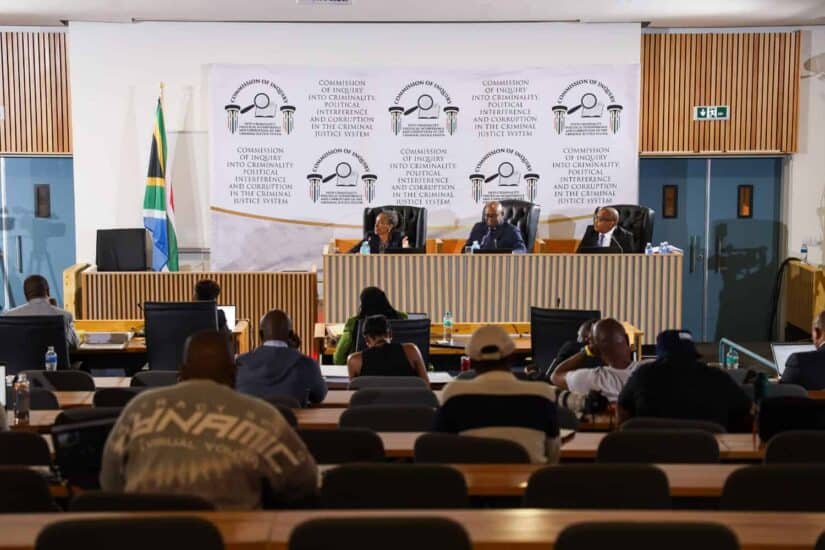
General overview at the Madlanga Commission of Inquiry at Brigitte Mabandla Judicial College in Pretoria on 22 September 2025. Picture: Gallo Images/Luba Lesolle


The Madlanga Commission is set to hear arguments in an application seeking to have the testimony of Dr Ntandazo Sifolo, the Acting Coordinator of the National Intelligence Coordinating Committee (NICOC), heard in-camera.
The application was brought by the commission’s evidence leaders on 12 October 2026 and is opposed by the amaBhungane Centre for Investigative Journalism, Daily Maverick and Media24.
In-camera
Commission chairperson Justice Mbuyiseli Madlanga on Monday directed that the in-camera application relating to Sifolo’s evidence will be heard in an open session at the commission’s venue in Pretoria on Wednesday, 21 October 2026, from 9am.
According to the directive, the applicants will be allocated 45 minutes to move and argue their application.
The respondents opposing the application will also be given 45 minutes to present their arguments and respond to the applicants’ submissions.
The applicants will then have 15 minutes to reply.
Written submissions
Dr Sifolo serves as the Acting Coordinator of NICOC, the body responsible for coordinating South Africa’s intelligence structures.
The commission said the parties’ written submissions relating to the application will be published on its website.
Testimony
Dr Sifolo was originally scheduled to begin testifying on 13 October 2026. However, in a late-night update, Commission spokesperson Jeremy Michaels confirmed that his appearance had been postponed.
The Citizen last week reported that an attorney representing the Commission supported the in-camera application with an affidavit describing the anticipated evidence as highly sensitive.
“His evidence relates to classified material which has been declassified for use by the Commission but not for public dissemination,” the affidavit stated.
Intelligence
According to the affidavit, Dr Sifolo is expected to testify about the relationship between NICOC and other intelligence and security structures, as well as the identification, assessment and reporting of threats linked to organised crime and criminal syndicate infiltration of the criminal justice system.
The Commission argued that the confidential information is so deeply embedded in Dr Sifolo’s evidence that it cannot realistically be separated from the rest of his testimony.