
Many cited crime and economic uncertainty as they abandoned their lives in South Africa
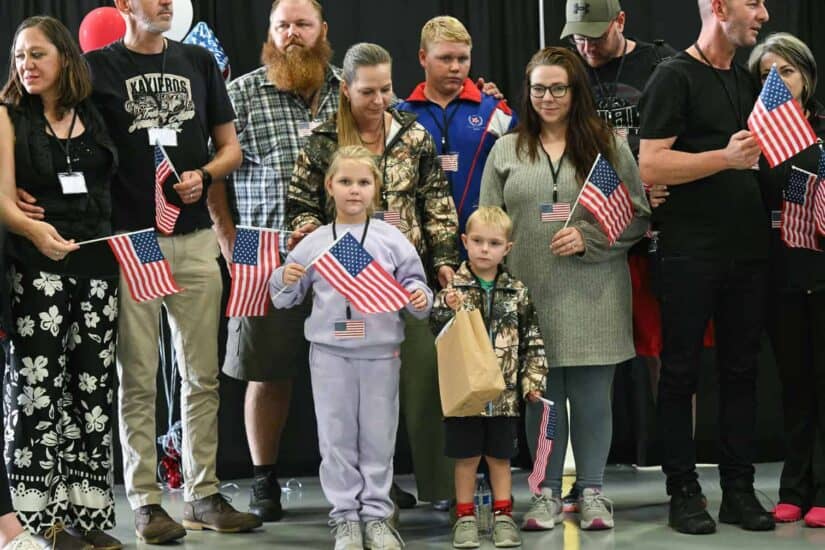
The first group of Afrikaners from South Africa to arrive for resettlement after arriving at Washington Dulles International Airport in Dulles, Virginia, on 12 May 2025. Picture: AFP


More than 150 white Afrikaners boarded a flight out of South Africa on Monday under US President Donald Trump’s controversial refugee programme, with many citing crime, economic uncertainty and safety concerns as they abandoned their lives in the country for what they hope will be a better future in the United States.
The Citizen witnessed the group checking in at OR Tambo International Airport on Monday for an Air France flight via Paris before continuing to destinations across the US.
Leaving SA
Carrying multiple suitcases and wearing red identification tags, the travellers appeared poised for a life-altering journey, leaving behind family members, friends and familiar surroundings.
Among those preparing to leave was a young Afrikaans-speaking boy who broke down in tears at the departure terminal as his family waited to board.
“Ek wil nie gaan nie. Ek gaan Suid-Afrika en my vriende verskriklik mis,” he cried. (“I don’t want to go. I’m going to miss South Africa and my friends terribly.”)
His parents tried to comfort him as fellow passengers looked on, offering a poignant glimpse into the emotional toll of relocating to a country thousands of kilometres away.
Afrikaner refugees
The latest departure comes as Washington continues prioritising Afrikaner refugee admissions following a 2025 executive order signed by Trump, which fast-tracked applications from white South Africans on claims that they face racial discrimination.
Afrikaners reportedly account for 99% of admissions under the programme since October 2025, highlighting the administration’s focus on the group amid broader restrictions on refugee admissions from other countries.
‘We don’t feel safe anymore’
At the boarding gate, one Afrikaner and his wife, who declined to be named, told The Citizen they no longer saw a future for themselves in South Africa.
“We don’t feel safe anymore. We live in the city, but we are going to the USA. Life will be better there.”
Opportunities
Another traveller, who works on a farm in the North West, said he was leaving the country in search of better economic opportunities and to escape crime.
“I am travelling with my wife and two kids. I have been working for 16 years for a farmer and have nothing to show for it. I have no pension, no medical aid and I cannot handle the crime in South Africa anymore,” he said in Afrikaans.
When asked what he planned to do for work in the US, he said he was confident his skills would help him build a new life.
“I will find work. I am a mechanic. I can fix tractors and cars.” He added that he had been allocated accommodation in Texas.
Several other travellers approached by The Citizen declined to speak on record, saying only that they were “happy to leave”.
Refugee programme
The refugee programme stems from a 2025 executive order signed by Trump that prioritised the resettlement of Afrikaners while simultaneously cutting aid to South Africa.
The policy has sparked fierce debate on both sides of the Atlantic. Supporters argue that many Afrikaners face discrimination and growing security concerns, while critics reject claims that white South Africans qualify for refugee protection.
Advertising
Last month, The Citizen reported that the United States was considering spending more than $335 000 (about R6 million) on research and an advertising campaign in South Africa to determine why significantly fewer Afrikaners than expected had applied for refugee status under the programme.
In May, The Citizen also reported that more white South Africans could be heading to the US after the Trump administration proposed plans to admit an additional 10 000 Afrikaner asylum seekers, raising the refugee cap for the group to 17 500 in 2026.
Far from home
The proposal came as arrivals approached the existing ceiling of 7 500 applicants and formed part of a broader effort by Washington to expand the programme.
As boarding commenced on Monday, families carrying overstuffed bags slowly joined the queue bound for the United States.
For some, the journey represented hope, opportunity and a fresh start. For others, including a young boy who tearfully begged not to leave, it marked the painful end of a South African chapter and the uncertain beginning of another far from home.