Although Makgotloe admitted to making the errors, he said there was nothing sinister about his actions.

Retired judge Mbuyiseni Madlanga at the Brigitte Mabandla Justice College in Pretoria on 27 October 2025. Picture: Gallo Images


Captain Laurance Makgotloe, the ballistics expert who analysed the Armand Swart murder scene, has defended the errors found in his report.
30-year-old Swart, an employee at Q Tech Engineering Company based in Vereeniging, was shot and killed while seated in his vehicle outside his workplace by two suspects who were driving a white Hyundai i20 on 17 April 2024. He sustained multiple gunshot wounds and was declared dead on the scene.
It was reported that the suspects orchestrated the assassination in order to silence him after he blew the whistle about fraud and corruption linked to a Transnet tender contract.
However, some reports say it was a case of mistaken identity.
Four men – Sandton businessman Katiso “KT” Molefe, former police detective Michael Pule Tau, Musa Kekana, and Tiego Floyd Mabusela – have been arrested in connection with the case.
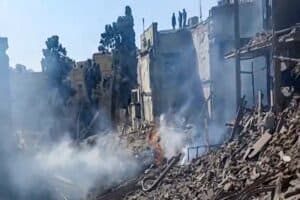
Armand Swart murder scene
Investigating officer, only known as Witness B, previously raised suspicions that Makgotloe may have made errors in his ballistics report to derail the investigation.
Witnesses A, B and C are living in safe houses and are involved in investigations into Gauteng criminal cartels.
Makgotloe was on standby duty the day Swart was murdered.
“On arrival at the crime scene, I noted that it was cordoned off and there were a number of police officers,” explained Makgotloe.
“We started processing the scene, which took a few hours. We agreed that the ballistic analysis of the Vereeniging crime scene was going to be conducted by me. It is common practice for standby ballistics analysts to allocate crime scenes attended evenly to distribute the workload fairly. In this regard, I would be the one to complete the crime scene report for the Vereeniging case.
ALSO READ: Armand Swart murder: investigator details how they allegedly linked Katiso Molefe to case
“22 exhibits were identified at the scene: 6x AK-47 fired bullets, 10x cartridge cases fired from a 9mm pistol, 4x bullets fired from another 9mm pistol and two bullets core fired from an AK-47 assault rifle.
“From our observation and processing of the Vereeniging scene, we could tell that an AK-47 assault rifle had been used. However, there were no AK-47 cartridge cases at the scene. We found two bullet cores of AK-47 and 6 AK-47 fired bullets.
“I would expect to find the AK-47 cartridge cases because they should have been ejected at the scene, but they were not there.”
Crime scene ‘cleaned’
Witness A previously told the commission that police discovered that the cartridges in the Swart assassination had been collected from the crime scene “maybe for the purposes to dispose of, so that they cannot be linked to the firearm.”
ALSO READ: Firearms used in DJ Sumbody’s murder linked to 10 other high-profile cases
This plan, however, was unsuccessful as evidence allegedly connected the same high-calibre rifles used in Oupa Sefoka’s, also known as DJ Sumbody, murder, to other killings, including those of DJ Vintos, Hector Buthelezi and Swart.
Report
The Swart case was assigned to Makgotloe on 8 May 2024. I collected the file on 9 May. The Bramley case, which is the arrest of the suspects in the Swart murder case, was also assigned to him.
The Bramley case had 225 exhibits, including 1 AK-47 assault rifle, 96 cartridges for the AK-47 assault rifle, 1 CZ brown 9mm pistol, 1 parabelum 9mm pistol, 3 magazines for the parabelum 9mm pistol, 15 AK-47 assault rifle cartridges and 91 9mm parabelum cartridges.
He said he submitted his report to his superior, though he never received any query or feedback from her until Witness B and her team came looking for it.
“In June 2024, I was contacted by Witness B, who had come to request the ballistics report. She was accompanied by two other officers. It was at that point that I became aware that [my senior] had not started reviewing the report since my submission on 24 May 2024,” said Makgotloe.
“I advised Witness B that the report was not complete. They waited for the report. [My senior] then alerted me to amendments that I needed to make to the report. I informed Witness B. I then gave the reviewed report to Witness B. They left.”
Report errors ‘innocent’
Although Makgotloe admitted to making the errors, he said there was nothing sinister about his actions.
“I have been accused of informing the investigating officer that the Vereeniging and Bramley cases were linked to other high-profile cases when they collected the report in June 2024.
“I never made such a statement to the investigating officer. The only linkage I was aware of on that date was the firearm confiscated during the arrest of the suspect in Bramley on 17 April 2024, which was the same one used in the murder of the victim in Vereeniging.
ALSO READ: Madlanga commission hears how firearm’s serial number in Armand Swart murder was recovered
“I was aware of the links because I conducted the ballistics analysis on the exhibits for the two cases. I am not certain whether the investigating officers misconstrued the linkages between those two cases to mean they were linked to other cases besides those two.
“The images of the samples used during my ballistics analysis had not been acquired on the IBIS system on the day, as such, there was no way that I would have been able to know if there are any links between the two cases and any other cases since those links can only be identified after images of the samples are acquired on the IBIS system. This was only done on 6 September 2024.”
‘Work pressure’
He said errors were a regular occurrence in his line of work and could only be corrected once flagged.
“I cannot indicate for what reasons [the errors were there], but I can say it amounts to work pressure as well. Before you type a statement, by nature, an expert is not a typist, but you’re doing your own typing and given 20 minutes to type your own statement, regardless of how many pages the statement has,” he explained.
“The possibility of errors will be there. We accept those mistakes and make corrections. They are innocent mistakes due to time and work pressure, nothing sinister.”
READ NEXT: Saps has ballistics system in place, but half the required staff to operate the machines
Support Local Journalism
Add The Citizen as a Preferred Source on Google and follow us on Google News to see more of our trusted reporting in Google News and Top Stories.