The current state of the ANC-led tripartite alliance is fraught with turmoil and on the edge of disintegration.
Pictures: Supplied


The current state of the ANC-led tripartite alliance is fraught with turmoil, and on the edge of disintegration.
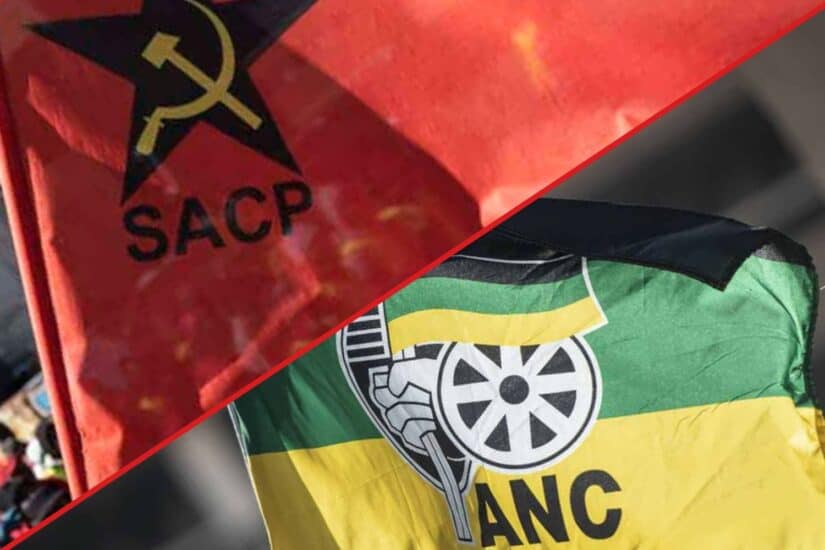
Despite the reluctance of ANC and South African Communist Party (SACP) leaders to admit it, the fractures in the alliance are deepening. The ANC seems to be pushing the ties towards a breaking point.
As the two parties begin their parallel election campaigns, reflecting their diverging paths, tensions between them have escalated. With the local government elections approaching, it seems there is no turning back.
At last month’s Police Prisons Civil Rights Union (Popcru) central executive committee (CEC) gathering in Boksburg, where SACP general secretary Solly Mapaila and his ANC counterpart, Fikile Mbalula, were supposed to face-off, Mbalula smartly retreated, leaving ANC MP Cassel Mathale to speak on his behalf.
You could cut the tension with a knife as the speakers hurled insults at each other.
As if this was not enough, barely a month later, the ANC fired SACP’s Western Cape regional secretary Benson Ngqentsu from his position in the provincial legislature.
This was a striking decision, as Ngqentsu is a prominent and influential leader known for his leftist views and articulate advocacy for socialist ideals, deeply rooted in the party’s ideological foundations.
Ngqentsu has emerged as a central figure as the ANC has launched a bold, aggressive campaign against the SACP, primarily in response to its decision to contest independently in the 4 November local elections.
Luthuli House’s message was unmistakable for public representatives with dual membership in the ANC and the SACP: they must choose sides.
In this charged atmosphere, Ngqentsu made his decision known, aligning himself with the SACP and the working class.
His departure highlights the fractures in the alliance and sets the stage for a new chapter in their contentious relationship.
The SACP’s hardline stance against the ANC’s neoliberal ideological approach had been simmering, but grew stronger under Mapaila. Unlike his past few predecessors, Blade Nzimande and Charles Nqakula, who tolerated the ANC, Mapaila appears grounded in the mould of Chris Hani.
He is a staunch opponent of any coalition with the DA. He believes the ANC is overly influenced by the DA, driving it deeper into neoliberalism. SACP would rather align with EFF and uMkhonto weSizwe party.
This sentiment reflects a frustration with the ANC, which he believes is ensnared in a neoliberal framework where corporate interests dominate.
At the Popcru CEC, Mapaila expressed strong disdain for the government of national unity’s Operation Vulindlela, viewing it as a strategy crafted by big business that was fundamentally opposed to the needs of the masses.
Although tiny by design, fashioned in the communists’ intellectual and ideological focus, the SACP punches above its weight within the alliance. Historically, it provided intellectual guidance that influenced the ANC’s original leftward policies, which the ANC later abandoned.
Now, the SACP is aiming to cut a stake in this constituency, which is rapidly drifting away from the ANC due to its governance failures. It will take some, but not all, because other parties have also been chipping away at ANC support.
Cosatu, the third alliance partner, is another cause for contention. Each wants to lure the federation to its camp. But a key question arises: will Cosatu align itself with the SACP or ANC?
Ngqentsu is hopeful and clear about Cosatu’s priorities: the workers’ interests. In an interview with veteran journalist Vuyo Mvoko, Ngqentsu’s message was clear: “Cosatu needs to choose the working class struggle, needs to choose the interests of the workers.”
But it’s still not so obvious. Some prominent SACP leaders have high regard for the ANC and have already indicated they may vote for the ruling party. That complicates matters.