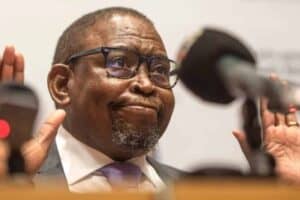



The mayor of Ngaka Modiri Molema has denied that he cooked for votes.


An expert has warned politicians against using cheap tricks to win votes ahead of this year’s local government elections.
It comes amid a circulating video of the mayor of Ngaka Modiri Molema District Municipality in the North West, Khumalo Molefe, cooking pap while wearing ANC regalia.
Cook comrade, cook! https://t.co/FCkoogJkZL
— Okunola Akeju. MD (Shobaloju of Agbooro ) (@MooAkee) September 23, 2026
LIVE interactive map, latest news, multimedia and more!
View Map
Khumalo received backlash on social media for the apparent stunt, with users accusing him of being “desperate” and cooking for voters.
But he denied this.
“Believe me when I say this cooking by us volunteers took place at the ANC Operation Centre, not at any of the households visited on the day. As volunteers, we cook for ourselves all the time. It is a blatant lie that we found a family cooking, and we took over. That is a distortion. It’s a lie,” he said.
Will political stunts help the ANC?
Political analyst Theo Neethling told The Citizen it is no surprise to see such videos of politicians cooking just a month before the local government elections.
“This is a fairly obvious electioneering tactic, particularly suited to face-to-face political canvassing in rural communities. The timing is significant: the gesture comes immediately before the local government elections and is therefore difficult to separate from the candidate’s effort to create a visible connection with voters,” said Neethling.
Neethling said the image of the mayor cooking for others is likely to be seen more as a stunt rather than an indication of any substantive commitment to municipal service delivery.
“The important question is whether such a gesture has any meaning beyond the campaign itself.
“It creates a sense of familiarity and personal connection, but it says little about the candidate’s ability or willingness to address the much more demanding responsibilities of local government-such as water and electricity provision, municipal finances, infrastructure, accountability, and basic service delivery,” he said.
Neethling said personalised and highly symbolic campaigning may have greater resonance in communities where direct interaction between political representatives and voters is an important part of political mobilisation.
“But its electoral significance should not be overstated. Ultimately, voters are being asked to make a choice about who should govern their municipality, and that involves considerably more than a temporary display of solidarity around a cooking fire.
“The real test comes after the election, when the cameras are gone, and the responsibility for delivering services remains,” said Neethling.